
 By Kilam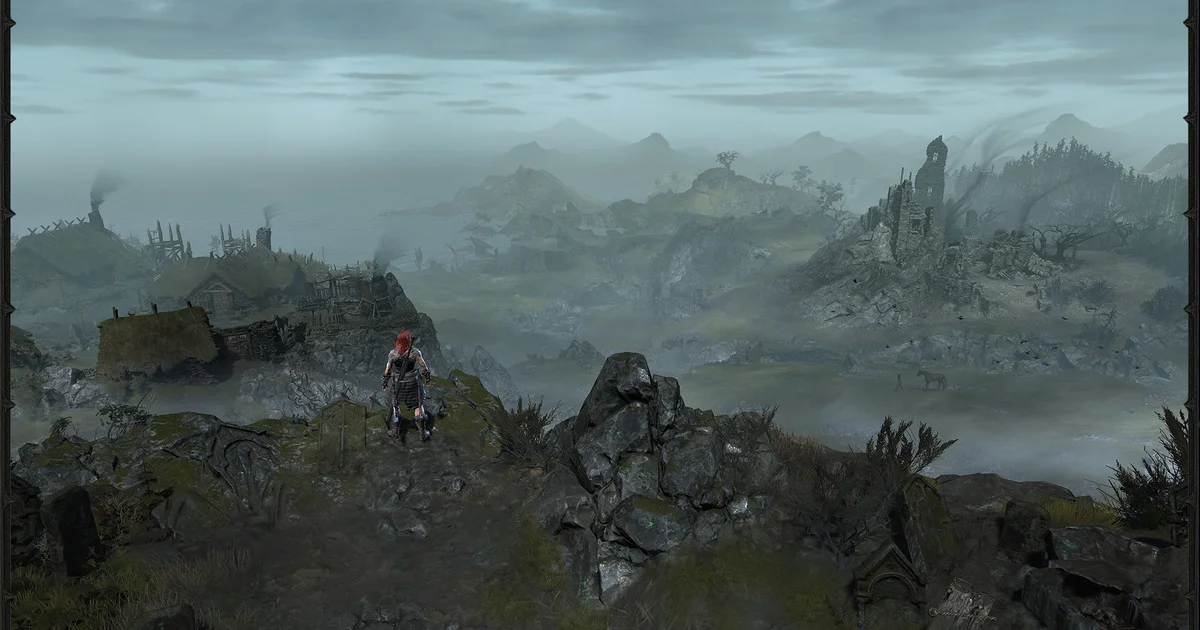
A cross-generation game that rarely looks trapped by old hardware
Diablo IV launched across PC, PlayStation 5 and Xbox Series hardware while still supporting PlayStation 4 and Xbox One. That compatibility could easily have defined the entire visual design.
Instead, Digital Foundry's launch analysis found a substantial leap over Diablo III in materials, lighting, geometry and environmental complexity. There is no single spectacular next-generation trick. The image is built from many smaller systems behaving coherently.
1260p to 4K works because the reconstruction is doing its job
On PS5 and Xbox Series X, launch measurements placed internal resolution at roughly 1260p before FSR 2 reconstruction to a 4K output. Despite the large numerical gap, the final result was considered impressively clean.
More important is the 60fps target. Both current-generation machines hold it very well during gameplay, with mostly isolated drops rather than sustained performance problems. PSFoundry's 2026 aggregation still characterises the PS5 version as an essentially stable 60fps experience.
PlayStation 4 exposes the cost of scalability
The older hardware pays visibly for compatibility. Digital Foundry measured an internal resolution around 720p on base PS4, reconstructed to 1080p, with a 30fps target and reductions to textures, shadows, geometry and environmental detail.
Keeping the same underlying game working there is an achievement. Moving to PS5 or Series X nevertheless improves more than simple pixel count. Motion clarity and consistency materially change how readable a crowded Diablo fight becomes.
PC performance is strong until texture memory enters the room
Broad PC scalability was one of the launch version's technical successes. ComputerBase found high performance across a large selection of graphics cards, helped by strong upsampling options.
Digital Foundry identified the awkward exception. Matching PlayStation 5's highest texture quality could effectively demand a 16GB graphics card, with lower-VRAM hardware vulnerable to severe drops or stuttering despite having enough raw GPU performance for the rest of the workload.
That memory behaviour sits strangely beside an otherwise flexible PC renderer.
The lighting matters more than the feature checklist
Blizzard's own graphics breakdown details physically based materials, volumetric effects, dynamic shadows and light scattering through particles and skin. Those systems are the real reason Diablo IV has such a specific visual identity.
Dark spaces remain readable without flattening the image. Spells illuminate nearby geometry. Snow, mud and desert stone can all belong to the same oppressive world without looking interchangeable.
Real-time cinematics come with visible compromises
The game uses the player's customised character directly inside its cinematics, creating unusually strong continuity between the isometric action and close-up storytelling.
Those close-ups also expose asset limitations more easily than the gameplay camera, something GameSpot noted in its original review. Console cinematics are capped at 30fps as well, creating an obvious transition from the 60fps game.
Technical discipline is the real achievement
Diablo IV is not the most advanced renderer of its generation. It is more impressive as a piece of prioritisation. Character silhouettes, incoming attacks, area effects and environmental detail remain understandable while dozens of things compete for attention.
Years of added classes, regions and systems have not fundamentally broken that clarity.
The PC texture memory appetite is still the one demon that deserved a cleaner exorcism.