
 By Adri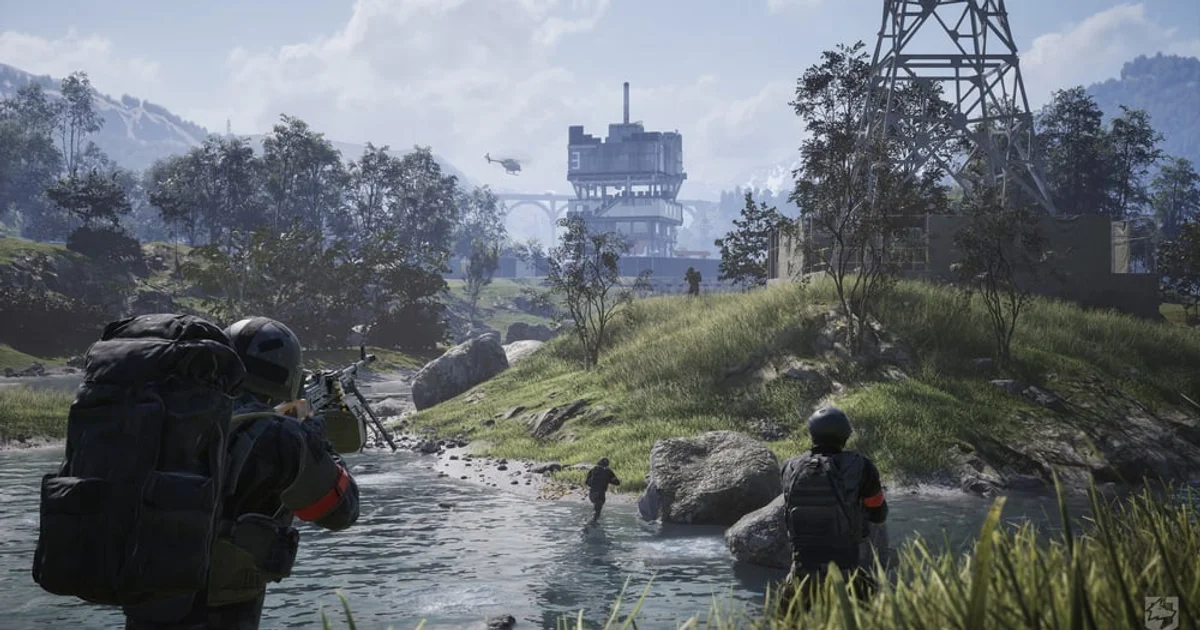
WARDOGS' latest closed beta exceeded 200,000 concurrent players on Steam.
That is an enormous figure for a game still approaching Early Access. It is even more striking beside BULKHEAD's internal expectations.
CEO Joe Brammer says the studio planned around roughly 5,000 concurrent users. Game director Howard Philpott has described 3,000 to 5,000 daily concurrents as a sustainable long-term target.
Viability does not necessarily require six digits
BULKHEAD is openly predicting that player numbers will decline after launch.
That contrasts with a live-service culture where every record peak can quickly become an expectation that developers are somehow supposed to maintain indefinitely.
The studio argues that a much smaller dedicated population is enough to keep matches active and support development toward version 1.0.
Its current Early Access estimate is approximately one to two years.
One hundred players and three teams create a substantial networking load
Each WARDOGS battle supports up to 100 players split across three competing teams.
Its primary mode revolves around a randomized 2x2km Control Zone inside a much larger 256km² map.
Vehicles, logistics, proximity voice, building and environmental destruction operate on top of that multiplayer layer.

For the client and network infrastructure, the challenge is therefore broader than synchronizing player movement and gunfire. The battlefield can change, vehicles move large numbers of players, and constructed or destroyed positions can alter how a fight unfolds.
BULKHEAD has not publicly provided enough detail to establish server tick rate, complete backend architecture or the exact technical limits of its destruction system.
Persistent money adds another layer between sessions
WARDOGS also carries player cash between matches.
Every account begins with $10,000. Weapons, equipment and vehicles cost money, while combat, support and logistics actions generate additional income.
The developer plans to make this progression layer substantially deeper during Early Access, alongside a larger seasonal metagame.
That means balance changes will not only affect weapon statistics. They can change the value of equipment and the rate at which players accumulate purchasing power over many sessions.
Easy Anti-Cheat runs at kernel level
Steam lists Easy Anti-Cheat as WARDOGS' anti-cheat solution and identifies it as kernel-level software.
That is relevant for a competitive PC shooter both because cheating prevention is important at this scale and because some users specifically care about software receiving privileged system access.
The Steam release supports interface localization in 14 languages, including French.
The paid release is a different kind of stress test
A closed beta reaching 200,000 concurrent users is already a significant scale event.
Early Access introduces a different workload: players remaining connected for longer sessions, persistent economy data, expectations of regular availability and an ongoing patch cycle.
Steam still explicitly labels WARDOGS a work in progress. BULKHEAD says balance, performance and stability are continuing priorities.
The peak is not the number BULKHEAD wants to defend
WARDOGS enters Early Access carrying two very different player-count figures.
One is the headline: more than 200,000 concurrent users during beta.
The other is the business target: a stable community of only a few thousand concurrent players.
If BULKHEAD can actually sustain the game at that smaller scale, its long-term architecture may matter far more than whether the launch-week Steam graph ever reaches the beta peak again.