
 By Adri
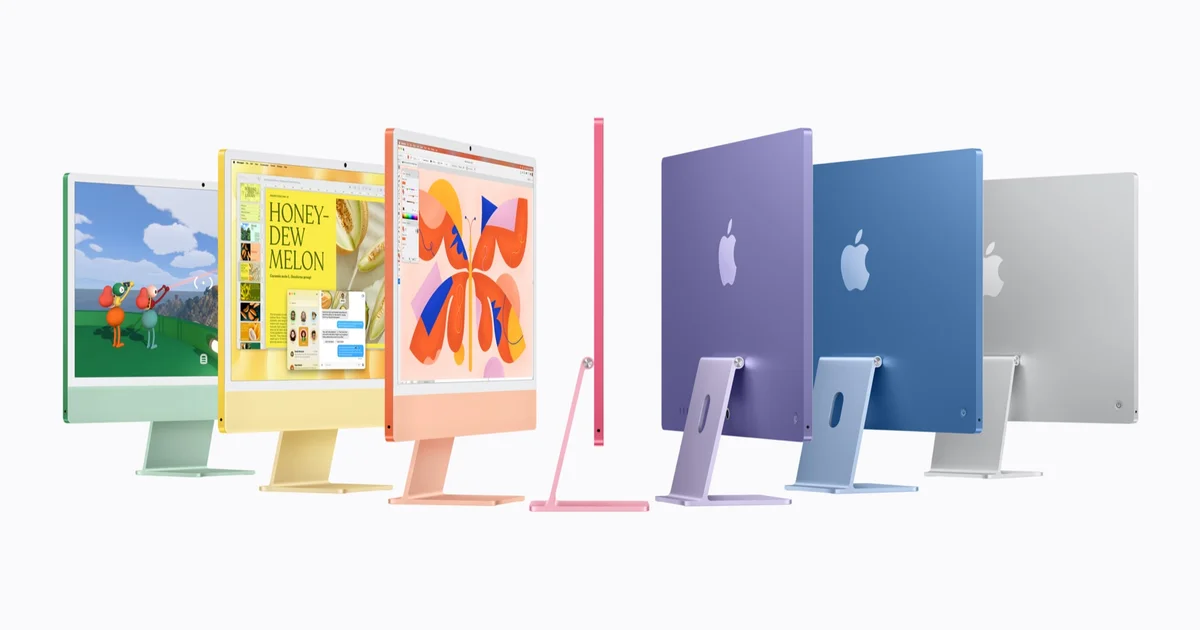
The 2026 iMac is an unusually straightforward hardware refresh. Apple has kept the same 24-inch design introduced with previous generations, retained the familiar color choices and left the display largely untouched. Almost everything that makes the new computer meaningfully different is tied to the M6 processor and its supporting connectivity.
The headline specifications look substantial: up to a 12-core CPU, 12-core GPU, 170GB/s memory bandwidth and a Dual 16-core Neural Engine. Apple is particularly focused on faster local AI processing, claiming up to five times the performance of the M4 iMac in selected tasks.
Those numbers need some context. The starting $1,499 configuration has a 10-core CPU and 10-core GPU, rather than the maximum configuration used to promote the new architecture. It also retains 16GB of unified memory and 256GB of SSD storage.
The M6 delivers a bigger GPU and a stronger AI architecture
Apple offers the new iMac in two principal M6 configurations. The entry-level model combines a 10-core CPU with a 10-core GPU. The higher-tier version increases both counts to 12 cores.
According to Apple, performance in applications such as Microsoft Excel can be up to 1.5 times faster than on the M4 iMac. Selected graphics workloads, including Affinity image editing, are claimed to run up to twice as fast.
The M6 GPU also incorporates Neural Accelerators into its individual cores, alongside hardware-accelerated ray tracing. Apple claims up to twice the gaming performance with ray tracing compared with M4, although the improvement will inevitably depend on the game and rendering workload.
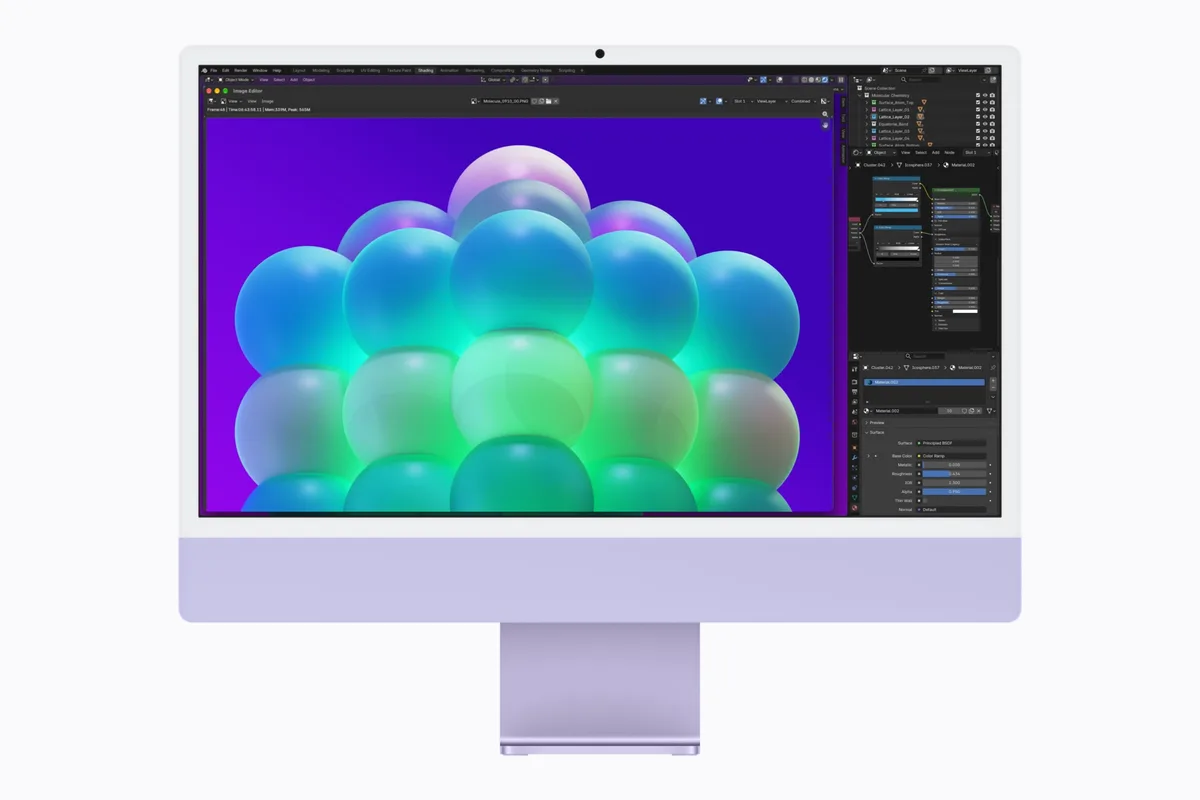
Professional applications stand to benefit as well. Faster GPU operations can help with rendering in Blender, image editing and effects processing in Final Cut Pro, while CPU improvements should support compiling software and other processor-intensive workflows.
These are manufacturer benchmarks rather than independent results. Sustained CPU performance, GPU efficiency, thermal behavior and actual application responsiveness remain to be established through external testing.
The fivefold AI claim raises a memory question
Apple's biggest advertised improvement is in local artificial intelligence. For selected prompt-processing workloads in LM Studio, the M6 iMac is claimed to achieve up to five times the performance of the M4 model and twelve times that of the M1 generation.
The new chip includes a Dual 16-core Neural Engine, with Apple claiming twice the Neural Engine compute performance of its predecessor. Neural Accelerators in the GPU cores provide another path for running machine-learning workloads.
Memory bandwidth reaches 170GB/s, potentially helping applications that regularly move substantial quantities of data between memory and processing units.
However, local language models are frequently constrained by the amount of available memory. Faster inference does not automatically mean that a larger model can fit inside the same unified memory pool.
The 16GB starting configuration therefore remains a meaningful limitation for users interested in running large local models while keeping several other applications active. The results will depend on model size, quantization, context length and the specific processing backend.
Apple has disclosed performance comparisons but not a complete independent characterization of inference throughput across a wide selection of local language models.
macOS 27 puts Siri AI into everyday workflows
The new iMac ships with macOS 27 Golden Gate, bringing Apple's expanded intelligence features to the desktop. Siri AI is designed to use personal context from messages, emails and other applications to answer questions and complete tasks.
Integration with Spotlight makes the assistant accessible through a familiar system interface. Visual Intelligence can also interpret selected onscreen content, allowing users to ask questions about documents, images or other information displayed in applications.

The capabilities extend beyond conventional chatbot interactions. Apple describes software features that can help organize Safari tabs, detect changes on websites and create custom extensions from natural-language descriptions.
There are important limitations. Siri AI is available in beta through macOS 27.2, and some features require supported languages or specific regional availability.
Apple also says that certain intelligence services relying on server-side models have daily usage limits. Expanded access to some of those services is expected to require a fee in the future. Local processor improvements should not be confused with unlimited access to cloud-based AI features.
Wi-Fi 7 and faster storage address practical bottlenecks
Wireless networking receives a useful upgrade through Wi-Fi 7 and Bluetooth 6. Users working with compatible routers and high-bandwidth local networks may benefit from faster transfers and improved connectivity.
Wired networking can now reach 2.5Gbps, but this capability is offered as an option on the 12-core CPU and 12-core GPU configuration. It is not a standard feature across the entire range.
Apple also advertises up to twice the previous generation's SSD read and write performance. Faster storage should help with large media libraries, complex application launches and projects requiring substantial file transfers.
The starting capacity remains 256GB. That is adequate for many conventional tasks but relatively limited for a desktop marketed toward creative professionals and users dealing with large projects.
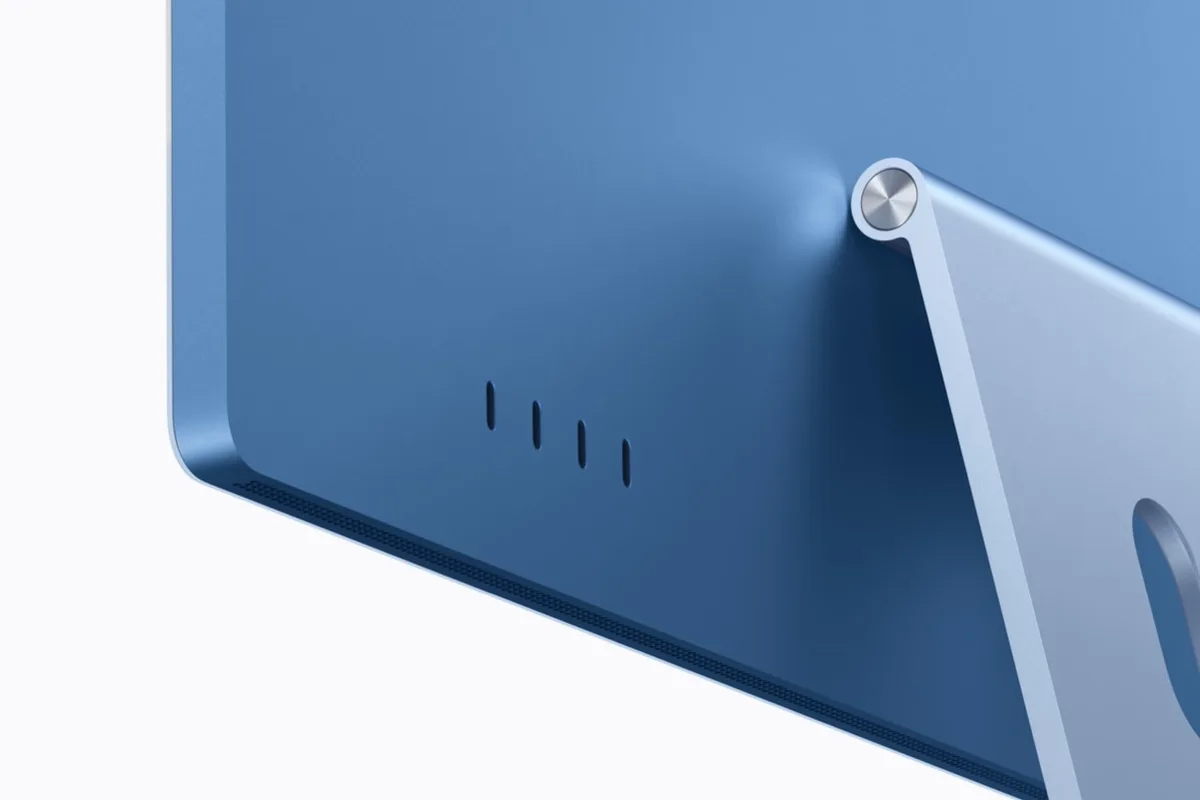
Port availability depends on the chosen configuration. The 10-core model provides two Thunderbolt 4 connections, whereas the 12-core model offers four. Compatible configurations support up to two external 6K displays.
Apple has not moved this machine to Thunderbolt 5. Thunderbolt 4 remains capable for ordinary peripherals, but users with demanding storage arrays or high-bandwidth accessories should account for the difference.
The familiar Retina display stays at 4.5K
The iMac continues to use a 24-inch Retina display, measuring 23.5 inches diagonally, with 4.5K resolution and 500 nits of brightness. P3 wide color remains part of the specification.
An optional nano-texture finish helps reduce glare on eligible configurations. There is no OLED upgrade, higher refresh rate or larger display option in the M6 generation.
The unchanged screen is still suitable for productivity, photography and general creative work. However, users who need a significantly larger desktop workspace will have to consider external monitors or a different Mac configuration.
Other features also carry over. The 12MP Center Stage camera supports Desk View, the speaker system includes six drivers, and a studio-quality three-microphone array remains integrated into the chassis.
Apple continues offering blue, green, pink, yellow, purple, orange and silver versions, along with color-matched accessories charged through USB-C.
Pricing makes the distinction between models important
The base M6 iMac starts at $1,499 in the United States, while the 12-core CPU and GPU configuration begins at $1,699. German pricing starts at €1,799 and €1,999 respectively, including VAT.
Both standard configurations include 16GB of unified memory and 256GB of storage. Buyers must pay attention to the processing configuration, port count and optional networking features before comparing them directly.
Preorders open on October 28 in 35 countries and regions, with Apple scheduling deliveries and retail availability for Friday, November 6, 2026.
For users still operating Intel-based iMacs, the move to Apple silicon could provide a substantial improvement. Apple claims up to eighteen times the performance of a selected popular Intel model, but this figure depends on the comparison system and workload.
Owners of M4 iMacs face a less obvious decision. The processor and wireless connectivity have improved, yet the same display, external design, base RAM and storage capacity remain in place.
The difference between the two new configurations should also shape any buying decision. The advertised $1,499 starting price does not include the maximum CPU and GPU core counts, four Thunderbolt 4 ports or all the optional networking capabilities. The 12-core configuration starts $200 higher.