
 By Adri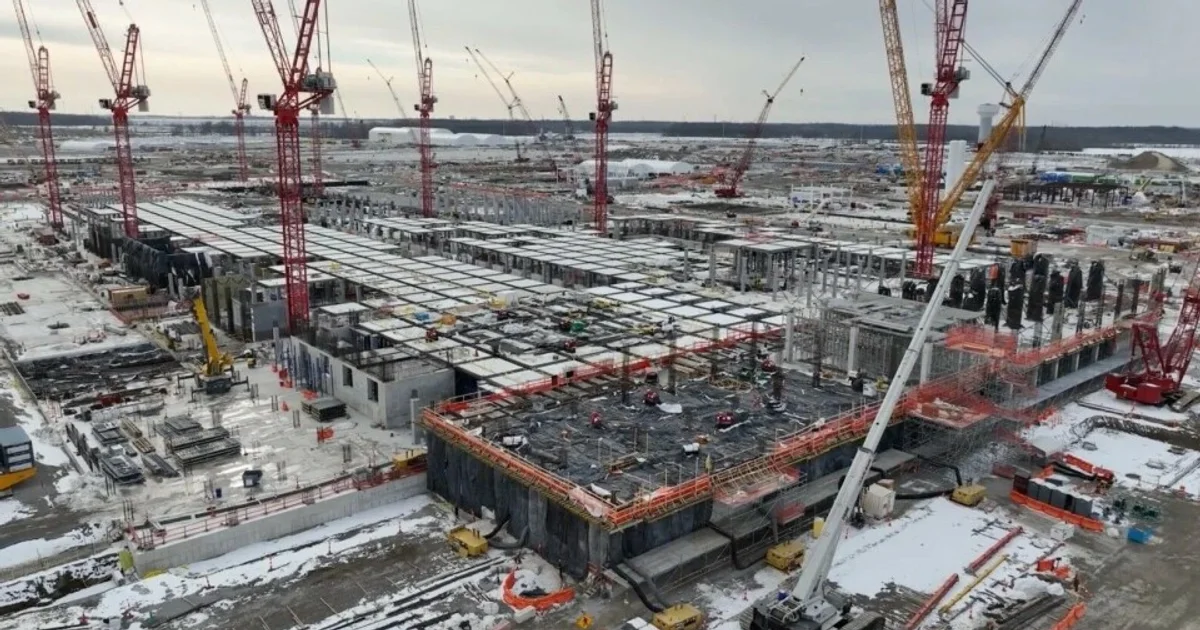
SK Hynix is discussing a potential agreement with Intel that could lead the South Korean company to manufacture memory chips in the United States for the first time at the wafer-fabrication level.
Reuters, citing three people familiar with the discussions, reports that one scenario would have SK Hynix lease part of Intel's Ohio One semiconductor campus near New Albany, Ohio.
Another possibility is a joint venture involving Intel and potentially major cloud companies interested in securing future memory supply.
The status of the talks is critical: they remain exploratory. SK Hynix says it is reviewing multiple options for expanding its production base and that no decision has been made.
Intel has buildings that SK Hynix may have a reason to fill
The industrial logic is unusual because the two companies arrive with almost opposite constraints.
Intel announced in 2022 that it could invest as much as $100 billion in Ohio, with ambitions to turn the campus into one of the world's largest semiconductor manufacturing sites.
Production was originally expected much earlier. The first two fabs have since been delayed until 2030 and 2031.
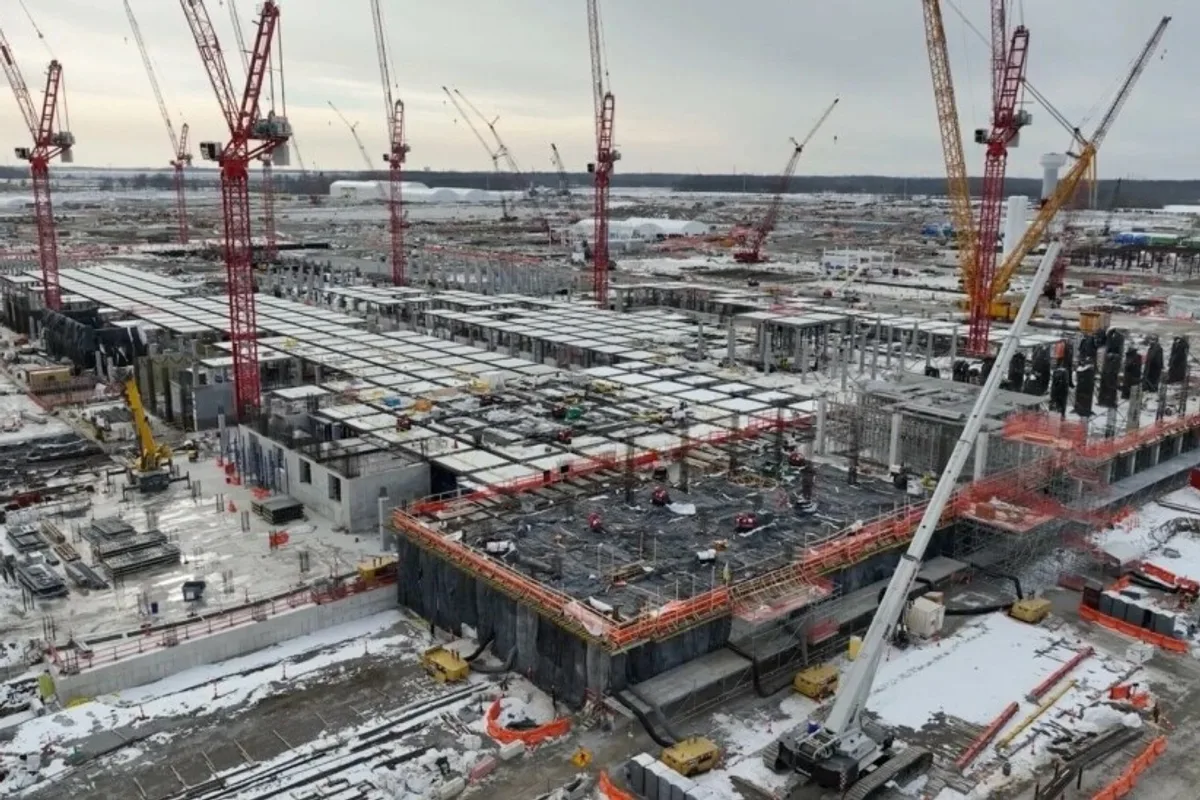
That leaves substantial infrastructure being built ahead of the utilization Intel initially envisioned. Bringing in SK Hynix could give Intel an industrial partner, additional revenue and a way to extract more value from construction already underway.
For SK Hynix, using a partly developed semiconductor campus could avoid starting its first US memory fab entirely from scratch.
Nobody has established which memory would actually be made there
Reuters was unable to determine which products would be manufactured in Ohio if an agreement is eventually reached.
SK Hynix produces conventional DRAM for servers, PCs and smartphones, NAND flash for storage, and high-bandwidth memory for AI accelerators.
Those categories are not interchangeable from a manufacturing perspective. Advanced DRAM, NAND and HBM-related production require different process choices and create different strategic concerns.
Reuters' sources said US production involving advanced DRAM or HBM technology could face particular scrutiny from Seoul because the technologies are considered strategically sensitive.
SK Hynix is already building in America, but it is building something different
The company is not starting from zero in the United States.
SK Hynix has begun construction of a more than $4 billion Indiana facility centered on advanced HBM packaging and AI semiconductor research.
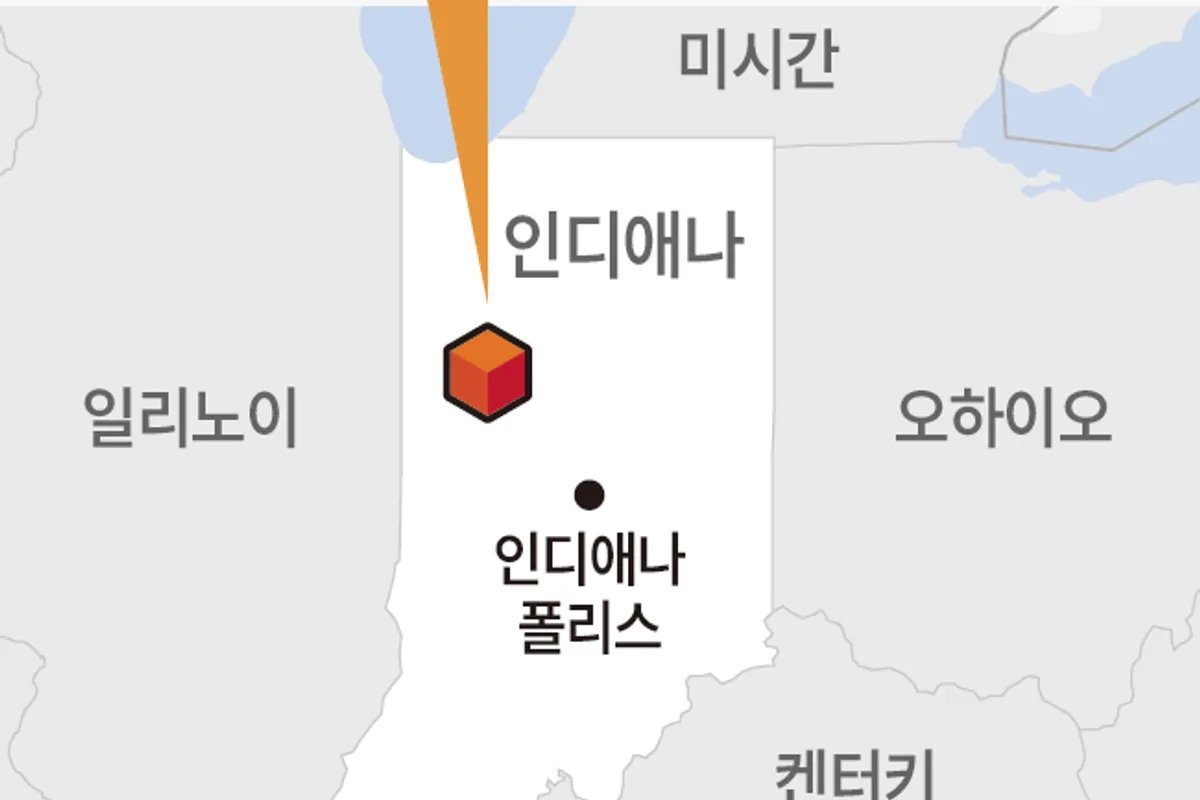
The site is scheduled to begin mass production of HBM4E in the third quarter of 2029.
Its supply chain remains tied closely to Korea. Advanced wafers are expected to be fabricated there and then shipped to Indiana for packaging and testing.
An Ohio project could introduce something fundamentally different: front-end memory-die fabrication in the US.
That would push American participation much farther upstream in the HBM and DRAM supply chain.
The memory shortage gives SK Hynix another reason to expand
The timing is not accidental. SK Hynix expects current memory constraints to persist through the end of the decade.
AI accelerators continue to consume enormous quantities of HBM while the servers surrounding them require more conventional DRAM at the same time.
SK Group Chairman Chey Tae-won said in July that the company faced enormous pressure from customers and governments to supply more chips. He also said he believed SK Hynix needed to build a factory in the United States if possible.
A joint venture involving cloud providers becomes easier to understand in that environment. Hyperscalers could help finance capacity they are simultaneously trying to secure years in advance.
US memory fabrication would cost more
Moving manufacturing closer to customers does not erase semiconductor economics.
Reuters' sources said producing chips in the United States would be materially more expensive than in South Korea because of higher construction and labor costs and because much of the semiconductor supply chain remains concentrated in Asia.
A US fab therefore has to absorb that structural cost or offset it through subsidies, customer commitments, logistics benefits or strategic value.
SK Hynix's Indiana project already has support including $458 million in US grants and up to $500 million in loans under the CHIPS Act.
No equivalent financing structure has been announced for a possible Ohio project.
The proposal also changes the geography of memory technology
For SK Hynix, a US wafer fab would represent more than incremental global capacity.
South Korea currently concentrates much of the engineering expertise, supplier network, manufacturing equipment and intellectual property associated with the company's advanced DRAM and HBM operations.
Building a genuine US fab requires transferring enough knowledge to operate the plant while protecting technology that Seoul regards as strategically important.
South Korea's trade ministry told Reuters that an investment decision would belong to the company, but any project involving a designated “national core technology” would be subject to review under the country's Industrial Technology Protection Act.
Ohio One could become more than an Intel-only manufacturing site
That may be the more interesting implication for Intel.
Ohio One was originally presented primarily as an expression of Intel's own return to leading-edge US manufacturing.
A lease or joint venture with SK Hynix would give the campus a broader role: semiconductor infrastructure supporting production beyond Intel's own processor portfolio.
That model makes more sense as advanced fabs become so expensive that sharing infrastructure and investment becomes increasingly attractive.
There is no SK Hynix Ohio fab yet
The talks could still collapse, change structure or lead to another site entirely.
Intel declined to comment on what it called speculation and said only that it continues investing to prepare the Ohio location.
SK Hynix confirms that it is examining ways to expand its memory-production footprint but says nothing has been determined.
The story is therefore not that a new factory is about to open.
It is that the AI-driven memory shortage is producing unusual industrial combinations: Intel has a massive US manufacturing site whose schedule has slipped, while SK Hynix has exactly the type of capacity customers are desperate to obtain.