 By Kilam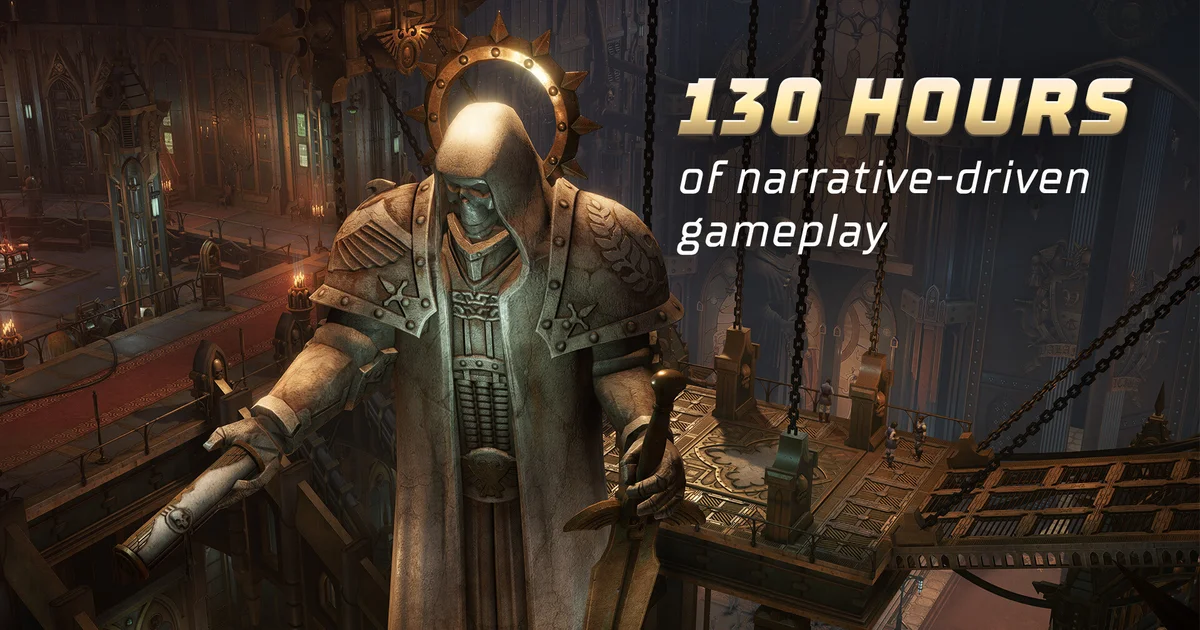
The 2023 review build and the 2026 game no longer describe quite the same software
The launch version contained two almost contradictory technical realities. PC Gamer reported solid raw performance on a Ryzen 9 5900X and RTX 3080 system, and even acceptable behavior on a GTX 1060 laptop, while simultaneously encountering bugs capable of breaking quests, abilities and AI. Framerate was not necessarily the primary problem. Logical reliability was.
RPG Site, after waiting for two major patches in 2024, already found a substantially cleaner game but still reported hitching, numerous loading screens and various quest or NPC anomalies. That distinction matters. Rogue Trader never required a graphical revolution; it needed hundreds of quest flags and systemic interactions to stop colliding with one another.
Three years later, the maintenance work is substantial. PC Gamer now describes Rogue Trader as an RPG that has matured into its systems, while Owlcat was still releasing update 1.6 in June 2026 with changes spanning bugs, interface work and entire class mechanics.
The interface had to evolve around a game with too many variables for its own windows
Rogue Trader is not technologically spectacular in the blockbuster sense. Character models remain modest, and animation was never competing with the largest productions. Its strength is art direction: Gothic mass, impossibly large voidships, industrial architecture and readable combat effects give the setting more weight than polygon counts do.
The more important interface battle happens in talent lists, inventories and class resources. Update 1.6 added multiple filters and grouping to talent selection, alongside dedicated UI support for resources such as Lethality, Tactical Advantage and Versatility. Those changes are less glamorous than a new rendering effect and far more useful in a CRPG where reading the interface occupies a significant portion of play.
Controller support also deserves credit. RPG Site's multi-platform testing found the interface effective on Steam Deck once settings were adjusted. That is meaningful for a game designed around nested menus, long tooltips and enormous lists.
PC and Xbox Series remain the safest technical reference points
By January 2026, RPG Site described the PC and Xbox Series X versions as having been in a great state for months. PS5 had also improved dramatically from launch but retained annoying hitching on the base console. Steam Deck had become recommendable with caveats after configuration changes.
That hierarchy suits the nature of the game. Rogue Trader does not require a competitive framerate, but interruptions compound quickly: a long load after dialogue, repeated hitching during exploration or a sluggish menu may occur hundreds of times across a campaign of this size.
On PC, hardware headroom and settings flexibility make it the easiest technical recommendation. Xbox Series X emerges as the most consistent console reference in the available testing. That is a major change from 2023, when one of the most practical technical recommendations was simply to maintain several save files.
Switch 2 proved Owlcat's old launch demon had not been fully exorcised
The Nintendo port released in December 2025 broke the otherwise reassuring trajectory. Even after its first major patch, RPG Site reported constant hitching, poor stability, long loads and visuals substantially behind the other versions in January. Its 3/10 score applied specifically to that port's technical condition, while the same review stressed that Rogue Trader itself had become an excellent RPG elsewhere.
Owlcat did not pretend the problem was minor. In July 2026 it released an update advertised as improving visuals, performance and numerous bugs, then made additional content free on Switch 2 as compensation. The company's head of publishing subsequently acknowledged that the team had failed with the launch and needed to repair it.
Two opposite shortcuts should still be avoided. The January score no longer describes the current build after July's major update; at the same time, an official statement that stability has improved cannot substitute for a new independent technical review of equivalent depth. By September 2026, the direction is clearly better. The exact distance traveled is less precisely measured.
The best patch is eventually the one players stop noticing
Rogue Trader's current condition creates an odd luxury: it is possible to forget why its technical reputation was so poor. Classes have been rebalanced, broken interactions repaired, interface layers revised, and recent PC coverage spends far more time discussing character builds than failed quest scripting.
That is exactly what successful maintenance looks like. The rendering, models and animation have not moved into another technological tier; the software around them has simply become much more trustworthy. Platform differences remain real, especially around base PS5 hitching and the troubled history of the Switch 2 port.
For a CRPG whose campaign can consume dozens or even more than a hundred hours, reliability is not optional polish. It is part of game design. A complex system only becomes interesting when players can trust its rules, and Rogue Trader took far too long to earn that trust.