 By Kilam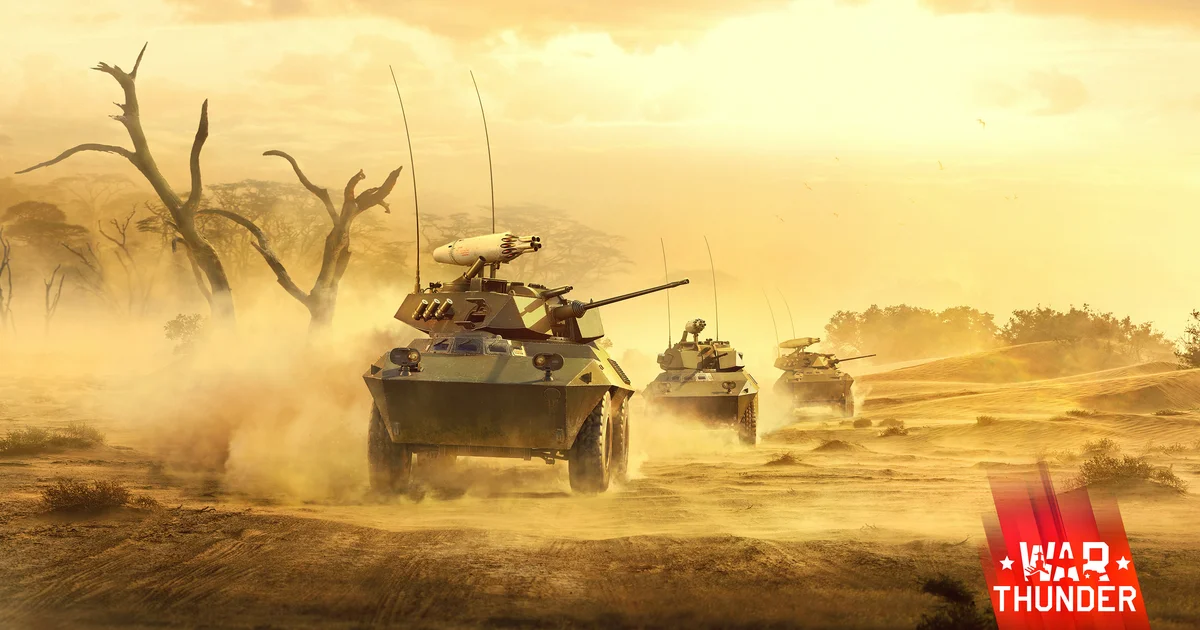
A 2013 game with a 2026 graphics stack
War Thunder's age becomes misleading as soon as its graphics menu opens. The move to Direct3D 12 gave Gaijin room for a newer generation of rendering features including ray tracing, FSR 3.1, XeSS, DLAA and continually updated DLSS. In March 2026, RTX 40 and 50 GPUs received DLSS 4.5 as the default for certain Performance and Ultra Performance modes.
Ray Reconstruction is also part of the ray-tracing pipeline. It has not simply been added and forgotten: a June 17 patch fixed a case where enabling the feature did not actually activate it, while a September 8 update repaired ray-tracing settings that could reset to preset values when changes were applied.
Those bugs explain the renderer's history almost as well as the feature list. War Thunder did not become modern through one clean rebuild. New technologies have been layered onto a continuously maintained project. The benefits are substantial, but every layer increases the number of combinations that can fail.
The supported hardware range is unusual
Gaijin's current Windows minimum still reaches down to Radeon 77XX-class hardware or a GeForce GTX 660 with 4 GB of system memory. The recommended specification lists a GTX 1060 or RX 570-class GPU and 16 GB of RAM. The official full PC client is now roughly 76 GB, while a much smaller minimal client remains available.
That is a remarkable span for software that can also expose ray tracing and current upscaling technologies. War Thunder continues serving old machines while adding features intended for contemporary RTX-class hardware.
Steam adds Linux through Vulkan and macOS to the equation, along with SteamVR. The official FAQ also covers gamepads, joysticks and head tracking. Hardware flexibility remains one of the less glamorous but more impressive parts of the project.
Console versions are not secondary ports
PC, PlayStation and Xbox participate in the same broader online ecosystem. Gaijin's current FAQ confirms cross-platform squads between PC, PS4, PS5, Xbox One and Xbox Series X|S, subject to platform-specific account and cross-network restrictions.
Xbox Series X is officially described as running consistently at 4K and 60 fps, with Series S at 1440p and 60 fps. Standard PS5 runs the game at 4K and 60 fps according to Gaijin's platform information, while PS5 Pro can reach refresh rates up to 120 Hz with an appropriate display and suitable output conditions.
The interesting part is not simply the resolution target. The same simulation has to keep armour, projectile behaviour, internal modules, radar and guidance logic coherent across several generations of console hardware and PC.
Precision makes small bugs mechanically important
A highly detailed simulation makes tiny errors visible. Gaijin fixed a critical client-server desynchronisation in August 2026. September patches then addressed naval lead calculation, radar behaviour, gyroscopic sights, flight-model parameters and missing modules in X-Ray views.
That patch frequency does not mean the game is broadly unstable. entegg's 2026 testing described reliable behaviour during its review window. It instead illustrates the maintenance cost of War Thunder's ambition: every new vehicle is also a new set of data, weapons, sensors, damage interactions and rendering assets.
Sky Odyssey added another wave of vehicles, a map and system changes while reorganising parts of the hangar interface. Follow-up patches immediately began repairing edge cases around the newly expanded build.
The interface exposes thirteen years of accumulated systems
The renderer can depict modern aircraft with radar, missiles, detailed MFDs and internal damage models on hardware as old as a GTX 1060-class recommendation. The menu meanwhile has to expose research trees, crews, presets, events, currencies, Battle Rating, modifications and store systems. It can be the least elegant part of the technology.
Sky Odyssey specifically redesigned hangar presets, raised their available count to 25 and surfaced several permanent submodes more clearly. Useful changes, but also evidence of what happens when software keeps accumulating systems for more than a decade.
War Thunder's greatest technical achievement is therefore not one benchmark. It is range: Linux, macOS, older GPUs, current consoles, VR and high-end RTX systems all belong to the same live project. Keeping those layers aligned is visibly an ongoing job.