 By Kilam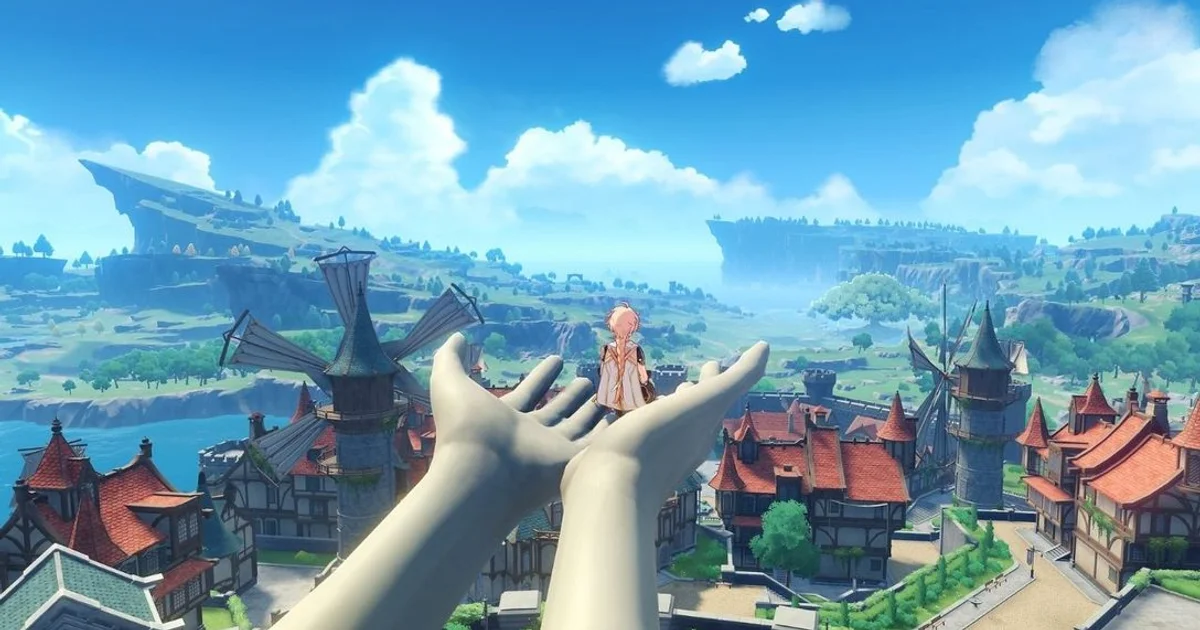
Genshin's smartest technical decision remains its art style
The game never chased photorealism, and that choice matters far more in 2026 than it did at launch.
Clean colour blocks, readable silhouettes, stylized lighting and relatively controlled materials allow new regions to remain visually compatible with older ones despite six years of development.
A realistic game carrying this much accumulated content would likely show far harsher visual breaks between launch areas and current expansions.
PS5 solved the original console bottleneck early
When the native PS5 build arrived in 2021, HoYoverse described a custom graphics library and loading system designed around the console's SSD.
The practical benefits remain relevant: fast teleportation, smooth 60fps play and an image clean enough for Teyvat to work comfortably on a large display.
GamingBolt already regarded the PS5 release as the preferred console version at launch.
Xbox joined a mature ecosystem rather than creating another island
The November 2024 Xbox Series X|S launch did not create a separate progression path.
HoYoverse preserved cross-play and cross-progression with PlayStation, PC, Android and iOS, allowing established accounts to move hardware without rebuilding years of characters.
For a live service, that continuity is arguably more important than a small resolution difference.
Mobile remains the invisible constraint behind every region
Every new environment must look impressive on a television while continuing to function on dramatically weaker devices.
That requirement explains part of the art direction: readable geometry, clear textures, controlled density and effects that remain legible on a small screen.
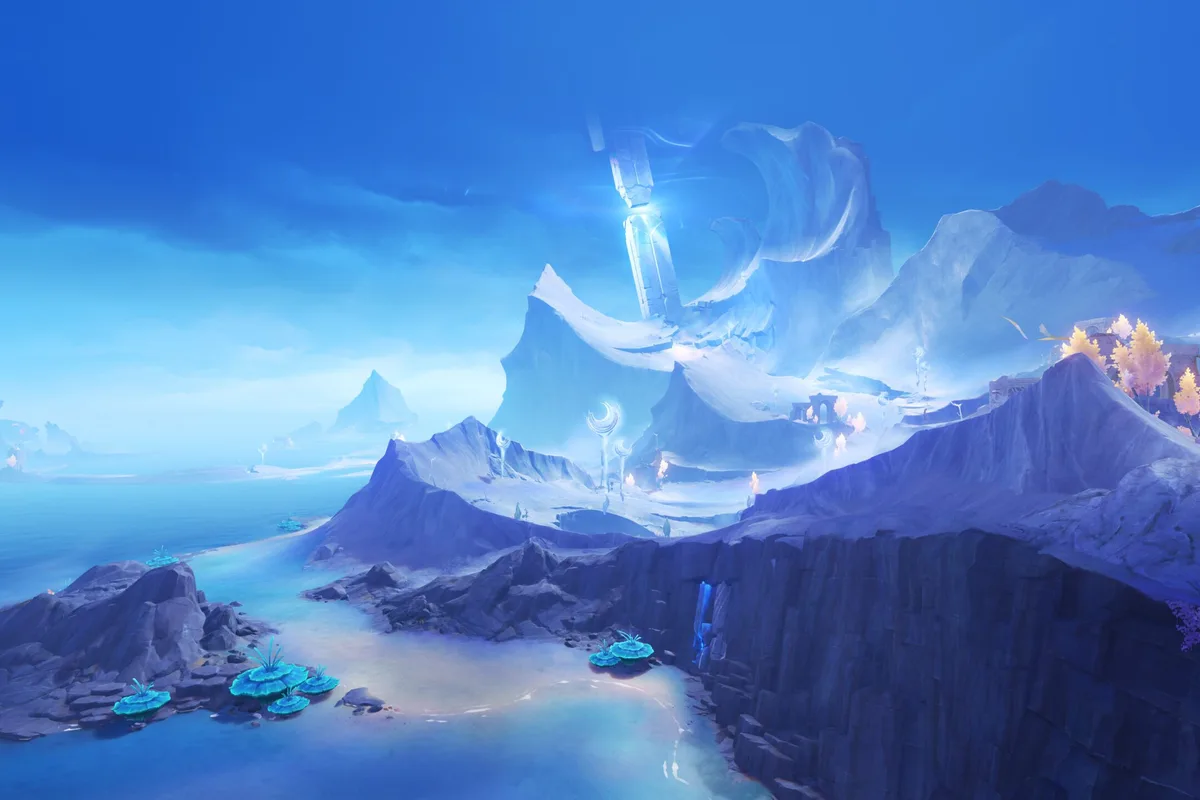
The fact that Fontaine, Natlan and Nod-Krai can still establish different visual identities within that multiplatform budget is a genuine technical achievement.
Six years of content inevitably become heavy
Download size and pre-installation requirements are now recurring concerns, particularly on mobile.
HoYoverse has introduced resource-management options and optimizations, but every region, voice pack, cinematic and permanent mode adds to a client that must keep carrying its history.
Version 7.0 alone still required several gigabytes of pre-installation data before the full client was considered.
PS4 eventually reached the end of the road
The clearest sign of hardware debt is official: Genshin Impact stopped receiving updates and became inaccessible on PS4 on April 8, 2026.
Accounts were not lost because progression can move to PS5 or other supported platforms.
But the retirement demonstrates how different the current game is from the one that originally launched on Sony's previous-generation console.
The interface is aging faster than the landscapes
Events, Battle Pass, Wishes, Serenitea Pot, TCG, endgame activities, progression screens, guides, archives and years of added systems now compete for attention.
Most are understandable individually. Together they can make a new account feel more like entering an operating system than starting a straightforward RPG.
That is less a graphics problem than the UX debt shared by almost every successful long-running service game.
Fortunately, the technology disappears when you look at the horizon
That may be the game's strongest technical compliment.
A Mondstadt cliff and a 2026 region obviously do not share exactly the same density or ambition, but they still belong convincingly to the same visual world.
HoYoverse has modernized Genshin in layers rather than making its oldest spaces look like abandoned technology demonstrations.
The engine shows its age. The art direction shows it far less.