
 By Kilam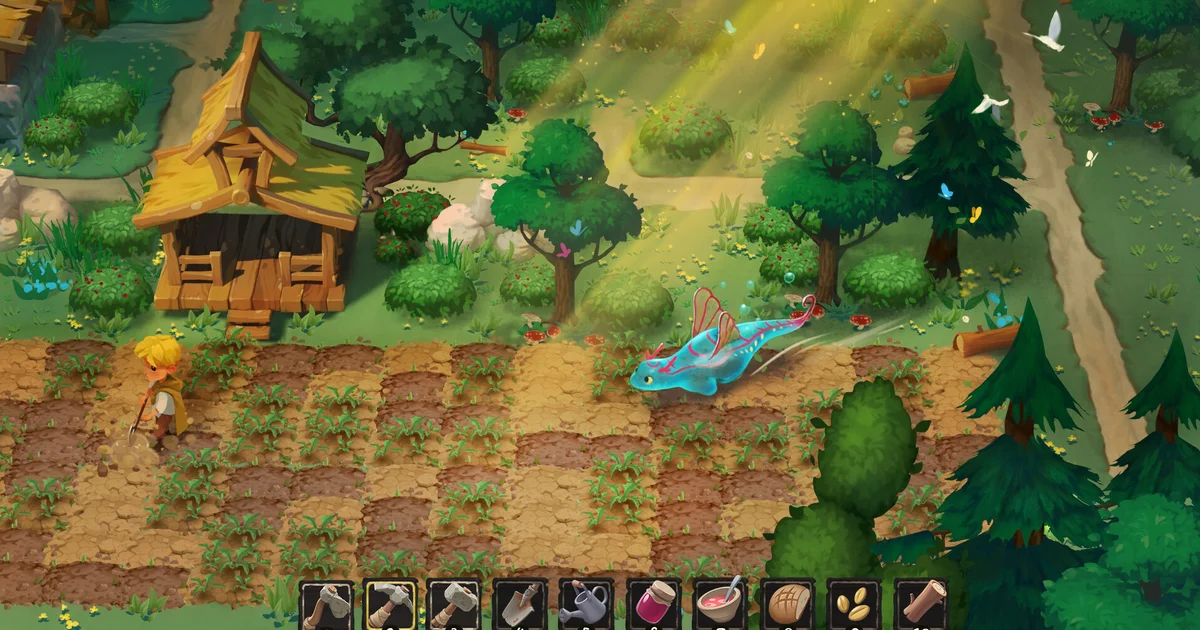
Raw performance is not the most worrying part of the technical picture
The current Steam requirements target 1080p at 30 fps on Low with a GTX 1050 Ti or Radeon RX 560 carrying 4 GB of VRAM. The recommended target is 1080p at 60 fps on High with a GTX 1660 Ti or RX 590 with 6 GB of VRAM. Storage remains a modest 10 GB.
Those are not extravagant hardware demands for a 3D simulation released in 2026. PC Gamer also notes that basic movement and tool animations avoid the heavy, clumsy feeling that can affect some 3D farming games.
SteamDB's current metadata lists Dragon Shelter as Playable on Steam Deck, with all functionality available through the default controller configuration and the default graphics setup considered performant. The notable warning concerns small in-game text.
The real bottleneck sits between the player and the systems
The most consistent technical complaint across the corpus concerns interface design. PC Gamer highlights fiddly backpack navigation, important information surfaced differently between mouse and controller, and rules hidden in help menus — such as being unable to add a cooking station while a recipe is already queued.
The same coverage also notes that the launch interface looks less polished than UI shown in some older Steam imagery. Gameliner reaches a similar conclusion, finding the dark menu treatment visually disconnected from the otherwise colorful world.
GameObserver adds placement friction: a fixed camera, limited contextual feedback and awkward furniture movement can turn simple decorating into trial and error. None of these are GPU problems. They are UX problems, and a simulation made of hundreds of small interactions magnifies every one of them.
Some reported bugs interfere directly with progression
Games.ch explicitly states that it reviewed an early build and reports dragons disappearing and quests becoming impossible to complete. Saving in that version occurred when sleeping, without flexible access to multiple previous saves. The build context matters, because not every limitation can automatically be projected onto the final executable.
Gameliner's release review nevertheless reports similarly serious failures, including a fire dragon no longer following the player into town and blocking quest progression. The same review also notes occasions where the music disappears.
Bonus Action describes a broader layer of friction around unintuitive interactions, unclear menus and basic processes that take longer than they should. When independent reviewers repeatedly encounter similar categories of failure, the problems become difficult to dismiss as isolated oddities.
The art deserves a better interface around it
The visual contradiction is easy to see. Dragons receive considerable attention: distinct silhouettes, expressive animation, accessories and behavior that make them immediately readable. The environment uses a warm palette and rounded forms that fit the cozy tone.
Human character models and customization receive much less enthusiasm from parts of the corpus. Bonus Action finds the protagonist noticeably rougher than the dragons, while Gameliner likes the broader visual style but criticizes the interface for breaking its cohesion.
Dragon Shelter therefore does not need a technological reinvention. It needs the less glamorous patches that fix quest state, clarify interface feedback, strengthen save reliability and make every interaction predictable. For a farm designed to be relaxing, the plumbing is currently the loudest machine on the property.