
 By Adri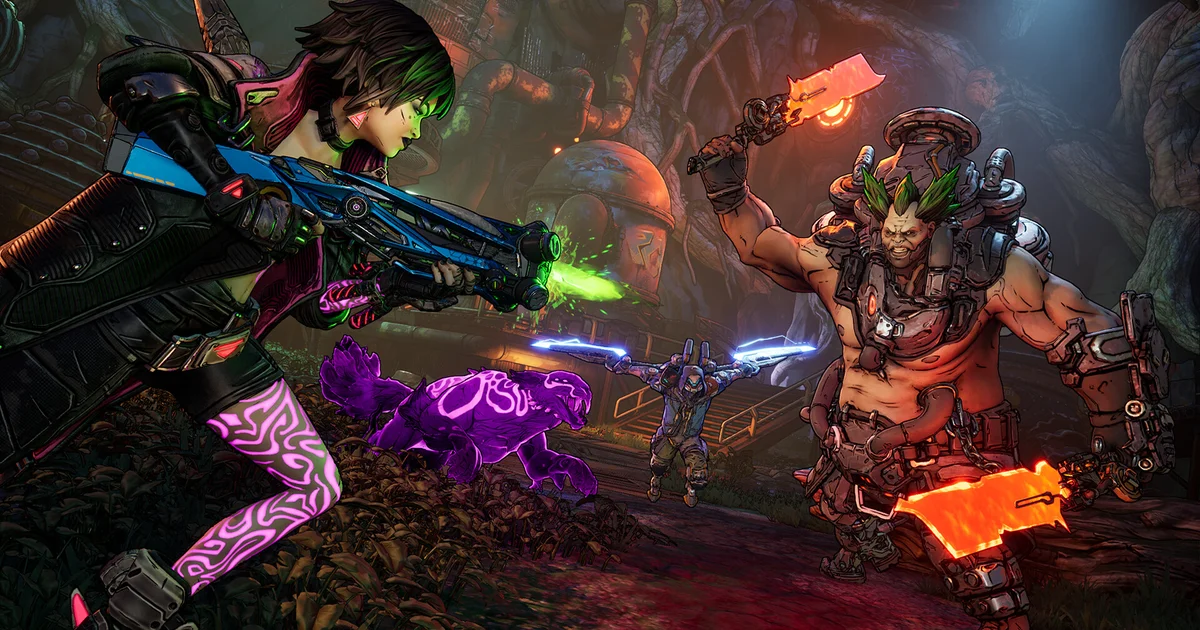
Borderlands 4 is frustrating because it is never difficult to see where the hardware budget goes.
Kairos delivers long sightlines, large encounters, dense effects, heavy lighting and mountains of loot without constantly falling back into the small segmented spaces of previous games.
The problem is that this Unreal Engine 5 ambition arrived with an extremely high performance cost.
PC launch performance was brutal even on elite hardware
PC Gamer, TechSpot, Digital Foundry and other technical coverage reached broadly similar conclusions in September 2025: Borderlands 4 was exceptionally demanding.
TechSpot measured an RTX 5090 struggling to stay close to 60 FPS at native 4K with heavy settings, including drops well into the 40s.
PC Gamer found similar performance limits alongside stutter, freezing and at least one crash during testing.
This was not simply a minimum-spec problem.
Upscaling behaves more like part of the performance budget than a bonus
Gearbox's own PC targets describe the minimum specification as 1080p 30 FPS at Low and the recommended specification as 1440p 60 FPS at Medium.
Beyond that, DLSS, FSR or XeSS quickly become important for maintaining higher frame rates.
GameSpot highlighted optimized settings capable of delivering substantial performance gains with relatively modest visual compromises, particularly by reducing expensive lighting and related effects.
That is useful tuning. It does not change the underlying conclusion that the highest presets demand disproportionate hardware for their visual improvement.
The open world can also become CPU-heavy
Fast traversal across Kairos exposes another bottleneck.
PC Gamer found a near-minimum eight-core CPU being pushed heavily during outdoor world streaming, with more severe stutters appearing as new areas loaded.
That helps explain why simply lowering resolution does not remove every hitch.
Some of the problem sits in world management rather than pixel rendering.
A year of patches improved the situation without erasing the reputation
Gearbox has delivered repeated stability and optimization updates since launch.
Version 1.7 notes from May 2026 were still explicitly listing stability and optimization improvements while stating that the team continued investigating performance.
By September 2026 the game had reached Version 1.10 and remains actively maintained.
PC sentiment remains difficult, however. Recent Steam reviews are still classified as Mixed, and current community discussions continue to mention shader compilation, stutter, freezes and inconsistent performance.
Community reports are not controlled benchmarking, but their persistence a year after release shows that the experience is not uniformly solved.
Shader compilation remains visible friction
Borderlands 4 performs shader compilation to reduce some runtime stutter, but the process itself has become a recurring complaint.
Recent reports still describe lengthy compilation after particular updates or restarts.
Precompilation is technically sensible: paying the cost before gameplay can be preferable to encountering every shader during combat.
When that preparation becomes long or repetitive, however, the friction has merely moved to startup.
Kairos visually justifies some of the expense
Borderlands' illustrated art style can create the misleading assumption that the game should be lightweight.
Borderlands 4 is rendering a much larger environment with long view distances, dynamic lighting, volumetric effects and extremely dense encounters.
The art direction also remains remarkably readable despite explosions, loot beams and elemental effects competing for the screen.
The hardware is doing real work. It is simply doing that work with questionable efficiency.
Combat becomes a permanent stress test
The game combines exactly the workloads that are difficult to stabilize: broad environments, many enemies, transparent effects, particles, physics and co-op.
Multiple Action Skills firing simultaneously can turn a boss arena into an improvised benchmark.
That is why average frame rate alone does not describe the experience. A sudden hitch during the most hectic moment matters more than a small decline while crossing an empty field.
Technology does not ruin Borderlands 4, but it still dictates too many conditions
The current situation is better than launch.
Patches have addressed crashes, improved stability and continued refining performance, and many console and PC users now experience a substantially cleaner game than the first-week builds.
Borderlands 4 nevertheless remains a PC title that asks users to think too much about presets, upscalers, shader compilation and CPU/GPU budgets.
For a shooter this fast, frame-time consistency matters almost as much as image quality.
A strong Unreal Engine 5 showcase, but not a showcase of efficiency
Gearbox successfully moved Borderlands into a much more continuous world without losing its visual identity or co-op chaos.
That is a legitimate technical achievement.
It came with excessive hardware demands and a long optimization story the game would rather not have needed.
A year later, Borderlands 4 is easier to recommend than it was at launch. It is still not the game you would use to demonstrate how lightweight Unreal Engine 5 can be.