
 By Adri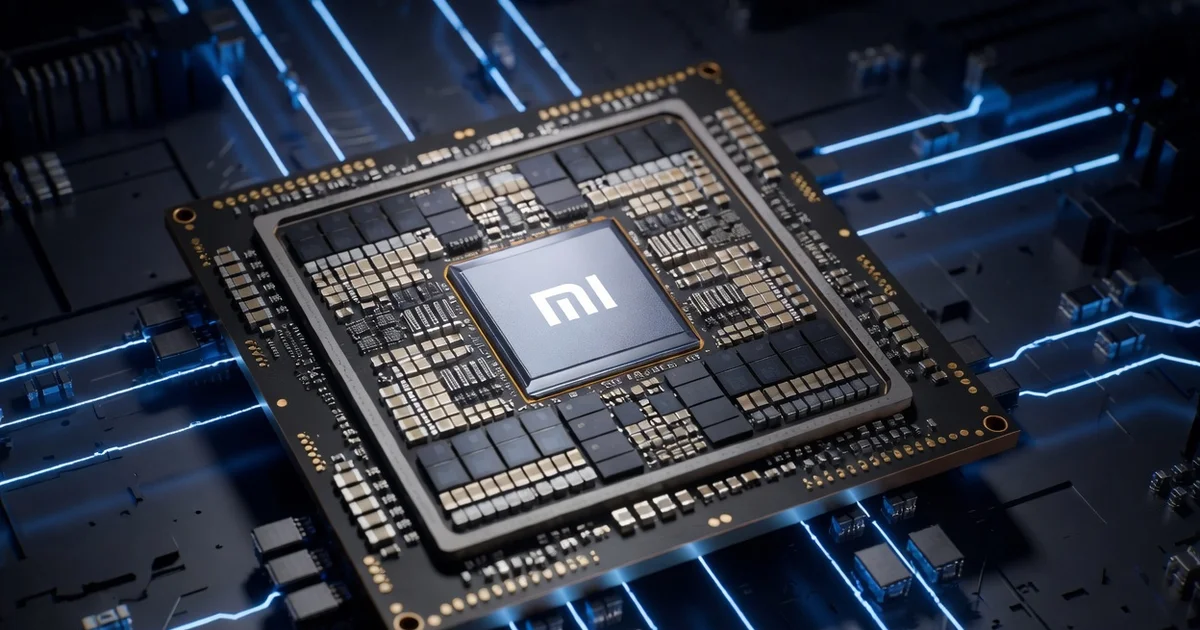
For most of Xiaomi's smartphone history, choosing the processor meant choosing a Qualcomm or MediaTek part.
Xring O3 makes that relationship less absolute.
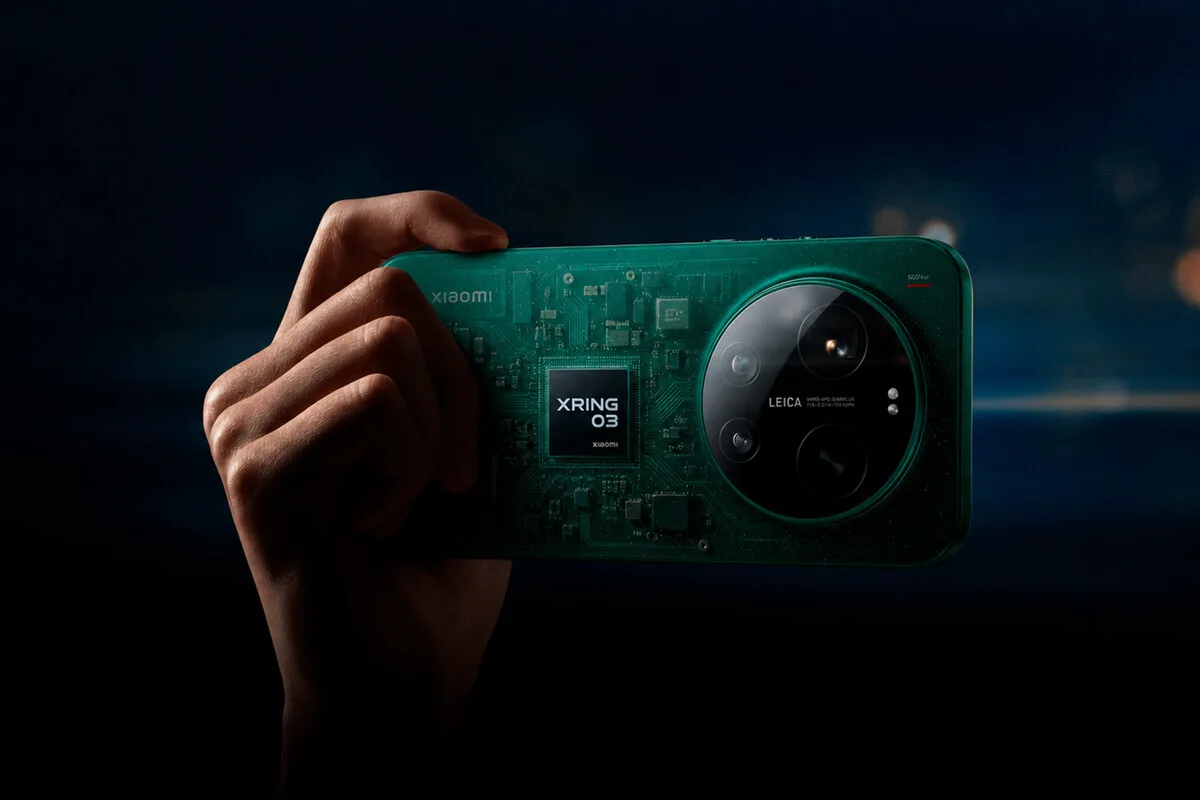
The new flagship SoC was announced on August 24, a little more than a year after Xring O1, and is already in mass production according to Xiaomi.
Ten CPU cores push Xring into flagship territory
Xiaomi describes a ten-core CPU built from six ultra-large and four large cores.
It claims performance improvements of up to 60% over Xring O1 and efficiency gains reaching 25% under lower and medium workloads.
Those are vendor figures rather than independent phone benchmarks, so thermal limits and sustained power remain unknown until commercial hardware arrives.
A 133mm² die makes this an expensive experiment
The processor contains roughly 24 billion transistors on a 133mm² die.
Golem calculates that the silicon is around 22% larger than the previous generation.
Larger dies can provide room for more computing resources, but they also increase manufacturing cost and make wafer yield more important.
That helps explain why Xiaomi is beginning with premium, relatively low-volume devices rather than replacing every Snapdragon in its catalogue.
The 3nm manufacturing is reportedly coming from TSMC
Xiaomi publicly confirms a 3nm process.
Reuters, citing two people familiar with the matter, says TSMC will manufacture Xring O3.
Neither company confirmed the foundry relationship, exact process or shipment target when Reuters requested comment.
That distinction defines what Xiaomi's independence actually means.
The company is becoming less dependent on external SoC designers. It is not becoming an advanced semiconductor manufacturer.
Graphics ambitions have increased sharply
Xiaomi's sixteen-core G2-Ultra NX GPU is claimed to deliver an 85% increase in peak performance over Xring O1.
The company also claims 182% stronger ray-tracing performance and substantially better efficiency at equivalent performance.
The useful question will be sustained output inside a thin foldable rather than the highest number achieved during a short benchmark.
The 200-TOPS NPU is part of a larger AI design
Xring O3's redesigned NPU is rated at 200 TOPS.
Xiaomi also distributes neural acceleration across the CPU, GPU, ISP, display processor and audio subsystem under what it calls an All in AI architecture.
The advertised use cases include low-light video denoising, super-resolution, frame interpolation and local model execution.
That distributed approach may ultimately matter more than the headline TOPS number because specialised blocks can handle narrow workloads without waking the entire chip.
MiMo 5 ties the processor more closely to Xiaomi's own models
Xiaomi has also introduced a quantisation format called MiMo 5.
It uses five discrete values and Huffman-style compression to reduce model-weight storage.
The company says some 4-bit workloads can achieve comparable quality while requiring roughly 30% less memory.
The significance is strategic: Xring is being designed around Xiaomi's software rather than operating only as a generic Android processor.
LPDDR6 arrives with the same product generation
Xring O3 supports LPDDR6 over a 96-bit interface at a stated 10,667 MT/s.
That produces a theoretical memory bandwidth of 113.8GB/s.
The specification now has a confirmed commercial partner. On August 29, CXMT and Xiaomi said the Xiaomi 18 Fold will use CXMT LPDDR6 memory.
The resulting device combines a Xiaomi-designed processor, Chinese next-generation mobile DRAM and, according to Reuters' sources, advanced fabrication from TSMC.
That is greater control, not a fully domestic supply chain
“Custom silicon” can hide how international modern chip production remains.
Xiaomi owns more of the SoC design and integrates more internal IP, but leading-edge fabrication still appears to depend on Taiwan's TSMC.
Unlike Huawei, Xiaomi is not currently forced by US sanctions to rebuild an isolated advanced-chip supply chain.
It can therefore pursue internal design while continuing to use the strongest manufacturing partner available.
Qualcomm does not need to disappear for Xring to succeed
Maintaining several suppliers can be economically useful.
Qualcomm and MediaTek distribute enormous R&D costs across chips sold to many phone manufacturers. Xiaomi must recover its internal investment through its own ecosystem.
One Reuters source expects only 200,000 to 300,000 Xring O3 shipments for the upcoming foldable.
Xiaomi sold 65 million smartphones during the first half of 2026.
At that scale, Xring is not replacing Xiaomi's existing processor supply. It is creating an alternative.
An alternative changes negotiations even at small volumes
The strategic value of internal silicon is larger than its immediate shipment count.
Xiaomi can create hardware-specific features, coordinate software development earlier and negotiate with external suppliers while possessing a credible fallback.
Reuters explicitly identifies increased bargaining power as one likely benefit of the programme.
Xring O1 crossed one million devices, but phones were only part of that number
Xiaomi says cumulative shipments of Xring O1-powered smartphones, tablets and watches have surpassed one million units since May 2025.
Reuters' sources estimate that only around 150,000 of those were smartphones.
That gap hints at the broader model Xiaomi may pursue: reuse internal chip development across several device categories rather than forcing every smartphone onto the same silicon.
More than 20 billion yuan has already gone into Xring
Reuters reports that Xiaomi has invested more than 20 billion yuan, roughly $3 billion, in Xring development so far.
Its semiconductor design organisation now employs more than 3,000 people, up from about 2,500 a year ago.
Xiaomi has separately committed to investing at least 50 billion yuan over a decade.
This has moved far beyond a side project.
The programme now extends into AI and cars
Xiaomi announced two additional chips alongside O3.
Xring O100 is a 6nm AI accelerator, while D100 is a 3nm processor for autonomous driving.
Reuters reports that TSMC has also been contracted to manufacture those products. Xiaomi says both designs are complete and scheduled for deployment in 2027.
That gives the company a way to reuse silicon expertise across phones, local AI, robotics and electric vehicles.
The timing is financially uncomfortable
Xiaomi is making this investment during one of the smartphone industry's more difficult periods.
It sold 65 million handsets in the first half of 2026, down from 84 million a year earlier, according to Visible Alpha data cited by Reuters.
Average selling price increased from 1,141 yuan to 1,329 yuan.
In the second quarter, smartphone gross margin fell to 8.5% from 11.5%, while Xiaomi's adjusted group profit dropped 42.6% year over year as memory and other component prices compressed margins.
A multi-billion-dollar semiconductor programme is therefore being expanded precisely when the phone business has less financial room to absorb it.
The Xiaomi 18 Fold will be the more useful benchmark
A premium foldable is a rational launch vehicle for expensive custom silicon.
Volumes are lower, margins are higher and Xiaomi can test the architecture without immediately supplying tens of millions of Redmi devices.
It is also a severe thermal environment.
If Xring O3 can sustain its CPU, GPU and AI performance inside a thin foldable while delivering competitive battery life, that will say more about the programme than an AnTuTu record.
Xiaomi's independence begins by choosing its dependencies
Xring O3 does not remove Xiaomi from the global semiconductor industry.
It gives the company greater choice over which parts of that industry it still wants to buy.
TSMC can manufacture the silicon. Qualcomm can still supply other models. External IP can still be licensed where appropriate.
The central change is that the component increasingly defining the phone can now be designed around Xiaomi's own priorities.
Apple has spent years demonstrating how valuable that control can become. With more than 20 billion yuan already committed, Xiaomi is no longer testing whether it wants the same advantage. It is testing how quickly it can scale it.