
 By Camille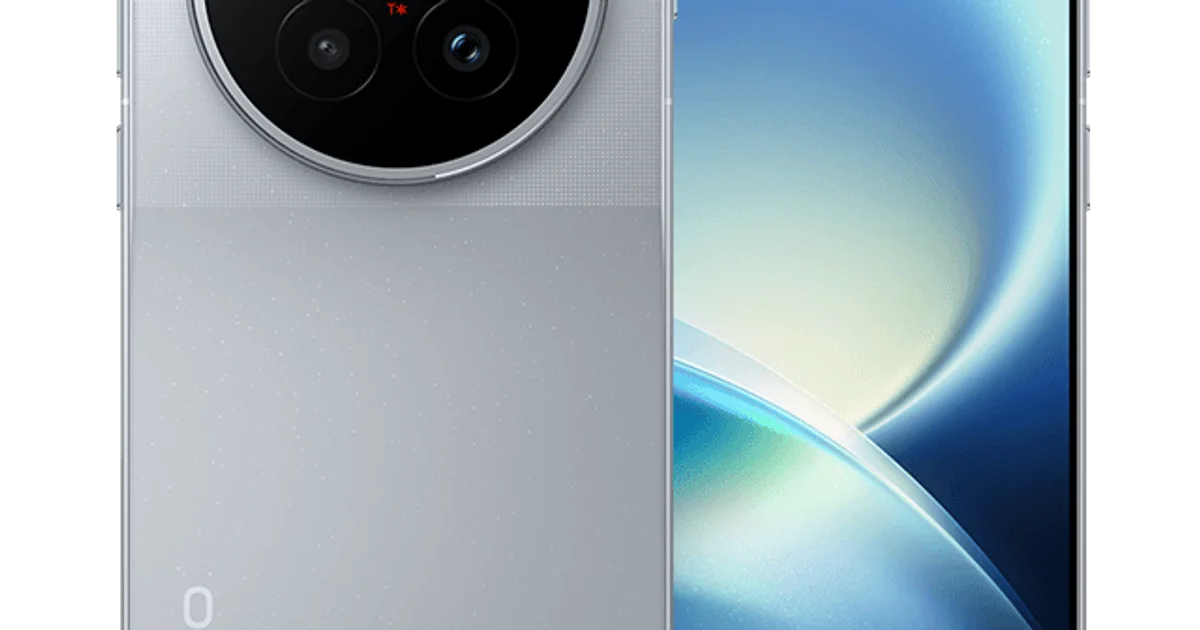
Video is now the center of the X500 strategy
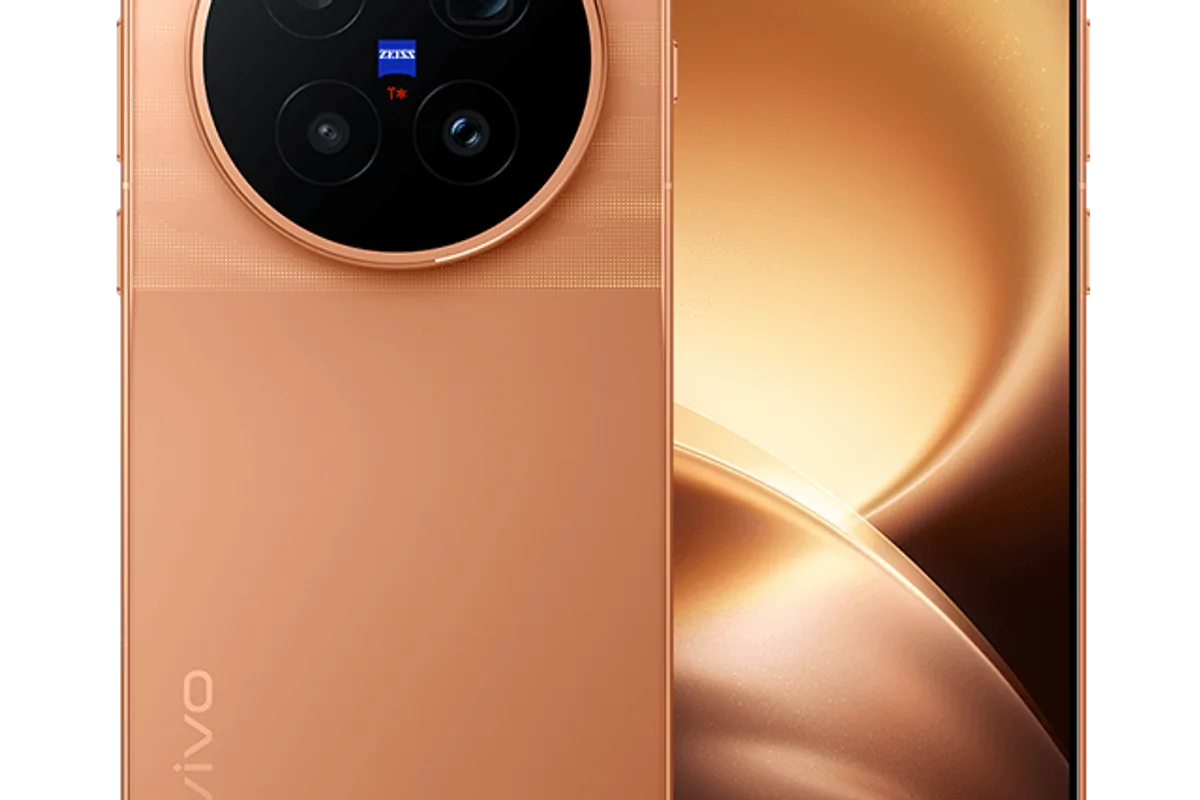
vivo officially unveiled the X500 family in Shanghai on September 21. Three phones make up the lineup, with X500 Pro Max carrying the most ambitious camera hardware.
The company is explicitly shifting the X series from a photography-first product toward a broader moving-image platform.
Its new BlueImage Dynamic Imaging Stack combines sensor technology, dedicated processing and computational imaging as one pipeline.
X500 Pro Max also pairs MediaTek's main chipset with vivo's own V3+ and VS1 imaging processors.
4K at 240fps creates serious slow motion
The headline video mode records 4K at 240 frames per second.
That footage can be slowed four times on a 60fps timeline or roughly ten times in a 24fps project while retaining 4K resolution.
Fast sport, dance, water, animals and other brief movements are the obvious use cases.
The workload is substantial. Reading 240 4K frames every second, processing them and writing the resulting stream to storage places pressure on the sensor, imaging pipeline, encoder and thermal system at the same time.
MediaTek's 2nm chip is part of the camera story
X500 Pro Max is powered by the Dimensity 9600 Pro, manufactured on a 2nm process.
Its CPU configuration includes two cores at up to 4.55GHz, three at 4.35GHz and another three at 3.1GHz.
vivo combines that silicon with its dedicated imaging processors rather than asking the application processor to perform every camera task alone.
That matters for computational video, where autofocus, stabilization, HDR processing and encoding all need to happen continuously rather than for one still photograph.
Thermal endurance will be the meaningful test. A spectacular 240fps mode is far more useful if it remains available through a real shooting session.
The main sensor carries a claimed 17EV dynamic range
The 50MP main camera uses vivo's new BlueImage Optic 900 sensor platform, widely identified with Sony's new Lytia L910 architecture.
LOFIC technology is used to increase the amount of highlight information the sensor can hold before clipping.
vivo claims a real 17EV dynamic range.
The practical targets are difficult scenes containing bright lights and deep shadows at once: backlit faces, concerts, sunsets and illuminated city streets.
Seventeen stops is still a vendor figure. Meaningful comparisons with another phone or cinema camera require equivalent measurement methods.
10-bit Log is aimed at footage that will be graded later
The phone introduces a new vivo LOG profile with 10-bit recording.
Rather than baking strong contrast and color into the file, Log preserves a flatter image with more room for later grading.
That makes the mode useful for creators matching multiple cameras or building a specific look during post-production.
For quick capture and immediate sharing, vivo's automated cinematic modes remain the easier option.
8K remains available too
X500 Pro Max also records video up to 8K.
vivo specifically promotes an 8K Native Live feature for high-resolution animated captures.
The additional resolution can also provide room for cropping when a final project is delivered in 4K.
It comes with higher storage, processing and thermal costs, so maximum resolution will not automatically be the best practical mode for every shoot.
A 200MP ZEISS telephoto remains the other major camera
The periscope telephoto uses a 200MP ZEISS APO sensor and offers 3.5x optical zoom.
Its native field of view is roughly equivalent to an 85mm lens, making it particularly useful for portraits and compressed perspectives.
The lens has an f/2.67 aperture and optical image stabilization.
vivo promotes the overall stabilized camera system at up to a CIPA 7.0 level, increasingly important as focal lengths become longer.
External optics take the phone to a 400mm equivalent
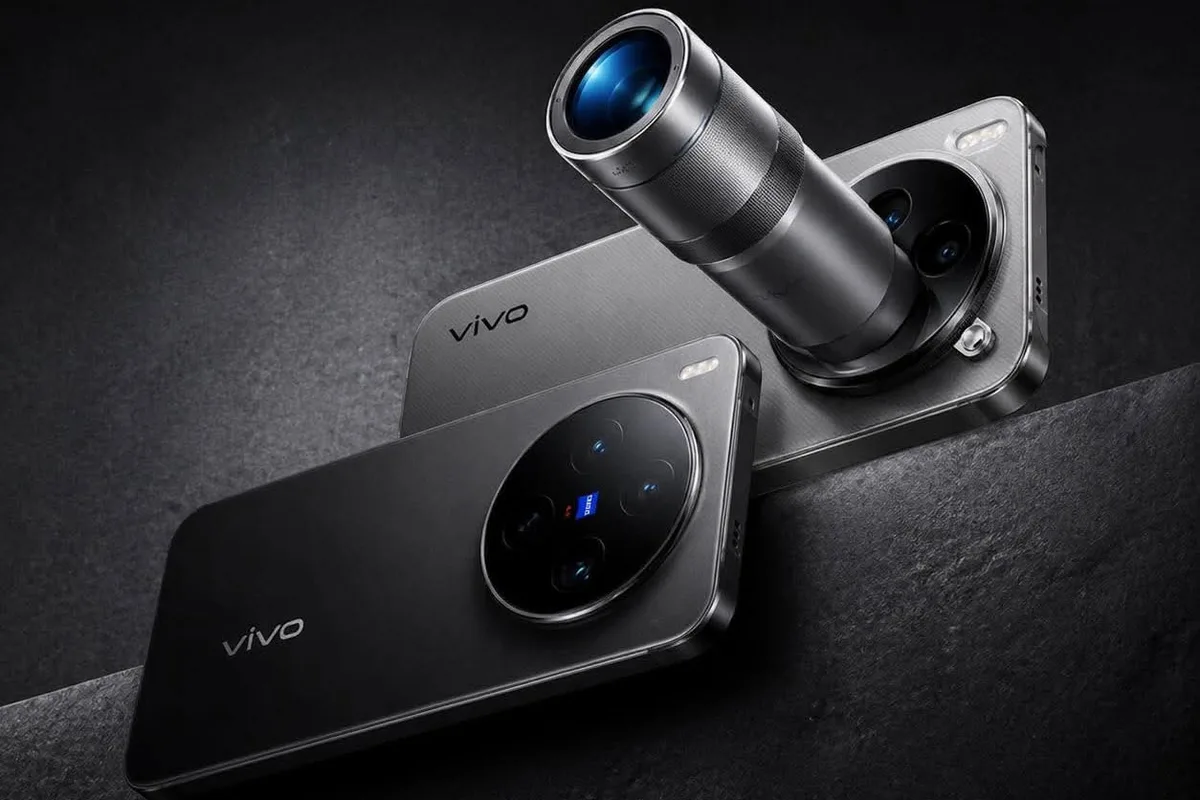
vivo continues to treat external teleconverters as part of the phone's camera ecosystem.
The ZEISS Teleconverter G2 reaches a 200mm-equivalent view, while the G2 Ultra option extends that to 400mm.
A 400mm field of view normally belongs to sport, wildlife and stage photography.
The obvious compromise is size. Adding a case and real optical element removes much of the phone's pocket-friendly simplicity, but it offers reach that computational zoom alone cannot reproduce in the same way.
The rear camera trio is 50MP, 200MP and 50MP
All three rear cameras support autofocus.
The 50MP main camera uses an f/1.57 lens, the 200MP telephoto is f/2.67 and the 50MP ultrawide is f/2.0.
Both the main and telephoto cameras use optical stabilization.
The front camera is also a 50MP unit with an f/2.0 aperture.
There is no obvious low-resolution filler camera in the flagship array.
The 2K display runs from 1Hz to 144Hz
The phone uses a flat 6.85-inch AMOLED display based around BOE's latest Q11 generation.
Resolution is 3168 by 1440 pixels, with LTPO refresh scaling between 1Hz and 144Hz.
vivo markets it as a ZEISS Master Color Display, with Dolby Vision and HDR10+ support.
The 144Hz ceiling is not a camera feature, but it rounds out the device's flagship gaming and interface credentials.
An 8,000mAh battery fits into an 8.12mm chassis
Battery capacity reaches 8,000mAh, or 29.68Wh typical energy.
vivo uses its fifth-generation silicon-enhanced anode technology to increase energy density.
Wired charging reaches 90W and wireless charging 40W.
Depending on finish, the phone measures 7.95mm or 8.12mm thick and weighs between 225g and 229g.
It is still a heavy phone, but the relationship between thickness and an 8,000mAh battery would have looked extraordinary only a few product generations ago.
The highest-storage versions add satellite messaging
Storage reaches 1TB of UFS 4.1, paired with up to 16GB of LPDDR5X Ultra memory.
Selected Chinese 1TB variants add BeiDou satellite messaging, subject to local operator requirements.
Connectivity also includes Wi-Fi 7, Bluetooth 5.4, USB 3.2 with DisplayPort output and higher-quality Bluetooth audio codecs including LDAC and LHDC 5.0.
OriginOS 7 is based on Android 17.
Chinese pricing starts at CNY 6,999
The entry configuration combines 12GB of RAM and 256GB of storage for CNY 6,999.
A 12GB/512GB model costs CNY 7,999, while 16GB/512GB reaches CNY 8,499.
Satellite-enabled 1TB variants rise to CNY 8,999 and CNY 9,499 depending on memory configuration.
A 16GB/1TB Creator Kit costs CNY 12,999 and bundles additional imaging hardware.
Chinese retail sales begin September 24.
International details still need to be completed
For now, the full pricing and configuration list applies to China.
vivo is preparing availability outside its home market, and several Asian regions have already begun promoting the X500 family.
Exact European models, accessory availability and retail prices have not yet been finalized publicly for every territory.
That matters because previous X-series flagships have not always received identical distribution around the world.
4K/240 is impressive only if it survives real shooting
X500 Pro Max has no shortage of headline numbers: 17EV, 200MP, 400mm, 4K/240 and 8,000mAh.
The meaningful tests will be much less glamorous.
How long can 240fps recording run before thermal limits intervene? How much light does the mode need? Does the Log profile match dedicated cameras cleanly? Can autofocus hold a fast subject at a 400mm-equivalent field of view?
vivo now has enough hardware to describe the X500 Pro Max as a serious camera tool. The next job is proving that those camera features behave like tools rather than specification-sheet demonstrations.