
 By Tsuky
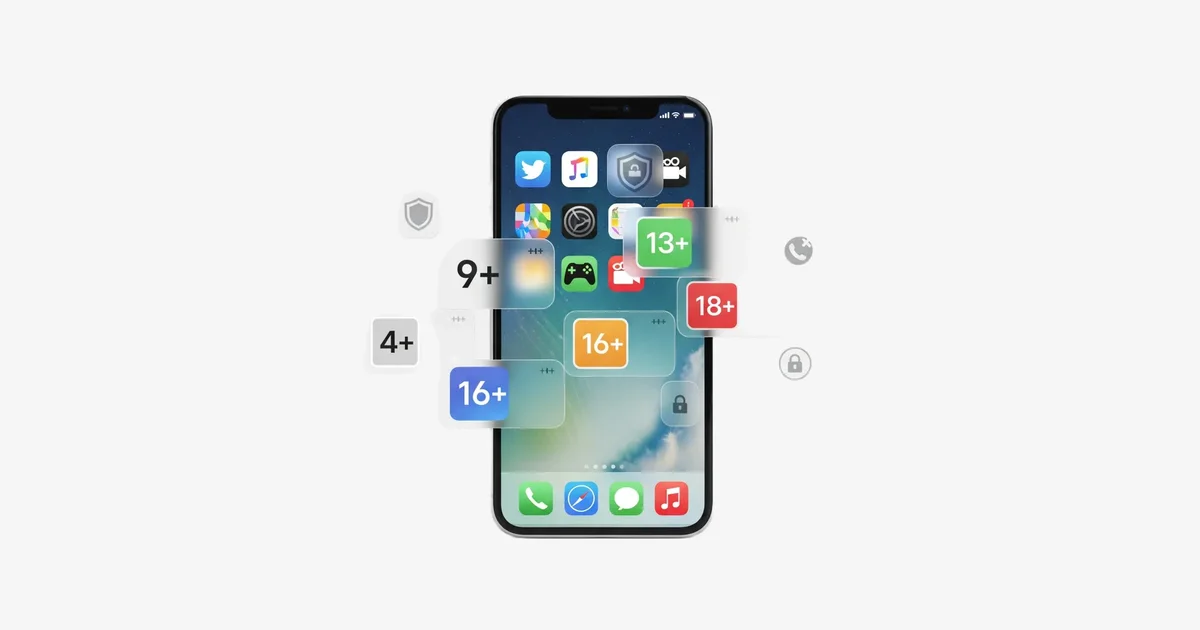
The new policy is not limited to applications explicitly marketed as dating services. An AI chatbot, entertainment platform or social application may include features that allow users to form romantic relationships with virtual characters.
Apple now wants those capabilities reflected in the application's age rating, regardless of the broader product category in which the developer places it.
The November announcement introduces two descriptors in the App Store Connect age-rating questionnaire: Dating and Relationships, and Shared Location.
The first covers real-person dating as well as interactions with a virtual companion involving romantic or sexual content. Any app containing the relevant features receives a minimum 18+ rating.
Shared Location operates differently. Developers must disclose when their apps share a user's real-world location with another person or group, but the feature does not automatically produce an adult-only classification in every region.
The policy is an age-rating and disclosure change. It should not be described as an immediate worldwide ban on all AI companion applications.
Virtual companions become part of the dating category
Mainstream dating services commonly establish their own minimum age requirements. Apple's new policy ensures that qualifying dating functionality is also reflected in the App Store's classification system.
Virtual companions present a more complicated problem. Some applications allow users to create characters, develop fictional relationships and participate in conversations that can become romantic or sexual.
Services such as Character.AI and Replika illustrate the broader market for conversational companions, although their functions and content policies differ.
Apple has not published a definitive list identifying which individual services will receive new ratings. The classification depends on the features offered by each application and the information supplied through the rating process.
The official wording is also broader than a specific category of AI models. Apple refers to virtual companions, focusing on the nature of the interaction rather than requiring a particular generative technology.
An educational assistant or productivity chatbot does not automatically qualify simply because it uses artificial intelligence. The relevant distinction is whether the app enables dating or qualifying romantic or sexual interactions.
This places responsibility on developers to evaluate not only their primary products but also optional features and secondary experiences.
Two deadlines define the implementation schedule
The first date is November 16, 2026. Apple will introduce the additional content descriptors into the App Store Connect questionnaire used to determine age ratings.
Developers submitting updates or changing their age-rating information will need to provide the new declarations.
The second deadline is January 12, 2027. By then, all applications must have completed the required declarations, including apps that have not otherwise been updated during the transition period.
This is not a policy that instantly reclassifies every potentially affected application on the date of the announcement.
Developers must review the functionality of their apps, supply the appropriate information and complete the process within Apple's stated timetable.
Applications that combine several experiences may require particular attention. A service whose primary purpose is messaging or entertainment might also enable dating, virtual romance or real-world location sharing.
The new descriptors are designed to capture those capabilities directly.
An 18+ label is not the same as universal age verification
Apple already uses age ratings to support parental restrictions across its devices and App Store.
The current classification system includes 4+, 9+, 13+, 16+ and 18+. These categories allow parents and guardians to apply limits through supported family and content-restriction features.
When a device is configured to restrict content based on age, an 18+ application may be hidden or blocked. Additional age-assurance steps can apply depending on the circumstances and applicable regional requirements.
However, the rating alone does not prove that every underage user is technically incapable of accessing an application.
Access depends on the operating system, configured restrictions, account settings and available verification mechanisms.
Apple's announcement does not claim to have developed a universal method that independently verifies every user's actual age under all conditions.
This distinction is particularly important when describing the changes as measures intended to protect minors. Age classifications support protective controls, but their effectiveness depends on how those controls operate in practice.
Location sharing receives separate treatment
The Shared Location descriptor applies to apps that share a user's real-world location with another person or group.
This can cover a wide range of products, including social applications and services that help family members coordinate their activities.
Apple does not impose a universal 18+ minimum merely because an app provides location sharing.
Instead, the resulting age classification may vary under local regulations.
Brazil provides a specific example. Its regional requirements generally assign an A16 rating to qualifying location-sharing apps, while dating and relationship functionality falls under an A18 rating.
Developers offering certain family-oriented location features can request an alternative official rating from Brazil's Ministry of Justice and Public Security.
Apple says qualifying developers must obtain the relevant government determination before the alternative rating can be reflected in the Brazilian App Store.
The distinction prevents location sharing from being treated as inherently equivalent to romantic or sexual interaction.
It also illustrates why app ratings may differ from one country to another, even when the underlying application offers the same features.
Generative AI creates unusual classification problems
Traditional content classification often begins with material that can be inspected before publication. Conversational AI systems introduce a different challenge because some content is generated dynamically during use.
Two users interacting with the same virtual character may receive very different responses. One conversation could remain a harmless fictional exchange, while another might develop into a romantic or sexual interaction.
Developers therefore need to understand what their applications actually enable, including secondary modes and the behavior of their content filters.
Apple's November announcement does not provide a new comprehensive technical audit process for evaluating every possible chatbot conversation.
Instead, the announced mechanism begins with developer declarations about application functionality.
This leaves questions about borderline behavior, generated responses that diverge from intended product restrictions, and the reliability of filters used to prevent certain content.
A system designed to block romantic interaction might occasionally produce an unexpected response. Apple has not specified in the announcement exactly how such cases would be evaluated for classification purposes.
An 18+ rating can make the nature of an app clearer to users and parents. It does not establish that all content produced by the application is reliable, appropriate or free from harmful interactions.
A platform policy with consequences beyond the App Store listing
The latest requirements extend a series of age-rating and parental-control changes introduced by Apple.
In 2025, the company expanded its classification system with more granular categories for teenagers. Its 2026 software releases added further tools for child accounts, content restrictions and parental oversight.
The new disclosures continue that approach by connecting specific app capabilities to age suitability.
For developers, the immediate work involves evaluating features, updating declarations and ensuring that age ratings accurately reflect what their products allow.
The effect on application distribution may vary considerably. Some services already carry an 18+ rating, while others may need to change how they describe or classify their features.
Apple has not disclosed how many applications will require a rating adjustment or provided an estimate of the resulting effect on downloads.
The distinction between App Store policy and legislation is also important. These are distribution requirements established by Apple, not a new worldwide law automatically covering every website, competing application store or AI service.
Developers serving multiple platforms will therefore need to consider Apple's requirements alongside other platform policies and local laws.
For users, the visible change will be clearer classification of dating and romantic companion capabilities. The more consequential technical question is how those classifications interact with parental controls and access restrictions.
Apple's confirmed schedule begins with the new questionnaire on November 16, 2026. The final deadline for all app declarations is January 12, 2027.