
 By Adri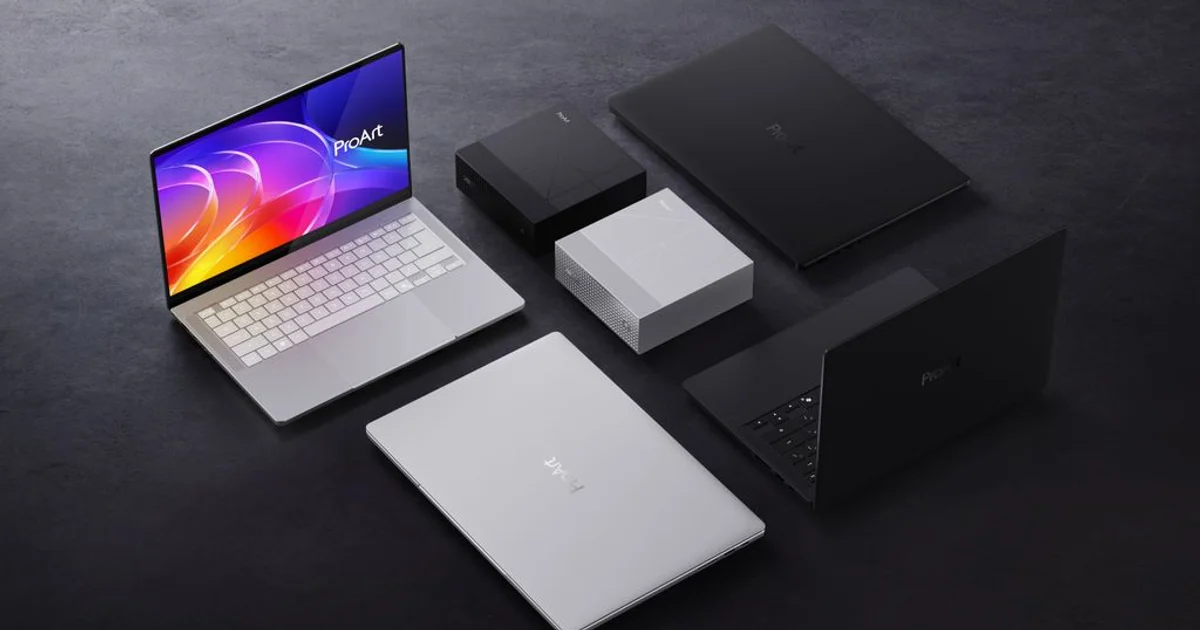
RTX Spark is now taking recognizable laptop form
ASUS has brought the ProArt P16 and P14 to Berlin alongside its compact GR1X desktop. Lenovo followed on September 3 with detailed specifications for the Yoga Pro 9n and a new Yoga 9n 2-in-1.
They all use NVIDIA RTX Spark rather than pairing an Intel or AMD processor with a separate GeForce laptop GPU.
At the top of the platform, NVIDIA combines a 20-core Grace Arm CPU with a 6,144-core Blackwell RTX GPU through NVLink-C2C.
One memory pool is the architectural headline
RTX Spark supports up to 128GB of unified LPDDR5X memory. CPU and GPU can work from that shared capacity rather than copying data between ordinary system RAM and a smaller dedicated graphics-memory pool.
Lenovo specifies LPDDR5X-9400 on a 256-bit interface for its Yoga Pro 9n.
That architecture does not magically give games 128GB of dedicated VRAM. The same memory serves the entire system. It is much more relevant when an AI model, a large dataset or a 3D scene would otherwise exceed a conventional laptop GPU's local memory capacity.
NVIDIA positions RTX Spark for local models up to roughly 120 billion parameters in supported workflows. ASUS also cites 90GB-plus 3D scenes and local 4K AI video generation.
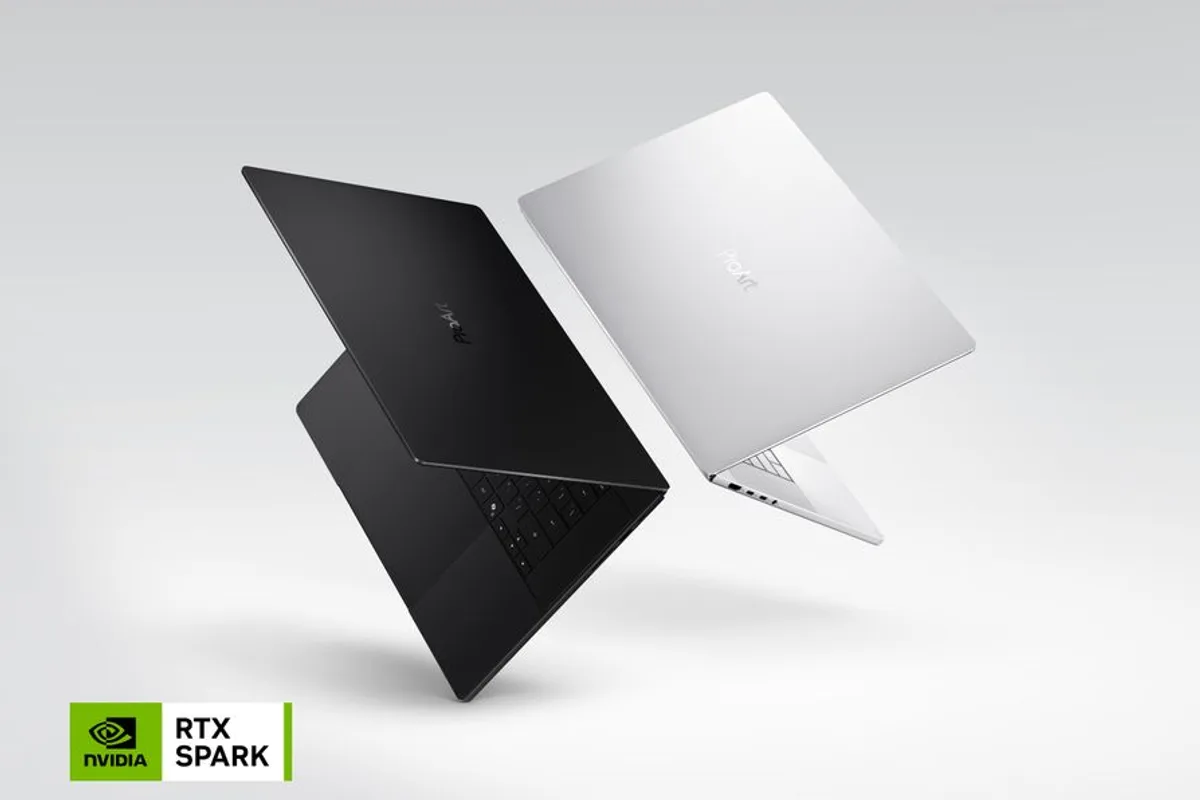
ASUS is packaging it into surprisingly thin ProArt systems
The ProArt P16 is 12.9mm thin at its slimmest point and weighs 1.77kg. It carries a 99Wh battery.
Its top Lumina Pro OLED option reaches 3840 × 2400 at 120Hz and up to 1,600 nits of HDR peak brightness using Tandem OLED technology.
The smaller ProArt P14 weighs 1.48kg, is 13.9mm thick and uses a 90Wh battery. ASUS offers displays up to 3K on that model.
A third design, the ProArt GR1X, puts RTX Spark into a 150 × 150 × 51mm desktop designed for sustained always-on AI workloads. ASUS equips it with 10Gb Ethernet, Wi-Fi 7 and support for as many as four 4K displays.
Lenovo's Yoga Pro 9n looks suspiciously like a workstation
Lenovo gives the 15.3-inch Yoga Pro 9n up to 128GB of unified memory and up to 4TB of storage across two SSD slots.
Its PureSight Pro OLED panel runs at 2560 × 1600 with a 48-165Hz VRR range. Lenovo rates HDR peak brightness at 1,100 nits and factory color accuracy below Delta E 0.5.
The aluminum machine starts at 1.65kg and 16.7mm thick, with a 92.5Wh battery and a 140W adapter.
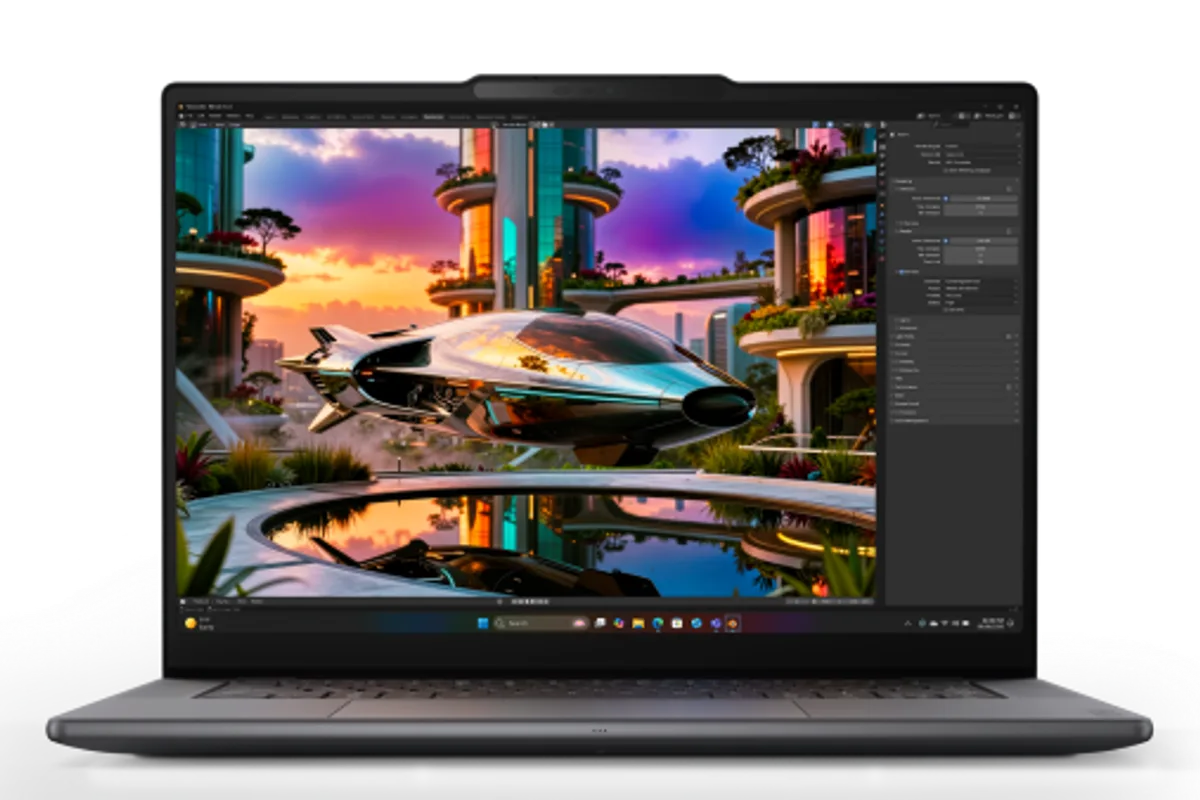
Two USB4 ports, HDMI 2.1, two USB-A connections, UHS-II SD and a headphone jack make the port selection look more like a creator workstation than a minimal consumer ultraportable.
The convertible trades half the memory for flexibility
Yoga 9n 2-in-1 uses the same RTX Spark family but tops out at 64GB of unified memory. Its 16-inch OLED display runs at 2880 × 1800 with a 30-120Hz variable refresh range.
The 360-degree chassis weighs 1.94kg and carries a 99.9Wh battery.
Lenovo lets the Yoga Pen Gen 2 work on both the touchscreen and the haptic Force Pad, making the convertible unusually focused on pen-driven creative workflows.
Grace also means Windows on Arm
The CPU side of RTX Spark is Arm-based. These systems therefore join the growing Windows on Arm ecosystem rather than behaving exactly like x86 creator laptops built around Core or Ryzen processors.
NVIDIA has CUDA running natively on Spark and lists its mainstream RTX stack as supported, including ray tracing, DLSS 5, Reflex 2, G-SYNC, Studio Drivers and Game Ready Drivers.
Application compatibility still deserves attention. Native Arm software can target the platform directly, while some established x86 tools, plugins and development dependencies may rely on Windows compatibility layers or require native ports.
A petaflop does not tell you gaming performance
NVIDIA's one-petaflop headline refers to FP4 AI tensor performance with the relevant acceleration features. It should not be compared directly with FP32 GPU figures.
Mobile RTX Spark variants operate within a 45-80W TDP range. Lenovo lists up to 80W for the Yoga Pro 9n.
That power envelope alone makes the design philosophy clear. Spark is not a GeForce RTX 5090 Laptop with an enormous memory upgrade. It is a much more integrated processor built around efficiency, shared memory and local AI while retaining NVIDIA's graphics stack.
October is close, pricing is not
NVIDIA says RTX Spark Windows PCs begin arriving in October 2026.
Lenovo has not announced final pricing or a precise availability date for either of its new Spark-powered Yoga systems. ASUS also has not published final IFA pricing for the new ProArt P16 and P14.
Until those numbers arrive, the architecture is easier to judge than the value proposition.