
 By Tsuky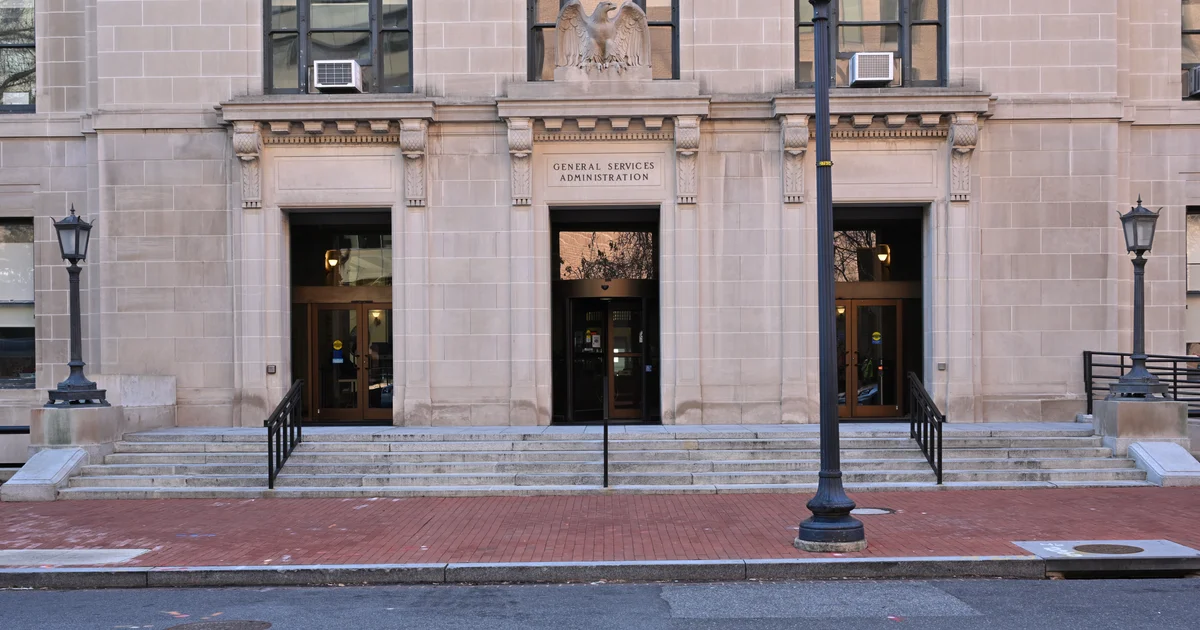
The fixed per-user fee goes to zero
OpenAI and the General Services Administration announced the new OneGov agreement on September 10.
It is scheduled to take effect October 1, 2026 and run through December 31, 2028.
That creates a 27-month pricing window.
The standard $15-per-user monthly license fee attached to the eligible government offering is reduced to zero.
Model consumption is still billed, with eligible usage discounted by 50%.
This is not two years of unlimited free ChatGPT
The distinction matters.
OpenAI is removing the platform-access charge rather than giving agencies unlimited compute.
GSA explicitly describes the new arrangement as consumption-based pricing.
There are no minimum orders, platform-access fees or required spending commitments.
An organization pays for what it actually uses.
It follows the earlier $1 federal offer
The US government already had an unusually aggressive OpenAI promotion.
Eligible executive-branch federal agencies could obtain ChatGPT Enterprise for a nominal $1 under the previous OneGov arrangement.
That offer runs through the end of September 2026.
The new agreement replaces the promotional-seat model with a longer consumption model: access itself becomes free while usage becomes the center of the bill.
States, cities and tribal governments are now included
The eligibility pool expands substantially.
The agreement covers federal organizations across the executive, legislative and judicial branches, as well as eligible state, local and tribal governments.
OpenAI says that makes approximately 23 million US public-sector workers potentially eligible.
That number describes the reachable workforce, not 23 million guaranteed users.
More than one million government workers already have access
OpenAI says more than one million government employees can already access ChatGPT through existing agreements.
That does not mean one million people are active daily users.
It is an access figure rather than an engagement figure.
The new agreement is designed to turn those promotional deployments into a more durable procurement structure.
GSA is moving from trials to actual metered consumption
Near-free introductory pricing is useful when agencies are still experimenting.
It becomes less useful once AI starts appearing inside everyday administrative workflows.
GSA says agencies increasingly want the ability to consume new technology without making a large upfront commitment.
Usage-based billing lets a small local organization and a major federal department buy through the same framework without committing to the same volume.
FedRAMP-authorized environments are included
GSA says discounted token-based usage can include ChatGPT models delivered through FedRAMP-authorized environments.
FedRAMP provides a standardized federal framework for assessing and authorizing cloud services.
That does not make every category of government information suitable for every AI deployment.
Individual agencies still have to follow their own rules around sensitive data, access, retention and mission requirements.
OpenAI says Enterprise data is not used for model training
OpenAI states that business data sent through ChatGPT Enterprise, including inputs and outputs, is not used to train or improve its models.
That separation matters in government environments where prompts can contain operational or administrative information.
It does not eliminate internal governance problems.
An employee can still paste information into an approved tool that policy did not permit them to share with that service.
Vendor-side protections do not replace correct data handling by the agency itself.
GPT-6 Astra is part of the broader government pitch
OpenAI explicitly mentions GPT-6 Astra when describing the tools public servants can access through its government offerings.
That makes the agreement more significant than simply extending an older enterprise chatbot.
Agencies can potentially obtain current frontier models through the same consumption-based purchasing structure.
Exact availability still depends on authorization level, deployment type and procurement path.
Cyber defenders get a separate discounted tier
The agreement also expands OpenAI's Daybreak program for public-sector cyber defense.
Every verified government organization can be approved for Daybreak Blue at 50% below standard commercial pricing.
OpenAI positions Blue for work such as vulnerability research, malware analysis and defensive security-tool development.
Training and enablement resources are part of the program.
Daybreak Red is not included in that discount
Government cyber teams can also request access to Daybreak Red.
That tier is intended for more advanced work including exploit validation and red teaming.
OpenAI says Red remains available at standard commercial pricing rather than receiving the general Blue discount.
Access is also more controlled because the capabilities are more sensitive.
Washington is not buying 23 million licenses in one transaction
The agreement should not be interpreted as one giant centralized purchase for every public employee.
Each participating organization places and funds its own order.
The roughly 23 million workers cited by OpenAI are the addressable public-sector population.
They are not contracted paying users.
Organizations have multiple procurement paths
The offering can be accessed directly, through resellers and through supported cloud marketplaces.
Federal agencies will also be able to purchase through GSA's Multiple Award Schedule once the agreement takes effect.
That procurement layer is important.
A technically capable AI service is not very useful to a government organization if it cannot be purchased through an approved contractual framework.
OpenAI is adding spending controls because usage can scale quickly
Consumption pricing creates a different budget problem from seat licensing.
A successful deployment can become expensive quickly when thousands of employees or automated workflows begin generating requests.
OpenAI says it will provide usage estimates, spending controls, FinOps guidance, onboarding and buyer guidance.
Webinars and an expanded Government Academy are also included.
The question shifts from whether an employee has a license to how much their workflow costs at scale.
A 50% discount can still produce a very large bill
The percentage alone says nothing about total spending.
Half the price of a small workload remains a small saving.
Half the price of billions of tokens or heavy reasoning workloads can represent substantial public expenditure.
The agreement lowers adoption costs while placing more responsibility on agencies to understand actual usage.
OpenAI is one supplier inside a broader OneGov strategy
GSA has negotiated government AI offers with multiple vendors rather than relying on a single provider.
Its procurement catalog has included offerings associated with companies such as Google, Perplexity, xAI and other technology suppliers.
The OpenAI agreement is therefore part of a broader effort to negotiate governmentwide terms while preserving some vendor choice.
Cheap entry can still create expensive lock-in
Aggressive discounts make initial adoption easier.
They can also encourage agencies to build workflows, internal documentation, staff expertise and integrations around one vendor's models.
By the end of 27 months, changing provider may cost more than the simple difference between two token prices.
The meaningful lock-in risk is likely to sit in integrations and organizational habits rather than the monthly platform fee.
The pricing window ends December 31, 2028
These terms are not permanent.
The new agreement begins October 1, 2026 and ends December 31, 2028.
Government organizations therefore have a little over two years to experiment, integrate and potentially operationalize AI under this pricing structure.
The announcement does not establish what the next pricing model will look like after that date.
The biggest change is that AI becomes a metered utility
The first phase of enterprise chatbot adoption looked like conventional software licensing: a price per person, per month.
OneGov 2.0 looks more like cloud infrastructure.
Access costs nothing. Compute consumption costs money.
That accounting difference can change how agencies deploy AI.
An occasional user no longer needs an expensive idle seat, but every additional automated workflow becomes a measurable operating cost.
For US government IT departments, ChatGPT is moving away from being another software license and toward a familiar cloud problem: opening access is easy, while the difficult part is understanding what everyone does with it once the meter starts running.