
 By Adri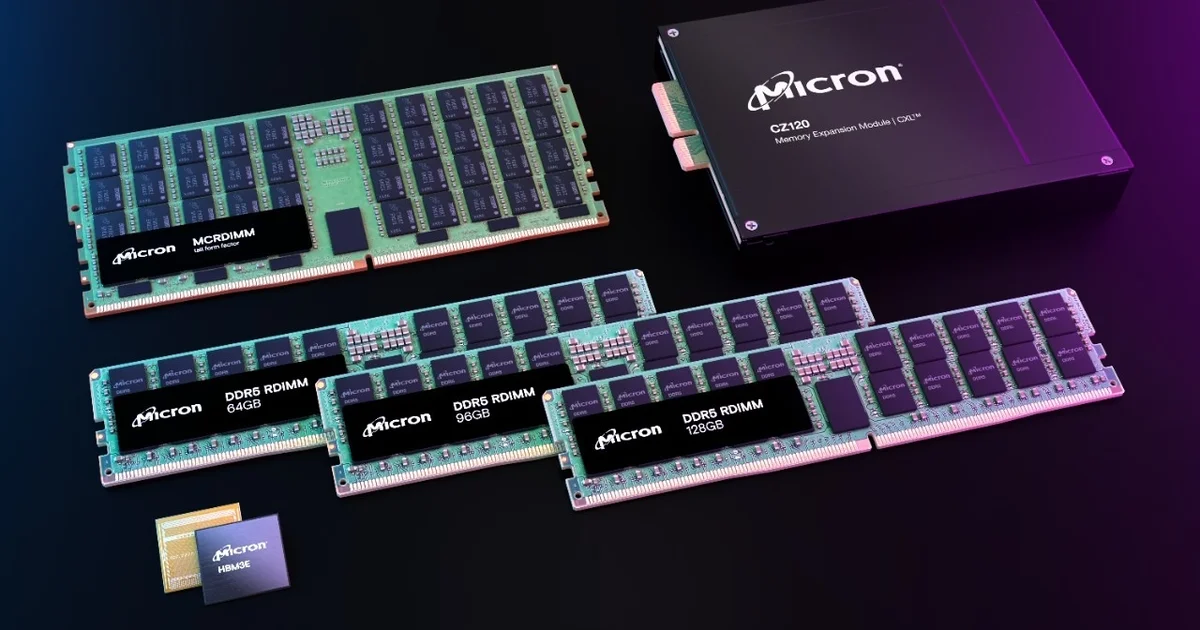
TrendForce still describes the DRAM market as extremely tight in September 2026. Conventional contract prices are expected to increase another 13% to 18% quarter over quarter in Q3.
That sounds almost moderate only because the first half of the year was so extreme. TrendForce had projected conventional DRAM contract increases of 58% to 63% in Q2.
Slower inflation does not mean memory is becoming cheap. It means prices are rising less aggressively from an already very high base.
Industry revenue shows the effect. TrendForce estimates total DRAM revenue climbed 59.5% sequentially in Q2 to nearly $154.73 billion.
Servers are not just buying more memory — they are buying the most valuable memory
AI creates pressure through several parts of the system at once.
HBM attached to accelerators is the obvious one. AI servers also contain host CPUs and large amounts of conventional DDR5, increasingly in high-capacity RDIMM configurations.
TrendForce estimates server DRAM revenue reached $75.58 billion in Q2, up 53% sequentially. Average contract prices increased by roughly 53% to 58% during the quarter.
DDR5 now represents more than 90% of server DRAM shipments according to the research firm.
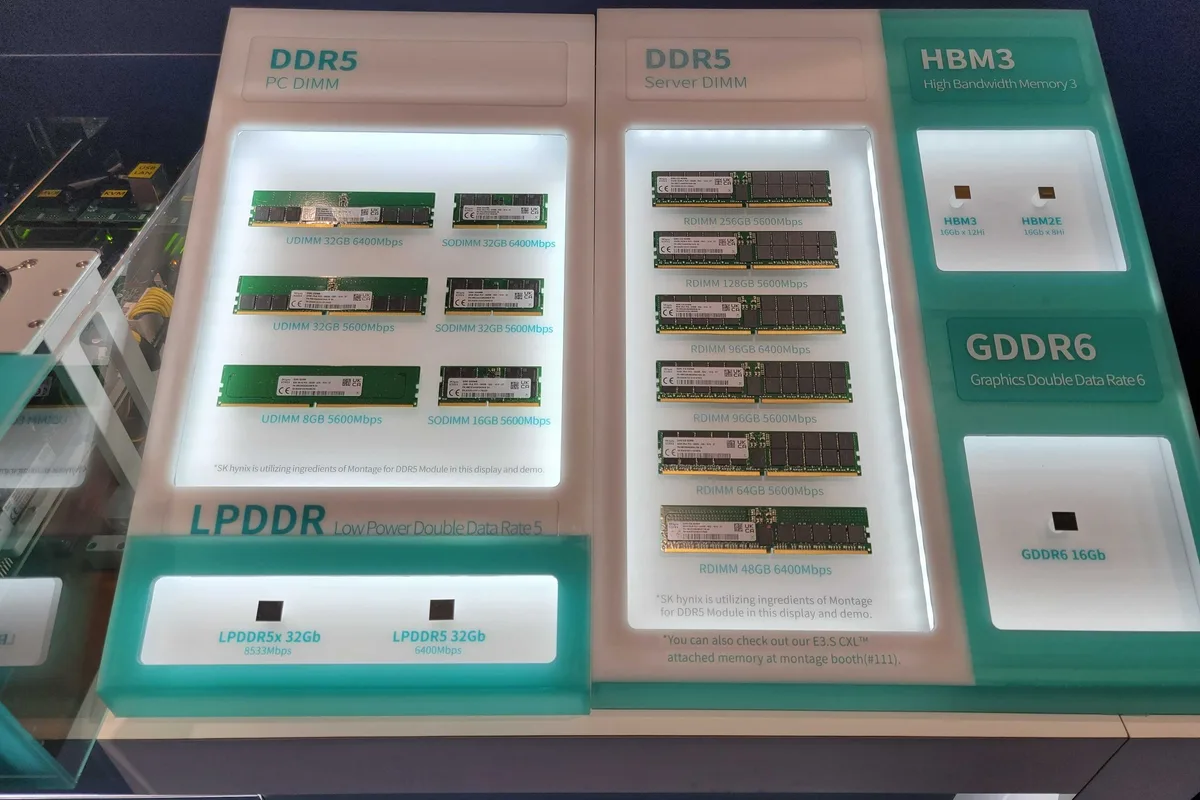
Cloud providers increasingly favor large-capacity RDIMMs to raise memory per socket. Agentic AI adds demand from the orchestration, databases, caches and data-processing systems surrounding the accelerators themselves.
For Samsung, SK Hynix and Micron, that changes the opportunity cost of every unit of manufacturing capacity. A wafer that can feed a much more valuable server product makes low-margin consumer memory relatively less attractive.
HBM and DDR5 do not share a finished production line, but both begin with DRAM manufacturing
One common simplification needs correcting. A DDR5 DIMM cannot simply be turned into HBM by changing the package.
HBM uses specialized dies stacked vertically through TSVs and assembled through advanced packaging. New generations also use increasingly sophisticated base dies.
The competition happens farther upstream.
Memory manufacturers still have to allocate DRAM wafer capacity, process-node migrations, engineering teams and capital expenditure between conventional memory and high-bandwidth products.
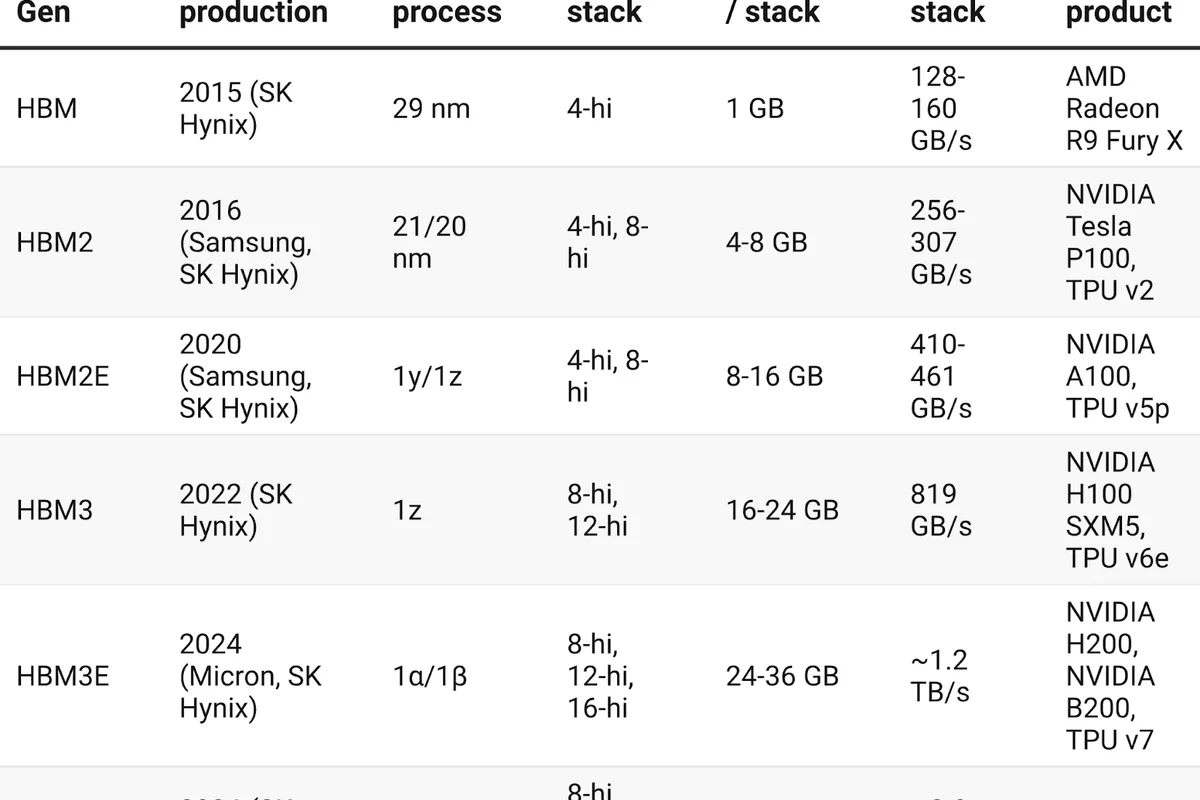
HBM also consumes substantial silicon for every finished stack. Modern products combine eight, twelve or sixteen DRAM dies before packaging yield and base-die requirements are even considered.
Even when the production flows are not perfectly interchangeable, rapidly increasing HBM output affects the industrial capacity and investment available elsewhere.
In a strange twist, server DDR5 can now be more profitable than HBM
The economics shifted again during 2026.
TrendForce estimated in June that per-wafer revenue from 64GB DDR5 RDIMMs had overtaken HBM during the first quarter.
Conventional DRAM pricing had risen so sharply that some server DDR5 products became more profitable than high-bandwidth memory.
That makes the current shortage harder to reduce to “vendors abandoned DDR5 for HBM.”
Suppliers are prioritizing high-value server memory more broadly: HBM where accelerator demand requires it, and high-capacity RDIMMs when those provide equally compelling economics.
PC and smartphone makers are becoming the customers forced to compromise
TrendForce sees the reverse behavior in consumer markets.
PC and smartphone manufacturers are reducing planned capacities or shifting toward cheaper memory configurations to control bill-of-materials inflation.
The research firm says buyers are increasingly moving toward lower-capacity modules as costs rise.
That eventually slows price inflation, but not because manufacturers suddenly created abundant supply.
It happens because customers hit an affordability ceiling.
A 13% to 18% increase can therefore look like good news for bad reasons
In an ordinary year, a quarterly DRAM increase of 13% to 18% would be extremely aggressive.
In 2026 it looks restrained only against the extraordinary increases that came before it.
The mechanism resembles demand destruction: fewer devices, lower capacities per product, delayed purchases and more conservative procurement.
Price growth is slowing partly because consumer buyers can no longer absorb the previous pace.
The spot market is telling a different story from contract pricing
TrendForce also observed relatively weak DRAM spot-market trading in early September.
That may look incompatible with structural scarcity, but the markets serve different buyers.
Large OEMs and cloud operators secure most of their supply through direct contracts and long-term agreements. Spot transactions capture more opportunistic and short-term demand.
A quiet spot market can therefore coexist with high contract pricing when major buyers already hold allocations and suppliers refuse to lower quotes.
TrendForce actually revised its PC DRAM quarterly pricing expectations upward despite subdued spot activity.
Supplier inventories have almost disappeared as a safety buffer
Inventory is another reason the system has little flexibility.
TrendForce describes supplier stocks as being at historically low levels, with incremental supply primarily directed toward server applications.
That removes the buffer normally used to absorb a sudden demand increase.
When warehouses contain excess inventory, suppliers can satisfy extra orders before new production arrives. When inventory is already near the floor, every additional order becomes an allocation decision.
Hyperscalers are starting to budget memory like core infrastructure
Cloud spending shows how large the shift has become.
TrendForce expects major cloud service providers to increase capital expenditure by about 98% in 2026 and another 50% in 2027.
DRAM and NAND together are projected to represent 47% of CSP capital spending this year and as much as 68% in 2027.
The firm also estimates server DRAM contract pricing could rise by roughly 270% cumulatively across 2026.
At that scale, memory is no longer a secondary component surrounding an AI accelerator. It becomes one of the central cost categories of the data center itself.
The next negotiation is already about HBM4, HBM4E and custom HBM
There is little evidence that the pressure ends quickly.
Suppliers and customers are already negotiating HBM4 allocations for 2027 while HBM4E and custom HBM designs move closer.
Custom variants increasingly shift controller and other logic into the base die, trading additional engineering complexity for better bandwidth, package-area efficiency and accelerator integration.
That also creates new thermal, multi-sourcing and development-cost problems, which means the first major users are likely to be hyperscalers with their own accelerator programs.
For a PC manufacturer buying ordinary DDR5 UDIMMs, the larger message is simple: semiconductor investment continues to orbit the data center.
The price of your DDR5 kit is the final link in a much more expensive chain
A PC user sees a 32GB or 64GB memory kit becoming more expensive.
Behind it sits a market where one hyperscaler can buy tens of thousands of accelerators, every accelerator consumes multiple HBM stacks and the servers surrounding those GPUs can each require hundreds of gigabytes or several terabytes of DDR5.
The same memory manufacturers decide where to send their newest processes, wafers and billions of dollars of capital expenditure.
So the most accurate description is not that AI is stealing RAM from PCs.
It is paying much more to stand at the front of the manufacturing queue.