
 By Adri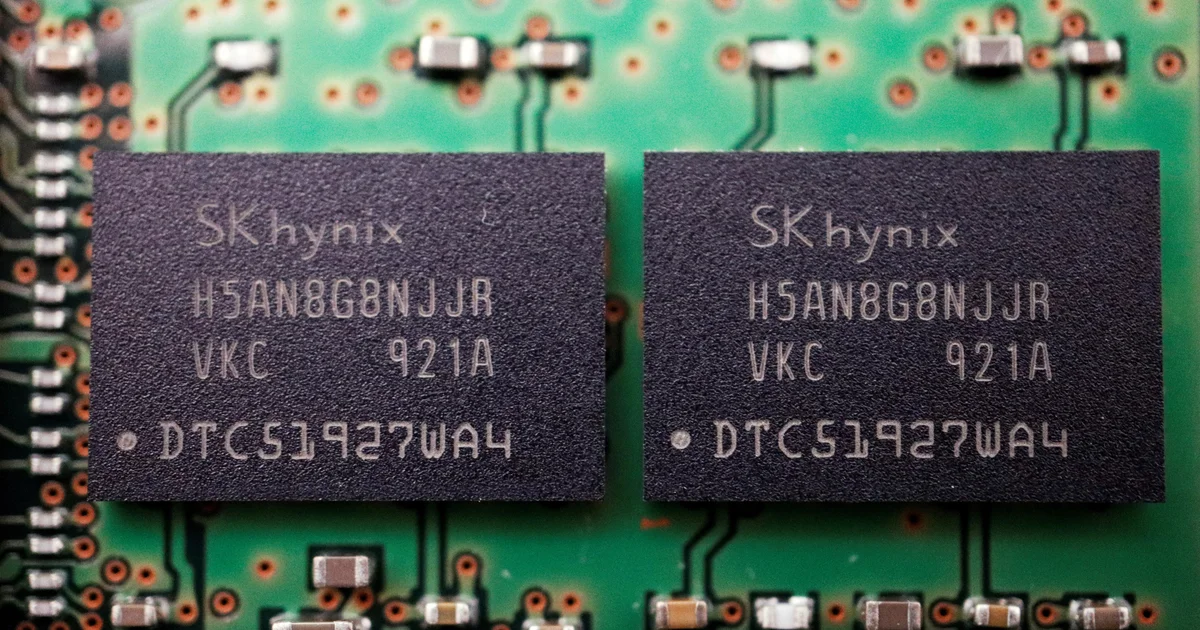
The global memory shortage is refusing to behave like a short commodity cycle. Independent phone and laptop manufacturers interviewed by Reuters are now planning around constrained supply through at least 2027.
SK Hynix CEO Kwak Noh-jung offered an even longer view in July, describing 2027 as potentially the worst year in the industry's history from a supply perspective and saying customer demand could remain above the company's production capacity beyond 2030.
TrendForce's numbers are less dramatic in wording but point in the same direction. It estimates the DRAM sufficiency ratio at roughly minus 1% to minus 2% in 2026 and expects the gap to widen next year.
Price is no longer the only constraint
DRAM contract prices are still rising. TrendForce expects conventional DRAM to increase another 13% to 18% this quarter after an extraordinary 93% to 98% increase in the first quarter.
The slower rate of inflation might suggest that the worst phase has passed. That is not necessarily how smaller buyers experience the market.
Fairphone told Reuters that allocation has become the binding issue. A manufacturer can be willing to pay the market price and still fail to secure enough product if larger customers have already taken the available output.
That changes hardware planning. A normal shortage makes components expensive. An allocation shortage also decides which configurations can physically be manufactured and in what volume.
HBM consumes more than a simple share of the DRAM market
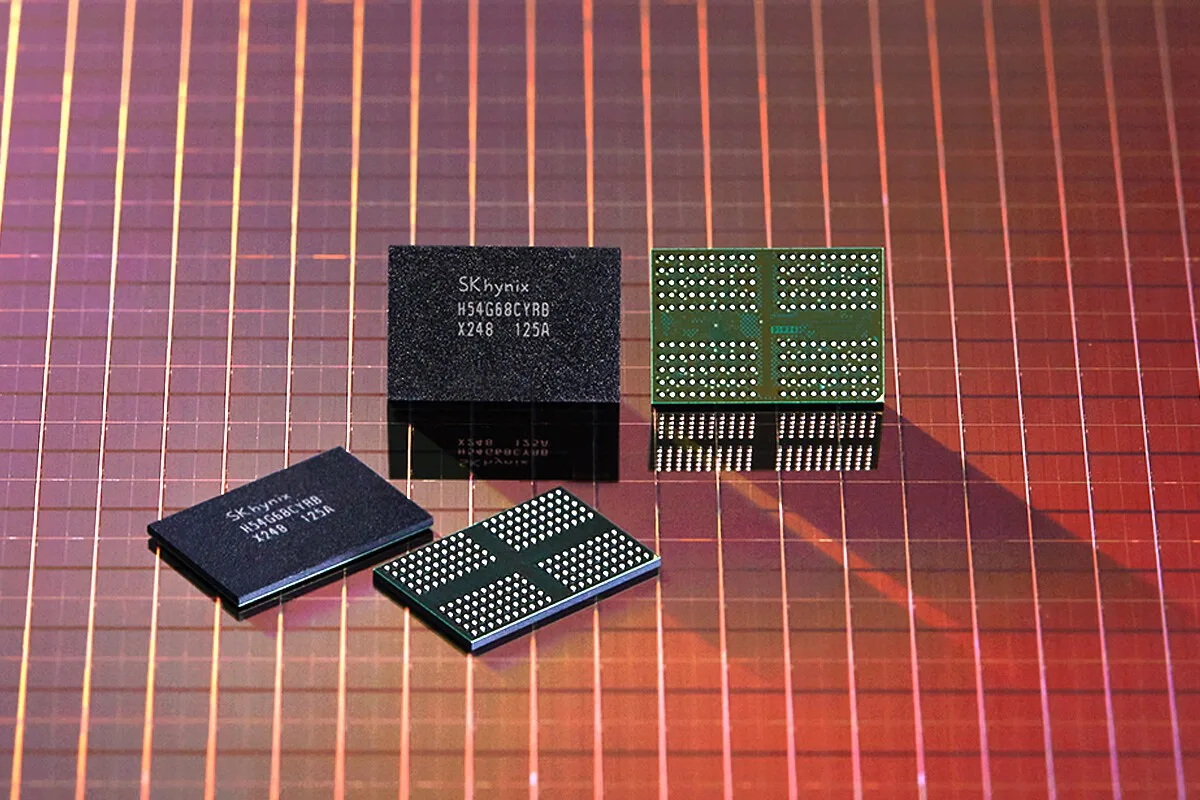
AI infrastructure remains the primary source of pressure. Modern accelerators need large quantities of high-bandwidth memory, while the servers around those accelerators are simultaneously consuming more conventional DDR5.
HBM and desktop DDR5 are not interchangeable products. They do, however, draw from overlapping industrial resources: DRAM wafer capacity, process equipment, engineering investment and capital budgets.
HBM is also expensive in manufacturing capacity. Producing it requires substantially more wafer input than conventional DRAM for a comparable quantity of usable bits, partly because multiple dies have to be fabricated and integrated into stacked packages.
TrendForce therefore warns that increasing HBM wafer starts does not translate proportionally into higher total DRAM bit supply.
AI servers create memory demand on both sides of the accelerator
The HBM surrounding GPUs is only one layer of the problem.
New Intel and AMD server platforms are increasing CPU memory capacity as well. Agentic AI deployments also require systems for data preparation, retrieval, vector databases, inference orchestration and caching.
TrendForce expects global server shipments to grow even faster in 2027 than the 17% year-over-year increase recorded in 2026.
One technology boom is therefore pulling simultaneously on premium HBM and more conventional server DRAM.
New fabs are coming, but semiconductor capacity has a long boot time
Samsung, SK Hynix and Micron are all investing in capacity. None of that means memory suddenly becomes plentiful in January.
TrendForce says construction schedules, equipment installation, qualification and ramping yields mean much of the meaningful new 2027 capacity will not arrive until the second half of the year, with larger production contributions slipping into 2028.
Manufacturers are squeezing existing facilities first through process migrations, higher yields and fewer conversions between product families.
Those changes create more bits. They are not substitutes for bringing another major fabrication plant online.
Framework can tell customers to reuse memory from an old machine
Smaller manufacturers are turning product architecture into a supply-chain tool.
Framework already designed several laptops around replaceable memory. During a shortage, that becomes more than a repairability argument: buyers can move existing modules into a new motherboard rather than purchasing fresh RAM at the current market price.
The company also places non-cancellable orders far in advance without necessarily knowing final pricing, timing or the exact volume it will receive.
That behavior is rational for one company and uncomfortable for the market as a whole. When everyone tries to secure inventory early, advance purchasing can intensify the shortage it is meant to protect against.
Jolla designed two motherboards simply to preserve memory options
Finnish phone maker Jolla took a different approach. It developed two motherboard variants so that production can switch between a combined storage-and-DRAM package and discrete components.
Manufacturers normally avoid adding that kind of complexity for free. Every board variant brings qualification, firmware, sourcing and testing work.
When the originally specified memory package may simply become unavailable, however, an extra board design can cost less than stopping production.
Jolla is also stress-testing samples from every incoming batch to check whether supposedly new chips are actually refurbished components being resold into a tight market.
Memory can approach 60% of the bill of materials in a $400 phone
Fairphone estimates that memory can now account for almost 60% of the component bill on handsets priced around $400.
That pressure hits affordable devices hardest. A premium phone or laptop has more room to absorb another hundred dollars of components than a model whose entire margin may already be narrow.
Counterpoint now forecasts global smartphone shipments falling 13.9% in 2026 to about 1.08 billion units, the steepest annual decline on record in its outlook. Memory costs are a major factor because they can make low-end configurations uneconomical.
Bad news for DRAM does not automatically mean bad news for SSD buyers
The memory market is not uniformly short of everything.
TrendForce expects DRAM to remain constrained in 2027 while NAND Flash could move toward a looser market in the second half as new capacity arrives and consumer-device demand stays weak.
A PC market can therefore experience stubbornly expensive system RAM while SSD pricing begins moving in the opposite direction.
The broad word “memory” hides two supply chains with increasingly different conditions.
AI is not literally stealing your DDR5 stick
It would be too simple to claim that every HBM package replaces one consumer DIMM.
The effect works through manufacturing priorities. Memory vendors direct wafer capacity, advanced packaging, engineering resources and new investment toward products with the strongest demand and best economics. In 2026, those products are disproportionately tied to AI servers.
Consumer DRAM continues to exist, but it is competing for industrial capacity that now has far more lucrative alternatives.
That is what makes the 2027 outlook uncomfortable. Prices can stop accelerating while supply still remains structurally below demand as new fabs slowly ramp.
For the largest PC and phone makers, that means harder negotiations. For smaller companies, it already means redesigning motherboards, salvaging old DIMMs and committing to memory orders before they even know exactly what those parts will cost.