
 By Camille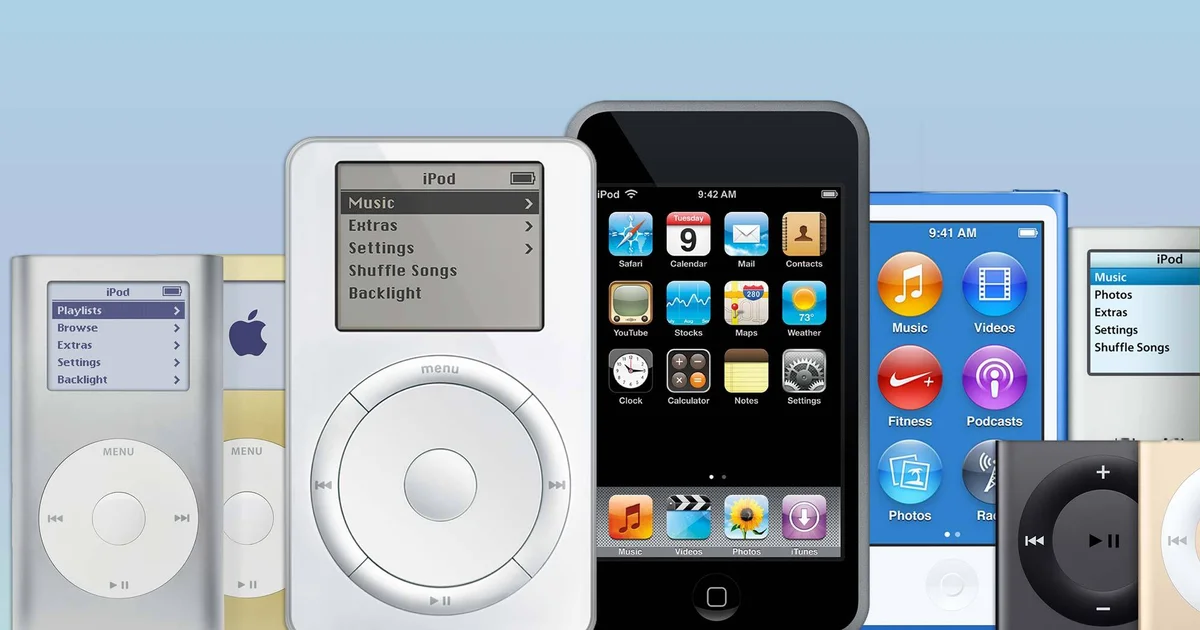
The original iPod is now one month away from its 25th anniversary. Apple's October 23, 2001 announcement described a 5GB hard-drive player holding up to 1,000 songs, offering around ten hours of battery life and using FireWire to move an iTunes library onto the device.
It launched in the US at $399. The iPod was neither the first MP3 player nor an inexpensive one. Its advantage was the package: storage, a scroll-wheel interface, iTunes and automatic synchronization worked together closely enough that managing a large portable music collection stopped feeling like a small computing project.
The universal device eventually won
Apple expanded the idea through multiple families, including the mini, nano, shuffle and touch. Over time, however, the iPod's job migrated into more versatile hardware. When Apple announced the end of the iPod touch on May 10, 2022, it said the portable music experience had been integrated across products such as iPhone, Apple Watch, iPad and Mac.
That reasoning made practical sense. A modern phone can store or stream music, manage wireless headphones, display album artwork, download podcasts and access subscription catalogs without requiring another device in your pocket. The final iPod touch, introduced in 2019, was already much closer in concept to an iPhone without cellular service than to the original click-wheel player.
But the universal device also erased a simpler interaction. Pressing play now often means opening the same object that contains messages, social feeds, work apps, news alerts and everything else competing for attention.
Dedicated music hardware has a new pitch
In April 2026, The Verge documented renewed interest in digital audio players and single-purpose gadgets. One example was Sleevenote, a player designed around complete albums and DRM-free music rather than algorithmic playlists. It is not a new iPod, and Apple has announced no return of the product line.
Other companies are approaching the same category from the hardware side. Modern players can combine removable storage, Bluetooth, dedicated DACs and support for high-resolution formats. In early September, TechRadar highlighted new compact Fiio and Shanling players as part of a broader revival of interest in standalone music devices.
The problem they solve is no longer the one Apple faced in 2001. Back then, the breakthrough was carrying a large digital library. In 2026, enormous streaming catalogs already live on almost every phone. A separate player instead has to justify itself through fewer distractions, offline ownership, independent battery life or more specialized audio hardware.
A modern iPod would not need to recreate 2001
Apple would not need a miniature hard drive or the exact industrial design of the first model. Flash storage, Bluetooth and USB-C could make a modern music player smaller and simpler. The difficult part would be deciding where to stop.
Add enough apps, communications features and general-purpose software and the device becomes another iPod touch — effectively a small iPhone without the phone. That was already the direction the product had taken before Apple discontinued it.
A deliberately limited device would be much stranger in Apple's current portfolio. No cellular connection, perhaps no camera and fewer notifications would mean treating missing features as part of the product's appeal. That is precisely the proposition some dedicated players are testing now.
The most relevant part of the iPod was not the wheel
Apple said in 2022 that the spirit of the iPod lived on across its other products. Functionally, that is true: portable music never disappeared from Apple's ecosystem. But the iPhone, Apple Watch and AirPods continued the idea of having music everywhere, not necessarily the experience of carrying an object whose main purpose was simply choosing and playing it.
The iPod officially turns 25 on October 23, 2026. Apple has announced no successor. Its most contemporary legacy may have less to do with a click wheel or white earbuds than with an increasingly unusual promise: a device that is comfortable doing only one thing.