 By Kilam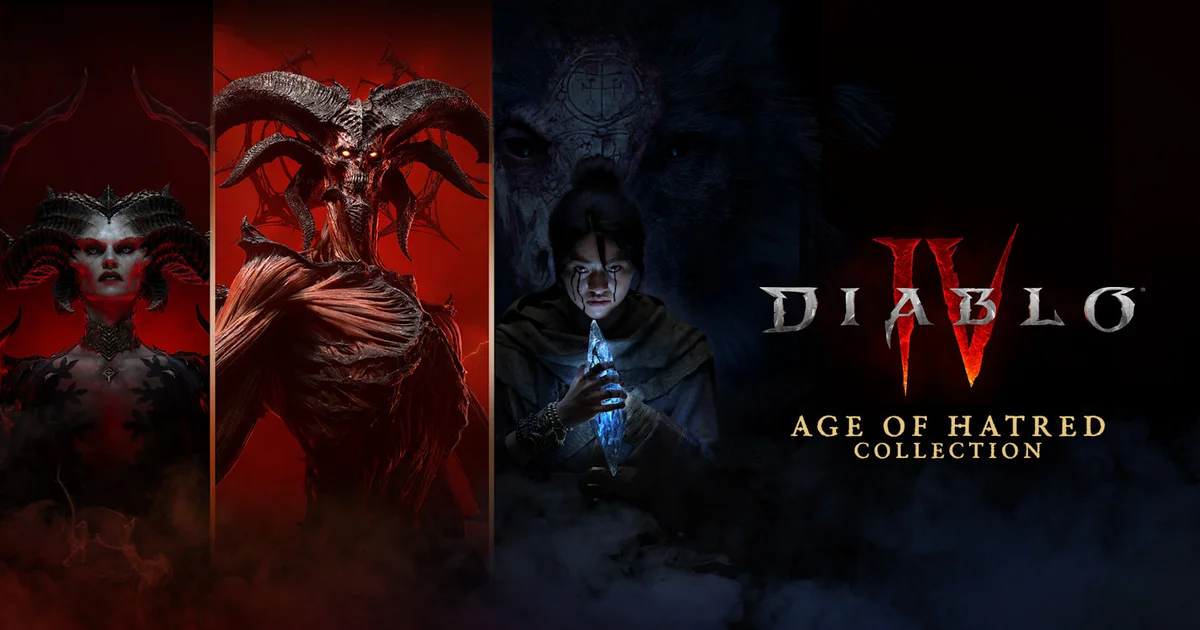
Diablo IV: Age of Hatred Collection has been available on Nintendo Switch 2 since September 15.
Nintendo lists handheld, tabletop and TV modes, together with HDR support when used with a compatible display.
Touchscreen functionality is also listed.
What neither Nintendo nor Blizzard provides in the launch announcement is a precise official resolution or frame-rate target for this specific port.
There is no official frame-rate number, so there is no reason to invent one
Switch 2 hardware can technically output up to 4K and support frame rates as high as 120 fps in compatible software, but those platform capabilities are not Diablo IV specifications.
Blizzard's launch material does not state that Diablo IV operates at 30 fps, 60 fps or any particular dynamic resolution.
The documented features are more concrete: HDR, the system's play modes and integration with Diablo's existing online ecosystem.
A serious performance assessment therefore requires direct technical measurement rather than extrapolation from the console's theoretical capabilities.
USB mouse and keyboard support is confirmed
Blizzard explicitly confirms keyboard and mouse functionality when those devices are connected to Switch 2 through USB.
That is useful for an action RPG whose PC interface was designed around precisely that control method.
There is one clear limitation: the Joy-Con 2 mouse feature is not supported.
Using mouse controls therefore requires an actual USB mouse.
Cross-play prevents Nintendo from becoming an isolated Sanctuary
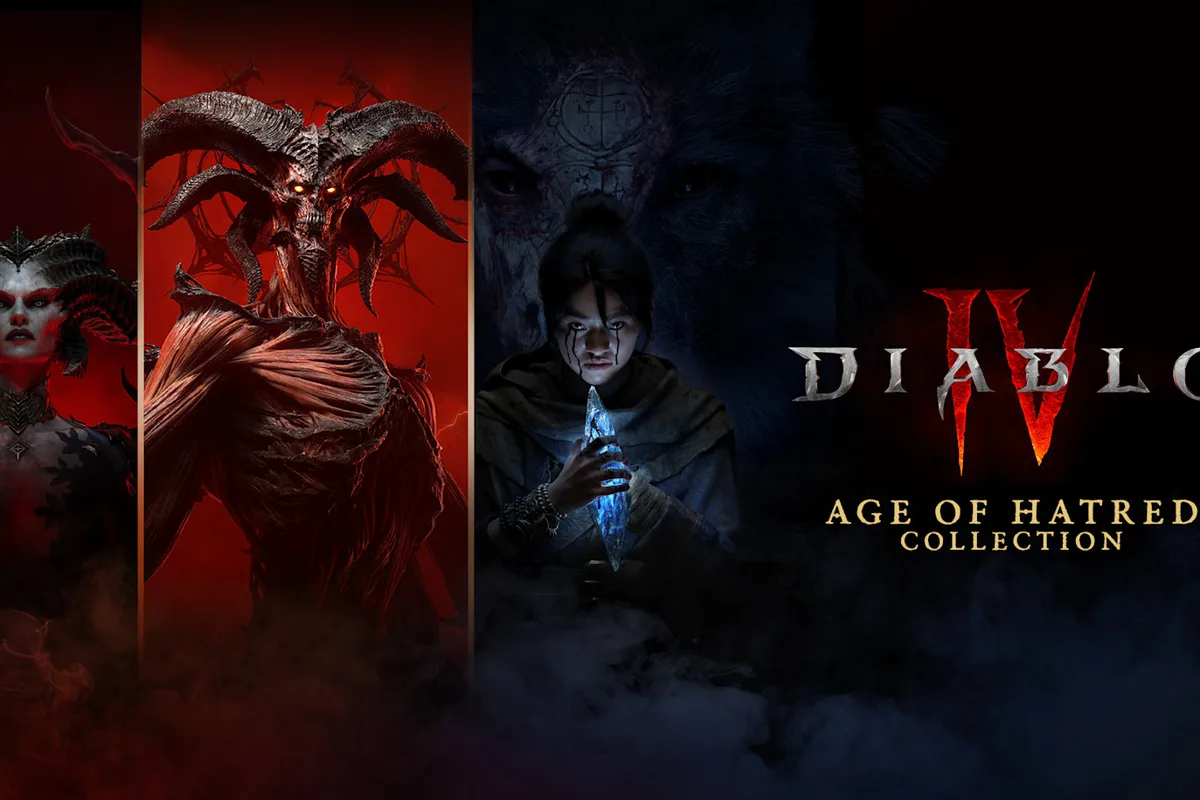
Age of Hatred Collection supports cross-platform multiplayer.
Switch 2 players are therefore not restricted to a separate Nintendo-only population.
Online play supports up to four players and requires Nintendo Switch Online.
Battle.net remains the central account layer behind the experience.
Cross-progression makes more sense here than almost anywhere else
Cross-progression allows existing characters to follow the player onto Switch 2 from another supported platform.
That matters especially on portable hardware.
Somebody already deep into Diablo IV on PC, PlayStation or Xbox does not need to rebuild an account simply to continue the same character away from the original machine.
The port therefore behaves less like buying a completely separate Diablo IV and more like adding another endpoint to the same account.
Couch co-op survives the platform move
Nintendo lists support for two players on a single Switch 2 system.
That preserves local cooperative play alongside four-player online multiplayer.
Additional compatible controllers are required.
It remains a worthwhile feature in an era where many persistent online games have abandoned same-system multiplayer entirely.
Connectivity is still the major portability constraint
A persistent internet connection is required.
That remains true even for somebody progressing alone through the campaign.
A Battle.net account is also mandatory.
Switch 2's handheld mode therefore does not turn Diablo IV into a fully autonomous portable game. Without a usable network connection, the hardware's mobility does not help.
The software arriving on Switch 2 is much larger in scope than launch Diablo IV
Age of Hatred Collection combines the base game with two complete expansions.
Vessel of Hatred contributes Nahantu and Spiritborn. Lord of Hatred adds Skovos, Paladin, Warlock, War Plans and major permanent system revisions.
Nintendo is therefore receiving a game after three years of software evolution rather than simply a conversion of the 2023 code and content footprint.
That means immediate access to the current systems, but it also gives the port a substantially larger content scope to handle than the original launch package.
The most interesting technical questions begin after launch
Functionally, the important pieces appear intact: cross-play, cross-progression, couch co-op, HDR and even USB keyboard and mouse support.
Blizzard has not officially detailed several variables needed to judge the rendering itself, including practical handheld and docked resolution, frame-rate stability, shadow quality, effect density or the potential use of image reconstruction.
Those questions need direct captures and measurements. They are not answered by Nintendo's store specification or Blizzard's announcement.
Switch 2 has therefore received the complete Diablo IV feature set. Exactly how the hardware pays for that ambition in image quality remains a measurement problem rather than a marketing claim.