 By Kilam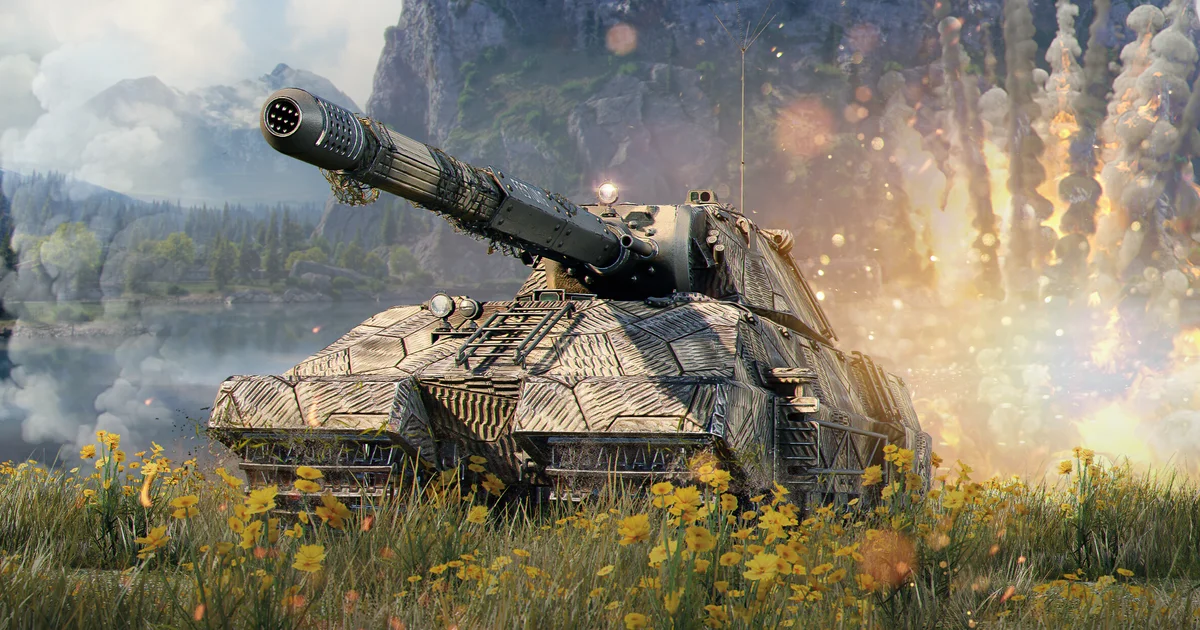
The fundamental technical break still dates back to 2018
Update 1.0 and the Core engine remain World of Tanks' most important rendering transition. Wargaming replaced or rebuilt lighting, water, shadows, vegetation, particle systems and level-of-detail handling on a large scale.
The unusual requirement was preserving support for low-end machines. Virtual textures, adaptive shadows and aggressive LOD management helped the new renderer remain scalable.
That work explains much of how the same client has continued evolving for another eight years.
The hardware floor finally moves upward in 2026
Update 2.3.1 changes the official baseline to 64-bit Windows 10 or 11, a Core i5-3330 or FX-6300, GTX 660 or R9 270 and 8GB of RAM.
Wargaming's recommended target is a Core i3-9100F or Ryzen 3 3100, GTX 1650 or RX 580 and 16GB of memory.
Those specifications are modest by 2026 standards. Their significance comes from a game that spent much of its life supporting hardware far older than its visual presentation suggested.
Storage better reveals sixteen years of accumulation
The official requirements now list 70GB of free storage at minimum and 120GB for the recommended configuration.
Hundreds of vehicles, HD assets, maps, modes and years of live-service content inevitably increased the footprint.
Wargaming still distributes separate SD and HD update packages in some cases, preserving at least part of the old scalability philosophy.
Overdrive turns effects into feedback
Update 2.4 redesigns muzzle flashes, penetrations, ricochets, blocked hits, smoke, fire and armor decals.
The goal extends beyond graphical spectacle. Different outcomes now have stronger visual signatures, reducing the amount of attention required from interface indicators during an exchange.
For an old competitive game, this is the right kind of visual modernization: improve readability without changing basic interaction.
Audio receives a similarly extensive revision
Close-range gunfire has been reworked across calibers, while secondary reflections now account for broad environmental categories such as open terrain, mountains, urban areas, tunnels and hangars.
Engine and track audio has been rebalanced in the same mix.
Sound therefore remains functional information, not simply decoration around the explosion.
Steam Deck performance is stronger than its interface support
Valve's compatibility data lists World of Tanks as Playable on SteamOS and considers the default graphics configuration performant with legible interface text.
The problems are largely interaction-related. Some functions require touch input, a virtual keyboard or a community controller layout, and keyboard or mouse glyphs can appear.
The renderer adapts to handheld hardware more naturally than the surrounding PC interface.
The achievement is that the game still looks like itself
Comparing World of Tanks in 2011 with the 2026 client reveals an enormous visual gap, but battlefield geometry, vehicle readability and basic pacing remain recognizable.
That is a difficult engineering compromise: change the rendering technology repeatedly without forcing the entire audience to relearn the game.
World of Tanks carries its age in the software stack. It hides it remarkably well in motion.