
 By Kilam
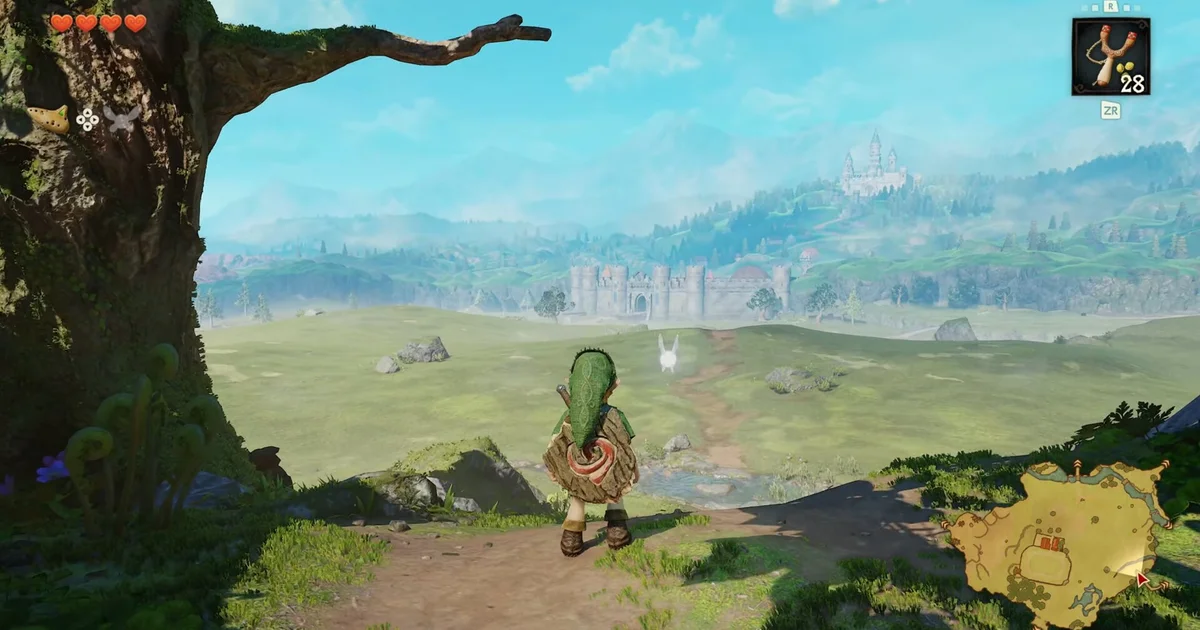
Ocarina of Time's technical transformation is immediately apparent in its frame rate. Moving from the Nintendo 64 original's roughly 20fps presentation to a consistent 60fps target changes camera movement, responsiveness and the perception of animation.
The Nintendo Switch 2 remake delivers this improvement while rebuilding the environments with more complex materials, substantially denser foliage and a modern lighting model. The result is a much larger technical leap than the increased resolution alone might suggest.
A remarkably stable 60fps presentation
Digital Foundry's technical analysis describes a highly consistent 60fps experience. Minor loading-related interruptions can occur, but frame pacing generally remains stable enough that variable refresh rate support offers limited practical benefit in most situations.
The comparison with earlier releases is significant. The Nintendo 64 original was designed around a 20fps target and could dip below it in demanding areas. Ocarina of Time 3D improved the experience to 30fps, while the Switch 2 edition now doubles that target.
The additional responsiveness is especially noticeable when using the modern free camera. Smooth movement and predictable input response make navigation considerably more comfortable.
Dynamic resolution without DLSS
Image quality involves more compromises. Technical analysis indicates dynamic resolution scaling with an upper range around 1440p and reductions toward approximately 1080p in docked play.
Handheld presentation uses a wider range, reportedly falling between 1080p and 720p depending on workload. Lower texture-filtering quality and more aggressive level-of-detail transitions are among the compromises noted in portable mode.
Despite the Switch 2's NVIDIA-based hardware, the remake does not appear to use DLSS. Digital Foundry instead identified SMAA and FSR1 as part of the image-processing approach.
The absence of DLSS should not be confused with poor performance. Nintendo's chosen rendering solution achieves its frame-rate objective effectively. However, the resulting image can exhibit limitations in fine-detail stability and overall clarity when resolution scaling becomes more aggressive.
A substantial upgrade to lighting and materials
The remade environments use more convincing material properties, enhanced ambient occlusion and more complex lighting. Stonework, vegetation and architectural details are significantly richer than in previous versions.
Forests are particularly impressive. Additional foliage movement, carefully arranged lighting and atmospheric effects give familiar areas much greater depth.
Navi can act as a light source, while destructible objects produce persistent fragments in some situations. These changes reinforce the sense that Nintendo has rebuilt the world rather than simply replacing its textures.
The remake also adjusts the geometry and structure of selected locations. Some environmental behaviors have changed, making this a new technical interpretation rather than a completely literal reconstruction.
A more responsive game beyond the graphics
Improved loading behavior, modern camera controls and faster item selection contribute to the overall experience. Some locations allow smoother movement between connected interiors, although larger transitions still require loading.
Optional motion aiming and revised interface layouts further reduce the practical limitations of the original control scheme. These changes complement the stable frame rate rather than depending entirely on it.
Ocarina of Time therefore stands as a technically successful remake with a clear set of priorities. Nintendo has favored consistent performance, richer environmental detail and improved responsiveness. Dynamic resolution scaling and the absence of DLSS prevent the image from being uniformly excellent, particularly in handheld mode.
The overall technical achievement remains impressive, especially considering the scale of the reconstruction and the exceptionally stable 60fps target.