
 By Kilam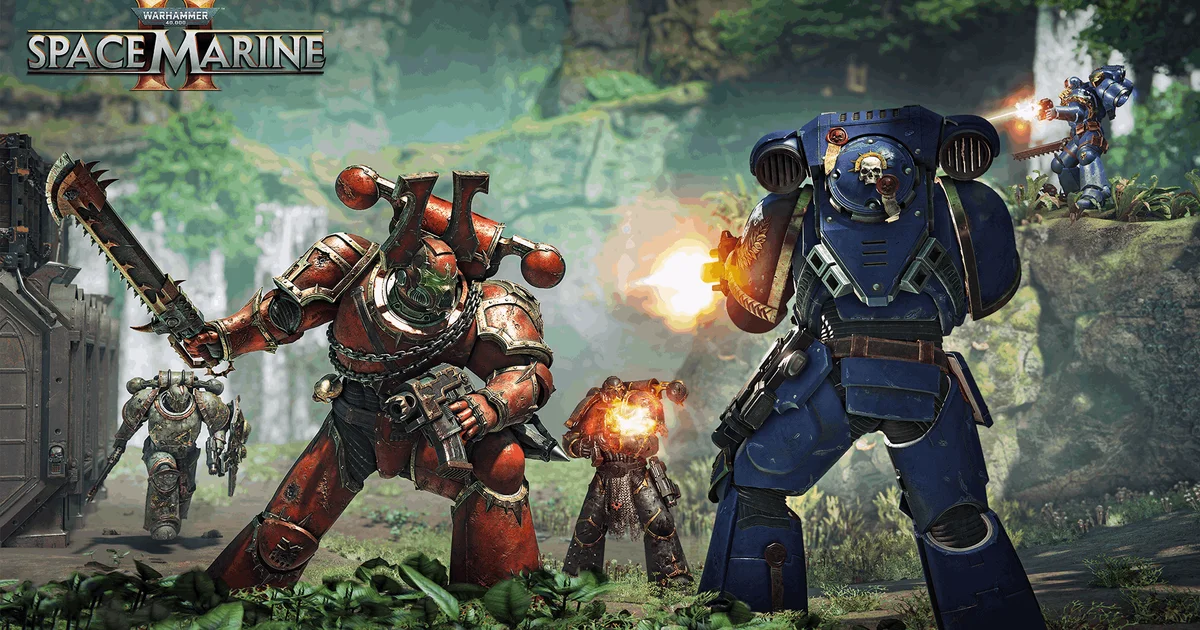
The real next-gen feature is a pile of Tyranids
Space Marine 2 is not primarily impressive because of one isolated rendering technique. It becomes impressive when the camera looks beyond Titus and finds hundreds of Tyranids already climbing a fortification by forming a living ramp.
Saber's Swarm Engine, evolved from the technology behind World War Z, is the defining feature. GameSpot and GamesRadar both highlighted the density, while Digital Foundry's technical analysis explains the cost: the game must simulate and animate substantial crowds while maintaining the foreground combat.
The CPU pays for the spectacle.
Thirty frames per second is the comfortable base-console mode
Digital Foundry's launch analysis shows two very different compromises on PS5 and Xbox Series X. Quality mode targets 30fps and holds it with strong consistency. Speed mode aims at 60fps, but the heaviest battles can pull performance far below that target.
On base PS5, Performance mode can drop its dynamic internal resolution toward 720p before FSR2 reconstruction. Image softness therefore becomes most visible at exactly the moment when the screen is at its busiest.
Reducing resolution cannot solve everything because the worst encounters are constrained by the processor rather than purely by GPU load.
PS5 Pro mostly fixes the image-quality side
The December 2024 PS5 Pro patch materially improves the fast mode. Digital Foundry found that PSSR, higher internal resolutions and additional performance headroom produce a substantially cleaner presentation than base PS5's FSR2 result.
PSFoundry's July 2026 technical summary places the Pro's Speed mode around 1080p to 1440p internally before reconstruction to 4K, compared with roughly 720p to 1080p on the base machine.
CPU-heavy swarms can still pull the Pro toward 40fps. More graphics performance cannot eliminate time spent waiting on simulation.
PSSR is not completely invisible
The reconstruction resolves fine environmental detail much more convincingly, particularly in motion. PSFoundry still documents local over-sharpening and sub-pixel flickering on some foliage and reflective surfaces.
It remains a favourable trade. A game containing this many moving silhouettes benefits enormously from temporal stability.
PC performance has the same fundamental bottleneck
Digital Foundry found a broad range of useful PC options, but the processor remains unusually important. A faster GPU cannot always improve a frame that is waiting for hundreds of enemies to update.
That distinction matters because the crowds are not merely background decoration. Large numbers of those Tyranids eventually enter the playable fight.
Saber chose density over a perfect graph
The developer could have reduced the crowds, simplified background battles or aggressively removed enemies when performance became difficult. Space Marine 2 instead protects the spectacle surprisingly often.
Its 60fps modes are less tidy because of that decision.
They also produce scenes that very few other third-person shooters attempt. Two years later, even PS5 Pro cannot completely hide the cost. That bottleneck is simultaneously the game's clearest technical weakness and one of the reasons its battles have such a specific identity.