
 By Kilam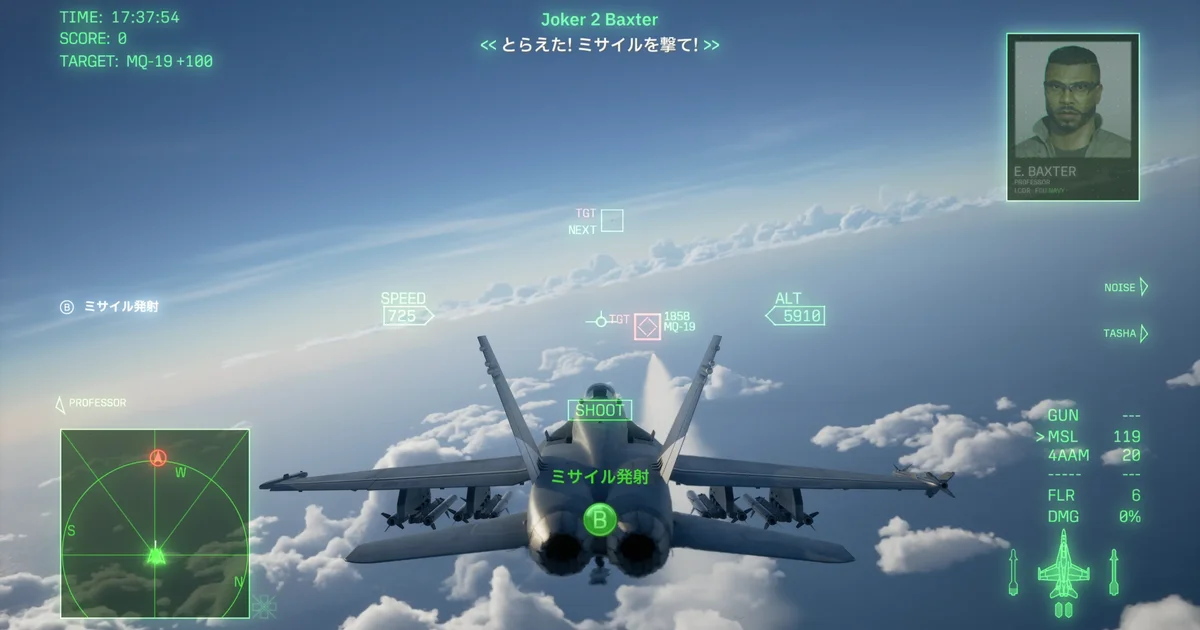
The sky finally becomes part of the game engine
Ace Combat 8 combines Unreal Engine 5 with Cloudly, proprietary atmospheric technology built for its clouds. The most obvious result is visual: enormous volumes, dense cloud layers, light passing through formations and condensation around aircraft give the sky a depth its predecessor could not achieve.
The value extends beyond scenery. Passing through those masses reduces visibility, changes target readability and covers the canopy with moisture. Vapor trails and weather effects also make maneuvers easier to read. This is the useful kind of graphics technology: the kind you notice without pausing the image to count pixels on a cloud.
Sixty frames per second or greater clarity
On PS5 and Xbox Series X, two graphics priorities shape the experience: a quality-oriented mode targeting 30 frames per second and a Performance mode aiming for 60. In a game where the entire screen repeatedly swings around a target at several hundred knots, the latter has an obvious practical advantage.
The trade-off appears in image definition. On base PS5, some elements can become softer and certain textures appear blurry. Quality mode recovers visual fidelity, but its 30fps target is less naturally suited to rapid directional changes and low-altitude flying.
Superweapons carry a GPU cost too
Stability is not absolute. On console, encounters packed with aircraft, explosions and effects can produce drops, particularly when presentation already prioritizes quality. Performance mode remains the more coherent compromise for preserving control response.
PC does not automatically make the problem disappear. Testing on powerful hardware still reports drops in certain cinematics and especially demanding sequences, including at high resolutions with DLSS assistance. The graphical load of giant weapons and their explosions can become quite visible on a frame-rate counter.
Audio carries part of the immersion
The technical presentation does not rely on Cloudly alone. On PS5, 3D audio and haptic feedback support the transition from carrier deck to combat. Radio communications, engines and warning systems remain distinct as battles become crowded, which matters more here than simply adding another layer of effects.
Ace Combat 8 is therefore a clear technical step forward without being a model of perfect stability. Sometimes the skies look good enough to make the hardware calculating them disappear. The largest explosions occasionally make sure you remember it is still there.