
 By Tsuky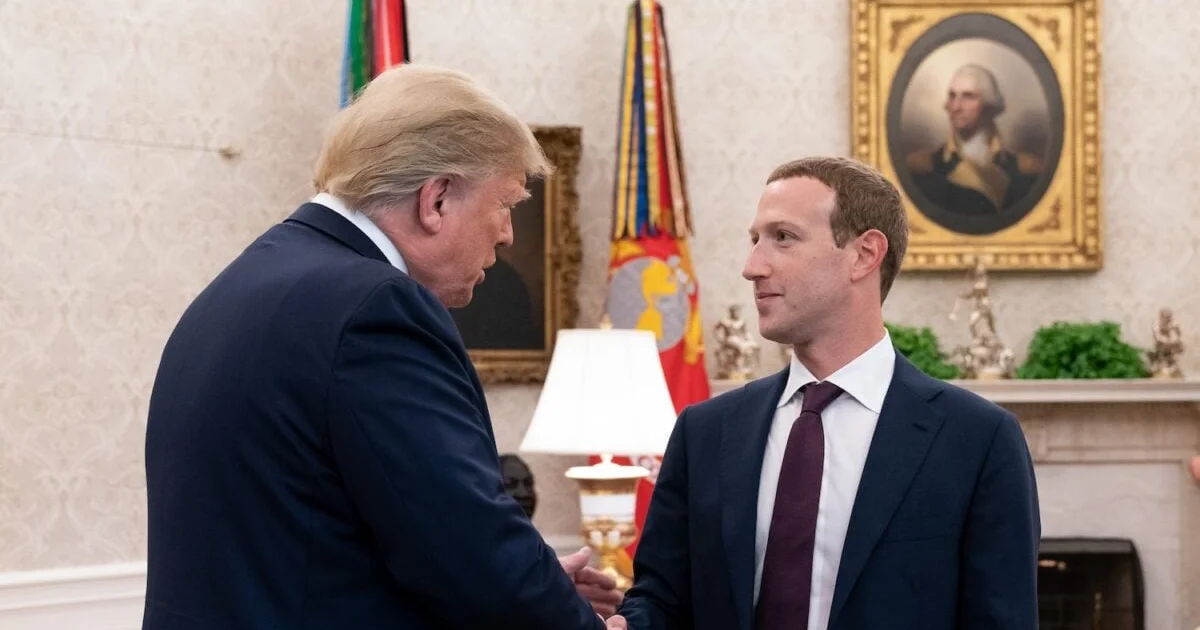
The proposal is modeled on financial self-regulation
White House officials have been discussing an independent AI organization inspired by FINRA, the industry-led body that oversees US broker-dealers under Securities and Exchange Commission supervision.
An AI equivalent could review frontier systems and test them for risks before broader deployment. The proposal has support from some senior administration officials but remains under consideration rather than established policy.
There is no final rule, executive order or public transcript of the Zuckerberg-Trump call. The details come from officials and people familiar with the private discussions.
Trump reportedly initiated the conversation
A senior White House official directly familiar with the call said Zuckerberg opposed the regulator. Another person offered a narrower interpretation, saying the Meta chief did not ask Trump to reverse his position but argued that anyone appointed to the body should reflect the president's generally light-touch approach to AI.
That person also said Trump placed the call.
Meta declined to publicly comment on the substance of the conversation. The White House said the administration remains committed to balancing AI innovation and security.
Demis Hassabis helped put the FINRA model on the agenda
Google DeepMind chief Demis Hassabis publicly advocated this summer for a US-led standards body modeled partly on FINRA. The idea is to create specialized capacity for evaluating increasingly capable systems, including emerging cybersecurity risks.
White House officials later discussed the concept with the president and separately previewed it with major AI developers including Meta, OpenAI and Anthropic.
The proposal matters because pre-release review changes where the bottleneck sits. Today a frontier lab largely decides when a model is ready. A sufficiently strong external testing regime could make deployment dependent on another organization completing its assessment.
Meta is arguing for government access without a release queue
Zuckerberg's reported objection matches the policy philosophy he published in August. Meta wants advanced AI distributed broadly and warns against concentrating control over superintelligence in a small number of institutions.
His case is partly about US-China competition. Meta argues that frontier leadership can shift on a short timescale, making even modest deployment delays strategically meaningful.
The company is not proposing that Washington receive no visibility into frontier systems. Zuckerberg has instead suggested that leading labs give the US government intermediate training checkpoints and technical support before models are complete.
That would allow government security teams to investigate risks and harden critical infrastructure while development continues.
A second proposal looks more like movie ratings
The administration is reportedly considering another path with considerably less direct government involvement: an industry body modeled on the Motion Picture Association's voluntary ratings system.
David Sacks has championed that approach and attacked the FINRA-style idea as a bureaucratic queue for AI releases. He has said Elon Musk supports an industry-led standards model.
The difference is substantial. One framework creates a dedicated institution with a formal supervisory role. The other relies primarily on the companies developing the technology to establish and enforce shared standards.
The US government is already reviewing frontier AI voluntarily
Some pre-release oversight is happening before Washington settles the institutional question.
OpenAI said the US government reviewed GPT-6 Astra before its broader deployment. Astra is the first OpenAI system to reach the company's Critical threshold for cybersecurity capability, bringing the practical question of government access much closer to the policy debate.
Sam Altman described that voluntary scrutiny as productive and has called for greater government involvement as systems become more capable. OpenAI has not publicly endorsed the specific FINRA-inspired regulator under discussion.
The contradiction sits inside the administration itself
At this week's G20 technology meetings in North Carolina, the Trump administration urged other countries to take a restrained approach to AI regulation.
Its Carolina Principles argue that governments should avoid new rules when existing frameworks can address the relevant problem, reflecting Washington's broader effort to accelerate US AI development and deployment.
Yet the same administration is discussing a dedicated mechanism for evaluating frontier models before release.
That debate remains unresolved. The White House has not announced a final decision on whether a national AI oversight organization will be created.