
 By Tsuky
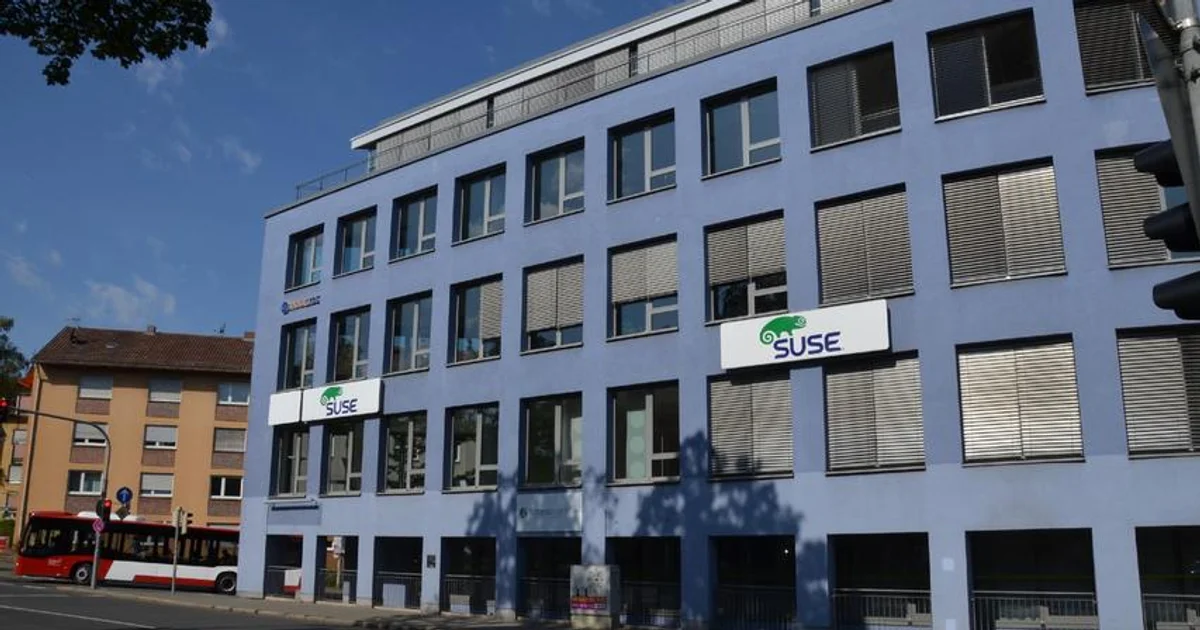
SUSE is one of the established names in enterprise Linux.
The company develops and supports open-source infrastructure software used by organizations that need dependable operating systems, container management and enterprise support.
Its portfolio includes SUSE Linux Enterprise Server, Rancher and products designed to manage complex IT environments.
On November 2, employees learned that the company was preparing a substantial restructuring.
According to an internal memo reviewed by The Register, SUSE intends to reduce its worldwide workforce by approximately 10%.
The company's explanation is notable.
Management says artificial intelligence and automation are changing how software businesses operate, reducing the need for some roles and encouraging flatter organizations.
However, the ability to automate individual tasks is not the same as demonstrating that an entire position has become unnecessary.
Approximately 190 jobs could be affected
The Register describes SUSE as having approximately 1,900 employees.
A reduction of 10% would therefore correspond to around 190 positions.
That number is an estimate based on the reported workforce, not a final verified count of departures.
The memo does not identify the precise functions that will be eliminated.
It also does not provide a definitive country-by-country breakdown.
There is insufficient evidence to conclude that software engineers, support personnel or middle managers will be disproportionately affected.
Although the company discusses organizational simplification, the available documents do not specify exactly where the reductions will occur.
That uncertainty matters to customers relying on SUSE for long-term software maintenance and technical support.
Management says AI is reshaping software work
Dirk-Peter van Leeuwen became SUSE's chief executive in 2023 after working at Red Hat.
In the memo reported by The Register, he presents the workforce reduction as a necessary response to changing business conditions.
According to the published account, management believes AI and automation are fundamentally altering how software companies operate.
Modern tools are already allowing teams to work faster, with less operational overhead and fewer management layers.
The company says the need for certain existing roles has significantly diminished.
Other jobs are expected to evolve over the coming years.
Management links the restructuring to revised investment priorities and the capabilities it expects the organization to require.
The message frames the decision as a reflection of changing organizational needs rather than employee performance.
However, those are management's stated reasons.
The available reporting does not include an independent analysis quantifying how many hours of work have actually been eliminated through AI.
Affected employees face a rapid timetable
The Register reports that affected staff are expected to be notified by November 4, 2026.
Employee representatives are scheduled to be nominated on November 5.
Individual meetings are expected to begin during the week of November 9.
Management plans to present its fiscal 2027 strategy to the remaining organization on November 16.
This timetable shows that the announcement concerns a concrete restructuring rather than a general review of potential cost savings.
However, as of November 3, not every scheduled step has taken place.
The exact process and employment conditions will depend on the relevant legal frameworks and individual circumstances.
The published memo does not establish the terms that will apply to every employee.
Voluntary departures had already been discussed
The November announcement follows earlier reports about workforce adjustments at SUSE.
In September 2026, The Register reported that the company had approached some experienced staff about voluntary separation.
The new restructuring comes after that initiative.
However, the information available does not establish the precise number of employees who accepted voluntary offers.
Nor does it conclusively identify an internal target that the earlier program failed to achieve.
What is clear is that SUSE has been reviewing its workforce and cost structure.
Management wants to concentrate investment in selected areas while reducing spending elsewhere.
That is a business strategy as well as a discussion about the technical capabilities of automation.
How AI could change work at an enterprise Linux company
Developing an enterprise operating system involves much more than writing code.
Engineers test software, investigate bugs, prepare security updates, maintain documentation and help customers manage complex environments.
Some of that work contains repetitive or highly structured tasks.
Coding assistants can help generate certain software components or analyze changes.
Automated systems can assist with ticket classification, log analysis and technical documentation.
Infrastructure-management tools may also recommend maintenance procedures or help identify anomalies.
These are examples of possible applications of modern automation.
They are not a verified list of SUSE positions replaced by AI.
Reducing the time needed for an individual task does not automatically eliminate the surrounding human responsibilities.
In some cases, the remaining work becomes more specialized because generated output still needs to be checked.
Open-source development still requires rigorous verification
For a conventional software application, a proposed code change might be evaluated through functional testing.
Enterprise Linux introduces additional requirements.
Teams must consider compatibility across hardware platforms, system stability and the implications of security patches.
A change that works in one test environment may fail in a configuration used by a particular customer.
Validation therefore requires detailed technical knowledge and access to relevant testing environments.
AI tools can help search for defects or suggest improvements.
However, their output still needs appropriate verification, particularly when it affects operating-system components and security.
The November 2 reporting does not establish that these responsibilities can now be fully automated at SUSE.
The central question is not merely whether an AI can produce code.
It is whether AI can reliably contribute to the long-term maintenance of software that enterprises expect to remain stable.
SUSE is investing in AI products at the same time
The restructuring comes as SUSE is expanding its own AI-related offerings.
On October 27, 2026, the company announced advances in multi-Linux management and agentic automation capabilities.
Those technologies are designed to help organizations manage complex infrastructure more efficiently.
SUSE is also developing AI Factory, a platform intended to support enterprise AI deployment.
The company is therefore promoting AI as a commercial opportunity while also citing its impact on internal staffing needs.
The overlap is significant.
However, it does not prove that a product feature announced in October directly replaced any of the jobs affected in November.
No detailed connection between the new products and individual workforce reductions has been publicly established.
What could the restructuring mean for SUSE Linux Enterprise?
SUSE Linux Enterprise Server is designed for organizations that require professionally maintained Linux systems.
Customers are not simply paying to access open-source code.
They also rely on support, security updates and maintenance arrangements for their production environments.
A workforce reduction can naturally raise questions about a vendor's future service capacity.
Potential concerns include incident response times, security patching and migration support.
However, these are risks to monitor rather than confirmed consequences.
SUSE has not announced the termination of Linux Enterprise Server or the cancellation of its security maintenance commitments.
No verified evidence establishes that the planned layoffs will reduce specific customer support obligations.
Customers should distinguish a workforce announcement from an actual change in the products or services they receive.
Rancher and Kubernetes users have questions too
SUSE is also an important supplier of cloud-native infrastructure tools.
Rancher is used to manage Kubernetes environments across different clusters and computing platforms.
Maintaining such software requires ongoing attention to compatibility, security and operational reliability.
The restructuring may therefore prompt questions from organizations using Rancher.
However, the available reporting does not establish that the Rancher engineering or support teams will be targeted specifically.
No changes to Rancher service commitments have been confirmed as part of the announcement.
It would be misleading to apply a global workforce reduction proportion directly to every product team.
Companies can reduce spending in some departments while increasing investment in others.
That redistribution of resources is part of the strategy described by SUSE's management.
Is AI really responsible for every job being eliminated?
The company's internal communication explicitly names AI and automation.
But that does not establish that every eliminated position corresponds to work now performed by a software agent.
Restructuring decisions can involve several overlapping motives.
A business may want to reduce costs, simplify reporting structures, change commercial priorities or invest in new products.
It may also anticipate productivity improvements that have not yet been fully realized.
SUSE's memo refers to organizational capabilities, team structures and investment priorities.
Quantifying the direct effect of AI would require more information about affected tasks, deployed tools and verified operational savings.
Those details are not provided in the published reporting.
It is therefore more accurate to say that SUSE cites AI as part of the rationale for the restructuring than to claim that approximately 190 workers have already been individually replaced by AI agents.
EQT's ownership adds a financial dimension
The announcement also arrives against a distinctive ownership history.
Swedish private equity firm EQT acquired SUSE from Micro Focus in 2018.
SUSE was listed on the Frankfurt Stock Exchange in 2021 before being taken private again in 2023.
In March 2026, Reuters reported that EQT was exploring a potential sale of the company.
Sources at the time suggested a possible valuation between $4 billion and $6 billion.
The discussions were preliminary, and a transaction was not guaranteed.
That background makes SUSE's cost structure and profitability relevant subjects of financial analysis.
However, it does not establish that the layoffs were ordered specifically to prepare a sale.
No direct causal link between the reported sale exploration and the November workforce reduction has been demonstrated.
The two developments should remain clearly distinguished.
Can an open-source company deliver more with fewer employees?
SUSE's business model combines open-source technologies with commercial software and support services.
Some development occurs in collaboration with communities beyond the company.
However, community participation does not automatically replace teams responsible for commercial products and customer commitments.
Professional support, compatibility testing and security maintenance still require dedicated resources.
The restructuring therefore raises an important organizational question.
Will automation allow SUSE to maintain service quality with fewer employees?
Or will remaining teams need to absorb more responsibilities?
The answer will depend on how SUSE implements the changes and allocates its resources.
For now, the claimed benefits of modern tooling have not been accompanied by sufficiently detailed operational results to settle the question.
What enterprise customers should monitor
Organizations using SUSE Linux Enterprise or Rancher do not automatically need to change suppliers because of the announcement.
No product shutdown has been announced.
Existing contractual commitments do not disappear merely because a vendor plans workforce reductions.
Nevertheless, customers can monitor several practical indicators.
Security patch delivery is one.
Support response times, access to technical specialists and product roadmap clarity are others.
Organizations planning major migrations may also want to verify that appropriate assistance remains available.
The fiscal 2027 strategy presentation scheduled for November 16 may provide additional context.
However, there is no guarantee that it will include detailed product schedules or new contractual commitments.
The November 16 strategy may clarify priorities
SUSE management plans to present its fiscal 2027 strategy on November 16.
That communication may reveal more about where the company intends to concentrate resources.
Relevant areas include enterprise Linux, cloud-native tools, professional services and AI infrastructure.
It may also provide a clearer explanation of changes to organizational design.
Affected employees are scheduled to receive individual information before that broader strategic presentation.
The timetable therefore places the immediate workforce impact ahead of the general explanation of future priorities.
As of November 3, the full operational consequences remain unclear.
A revealing moment for the enterprise software industry
SUSE's decision highlights a tension running through the technology sector.
Software vendors are selling tools intended to increase customer productivity while using similar technologies to justify changes to their own staffing.
In some cases, automation can genuinely reduce substantial amounts of repetitive work.
In others, efficiency improvements may be expected rather than fully demonstrated, while broader cost-reduction strategies remain important.
SUSE has not provided enough information to separate those effects precisely.
Its announcement is nevertheless significant because the company supplies technology used in many important enterprise computing environments.
The issue extends beyond the number of positions being eliminated.
It also concerns how software vendors will maintain technical commitments as their organizations become smaller or increasingly automated.
The outcome will matter more than the explanation
Approximately one in ten SUSE employees could be affected by the announced restructuring.
Management describes the decision as a necessary adaptation to changing technology and working practices.
But the outcome should ultimately be judged through observable results.
SUSE will need to maintain its products, provide reliable customer support and demonstrate that its remaining teams can meet their responsibilities.
The actual productivity improvements attributed to automation will also matter.
Until more detailed evidence is available, claiming that AI has directly replaced 190 SUSE employees would go beyond what the reporting establishes.
The better-supported conclusion is that SUSE plans to reduce its workforce by approximately 10% and considers artificial intelligence a major reason to redesign its organization.
The gap between that stated rationale and the operational results will be the real test of the company's strategy.