
 By Tsuky
The most familiar story began on September 6, when 600 BTC mined in 2010 moved after roughly sixteen years of dormancy. The coins came from twelve old block-reward addresses, each originally containing 50 BTC.
That was enough to revive speculation that Satoshi Nakamoto's coins were moving. Whale Alert subsequently said its analysis found no connection between those addresses and Bitcoin's pseudonymous creator.
“Satoshi-era” does not mean “owned by Satoshi”
The phrase is doing a lot of work here. A Satoshi-era coin is simply Bitcoin mined during the network's early years. It is a chronological description, not proof of ownership.
That distinction matters because old coins have been moving repeatedly. Galaxy Research tracking cited by Decrypt found four long-dormant wallets transferring a combined 1,971.03 BTC between September 6 and September 22, worth roughly $161 million at the time.
Some had been untouched since 2011. Another had been dormant since 2016. A transfer alone does not establish that the coins were sold, compromised or controlled by anyone famous.
Then there is the immortal 4chan prophecy
A screenshot attributed to an old anonymous 4chan post has also been circulating again with a $145,000 Bitcoin target for October 2026. Its appeal is obvious: the image is presented as a years-old prediction that supposedly anticipated earlier market milestones.
Its provenance is considerably less impressive. Reporting around the image has found no reliable archived original, while different versions contain conflicting figures and inconsistent market-cap claims.
That makes it a very effective meme and a very poor historical document.
MARA's $98 million “purchase” was a returned loan
A more instructive mistake arrived on September 16. A 1,292 BTC transfer into MARA Holdings addresses was initially interpreted by some trackers and publications as a fresh Bitcoin purchase worth around $98.6 million.
MARA clarified the next day that no such purchase had taken place. The bitcoins were being returned from a lending arrangement involving FalconX.
The company's own filings make that explanation entirely plausible. MARA actively lends portions of its Bitcoin holdings and also uses Bitcoin as collateral. Coins moving back into a company-controlled wallet therefore do not necessarily represent newly deployed capital.
An incoming transaction is a fact. “MARA just bought the dip” was the story added on top of it.
The fly-brain miner is the ridiculous one that actually exists
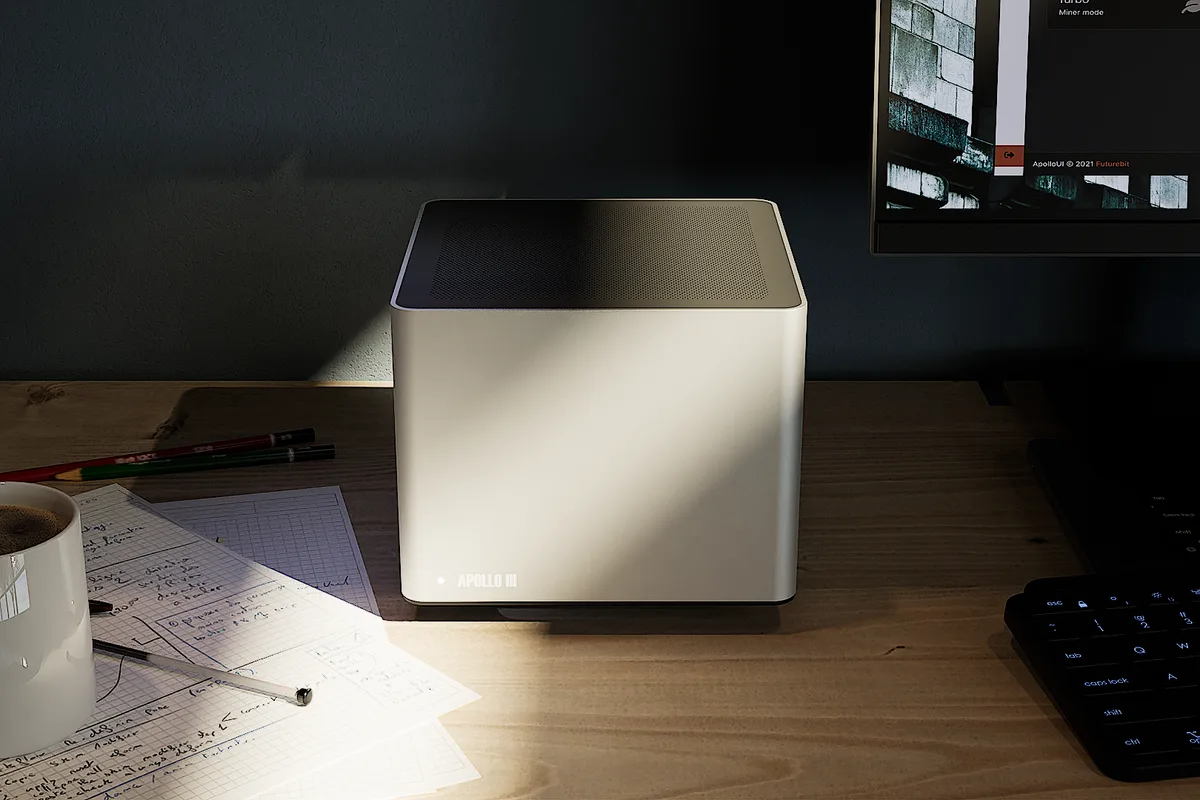
FutureBit's HashFly experiment sounds more fabricated than any of the rumors above, which is unfortunate because it is real.
The proof of concept uses a digital simulation based on the fruit fly connectome and routes 2,914 neural traces through a simplified Bitcoin hashing demonstration. It runs in a browser and performs double-SHA-256-related computation at roughly 100 kH/s.
That is effectively irrelevant beside modern ASIC hardware measured in terahashes per second. No organic fly is sitting in a mining rig and producing Bitcoin rewards.
FutureBit's more speculative claim is about efficiency. The company says that, if the idea could eventually be implemented and scaled using real organic neurons, a theoretical system might reach around one watt per terahash, roughly ten times the efficiency of leading 3 nm silicon mining hardware.
The words “if,” “could” and “theoretical” deserve to remain attached to that sentence.
Bitcoin's public ledger does not come with a narrator
All four stories share the same weakness in different forms. Blockchain data can show that coins moved. It cannot automatically explain who moved them, why they moved, whether a transfer was a purchase or a loan repayment, or whether an old address belongs to a famous early miner.
The technical event often takes seconds. The narrative arrives immediately afterward.
September has simply produced some unusually entertaining examples.