 By Tsuky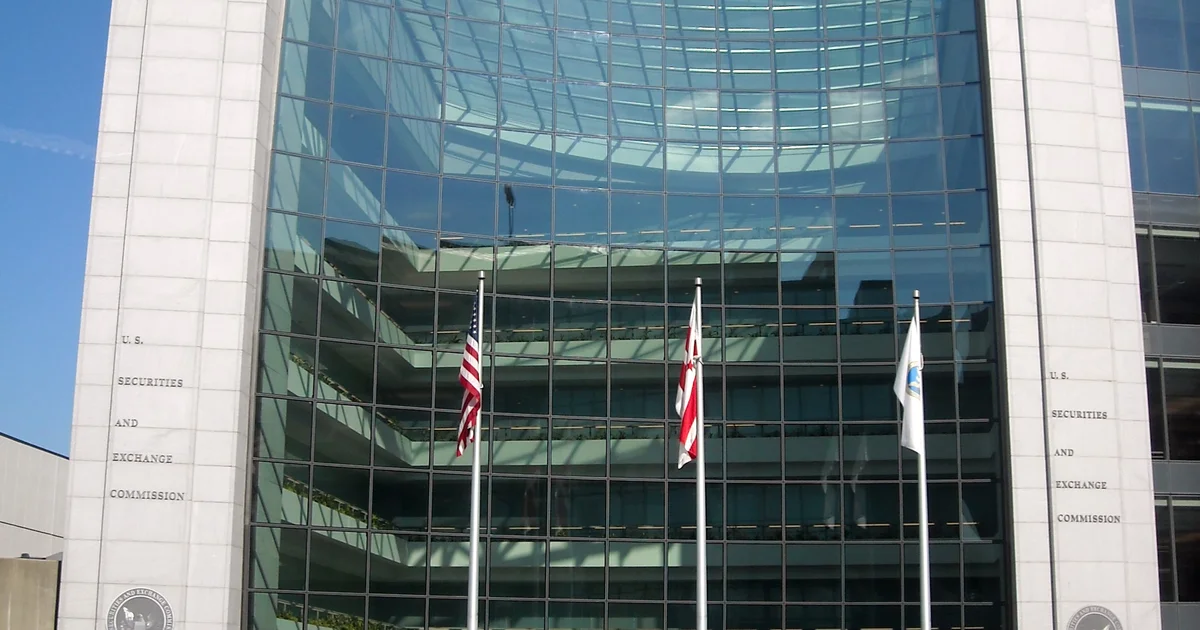
On September 17, the Securities and Exchange Commission approved temporary conditional relief for a new category of market operator called a Tokenized Securities Venue, or TSV. A qualifying TSV can bring buyers and sellers of tokenized NMS stocks together through permissioned automated market makers and liquidity pools. :contentReference[oaicite:12]{index=12}
The legal mechanism is narrower than a general deregulation of tokenized securities. A compliant TSV receives relief from the Exchange Act definition of an exchange. Certain liquidity providers supplying tokenized NMS stock with proprietary capital can also receive conditional relief from the Act's dealer definition. :contentReference[oaicite:13]{index=13}
A token must represent the stock, not merely imitate its price
The SEC draws a hard line around what can trade under the exemption. Eligible tokenized NMS stock can be created by the issuer, on the issuer's behalf or by an unaffiliated third party. Synthetic products that merely provide exposure to the value of an underlying security are excluded. :contentReference[oaicite:14]{index=14}
A TSV must verify that the tokenized instrument gives its holder the same rights and privileges as the equivalent conventional share. The SEC specifically includes dividend and voting rights in that requirement. :contentReference[oaicite:15]{index=15}
That matters because “tokenized stock” has covered very different products in crypto markets. Under this exemption, a token that only tracks a share price is not enough.
The blockchain can be permissionless while the market is not
TSVs can use AMM liquidity pools, but participation in those pools is permissioned. The venue sets standards governing who can access trading and limits participation to verified or credentialed users and liquidity providers. :contentReference[oaicite:16]{index=16}
The smart contracts themselves must be auditable and public and must run on a public permissionless distributed ledger. The SEC is therefore allowing open blockchain infrastructure while retaining controlled access at the trading layer. :contentReference[oaicite:17]{index=17}
Trading pairs can include another tokenized NMS stock, a qualifying non-security crypto asset, an eligible payment stablecoin or a tokenized money-market fund, although those assets fall inside the TSV framework only when paired with tokenized NMS stock. :contentReference[oaicite:18]{index=18}
Public companies keep a veto over third-party tokenization on these venues
An unaffiliated company cannot simply tokenize a listed stock and assume the resulting instrument will trade under the exemption. Before listing that tokenized stock, a TSV must give the underlying issuer written notice and an opportunity to object. :contentReference[oaicite:19]{index=19}
The SEC also imposes limits on the number of symbols and the volume that can trade. If the underlying stock stops trading on its primary listing exchange, trading in its tokenized version must stop at the same time. TSVs have public-disclosure obligations covering their operations and relevant affiliate activity as well. :contentReference[oaicite:20]{index=20}
This is a five-year experiment, not the final rulebook
The exemptions are scheduled to expire five years after publication. The Commission describes the order as an interim measure and is requesting public comment while it considers whether permanent rulemaking or other regulatory action should follow. :contentReference[oaicite:21]{index=21}
Chairman Paul Atkins has made the same distinction explicitly. The exemption gives market participants a way to begin experimenting with onchain stock trading now, while the Commission works toward rules that could provide a more durable framework. :contentReference[oaicite:22]{index=22}
The result is not a permissionless version of Nasdaq appearing overnight. It is a regulated bridge between two market designs that previously lived much further apart: U.S. listed equities on one side and blockchain-based automated liquidity pools on the other.