
 By Camille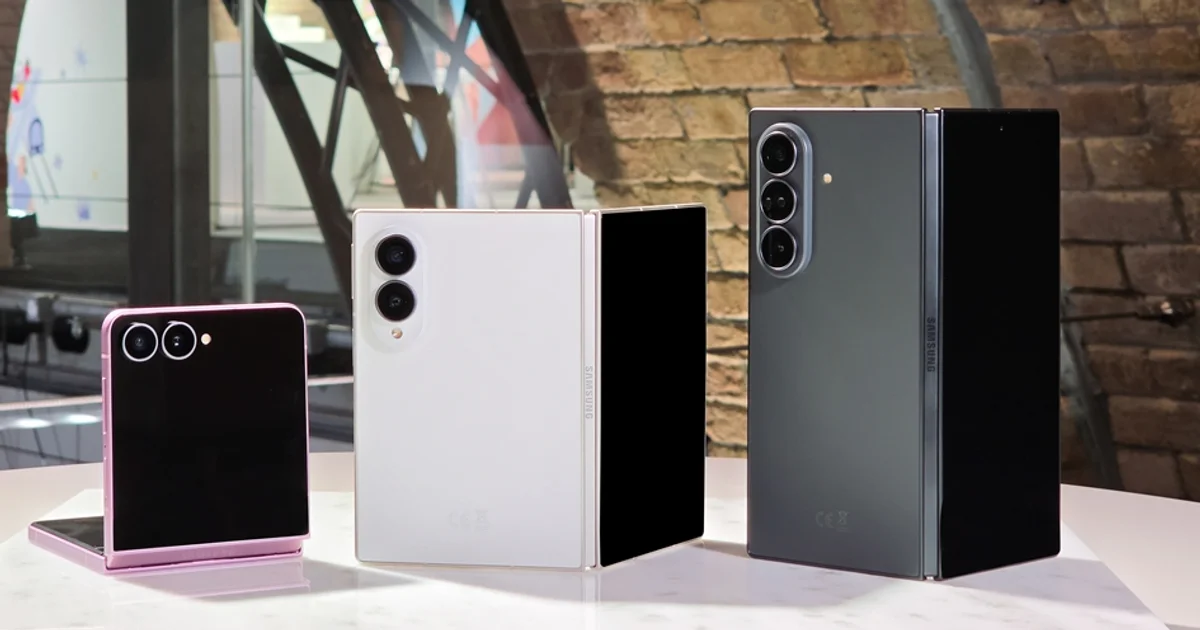
Silicon-carbon batteries have spent the last few smartphone generations doing something Samsung badly needed in foldables: storing more energy without demanding proportionally more volume.
The Galaxy Z Fold8 Ultra, Z Fold8 and Z Flip8 are the first Galaxy phones to use silicon-carbon anodes. Samsung had remained unusually conservative while several Chinese manufacturers pushed the material into increasingly mainstream devices.
Foldables make the decision more interesting than a simple capacity upgrade. Battery cells compete with hinges, cooling systems, cameras and flexible-display structures inside two exceptionally thin halves of a phone.
Silicon can hold more lithium, but expansion is the catch
Graphite remains the standard lithium-ion anode material because its behaviour is comparatively stable and well understood. Silicon can accommodate far more lithium, giving engineers a path toward higher energy density.
It also expands dramatically during lithiation. Repeated expansion and contraction can damage the electrode structure, disturb its interface with the electrolyte and accelerate capacity loss.
Silicon-carbon anodes mitigate that problem rather than eliminating it. Silicon supplies additional storage capacity while a carbon structure helps preserve conductivity and manage mechanical stress.
Samsung has not disclosed the silicon percentage in its new cells. The company says only that it optimized the proportion and uses the same concentration across the three 2026 foldables.
Samsung redesigned the system around the chemistry
Samsung's engineering team says changing the anode alone was not sufficient. Silicon-carbon materials are more reactive, particularly under high-voltage conditions, so the company reworked the battery as a system.
That work covered electrolyte, separator design, cell structure, expansion control and structural integrity. The objective was to preserve stability while exploiting the higher energy density.
It is an important distinction. Silicon-carbon is not a drop-in component that automatically creates a thinner phone. Mechanical and electrochemical constraints move elsewhere when the anode changes.
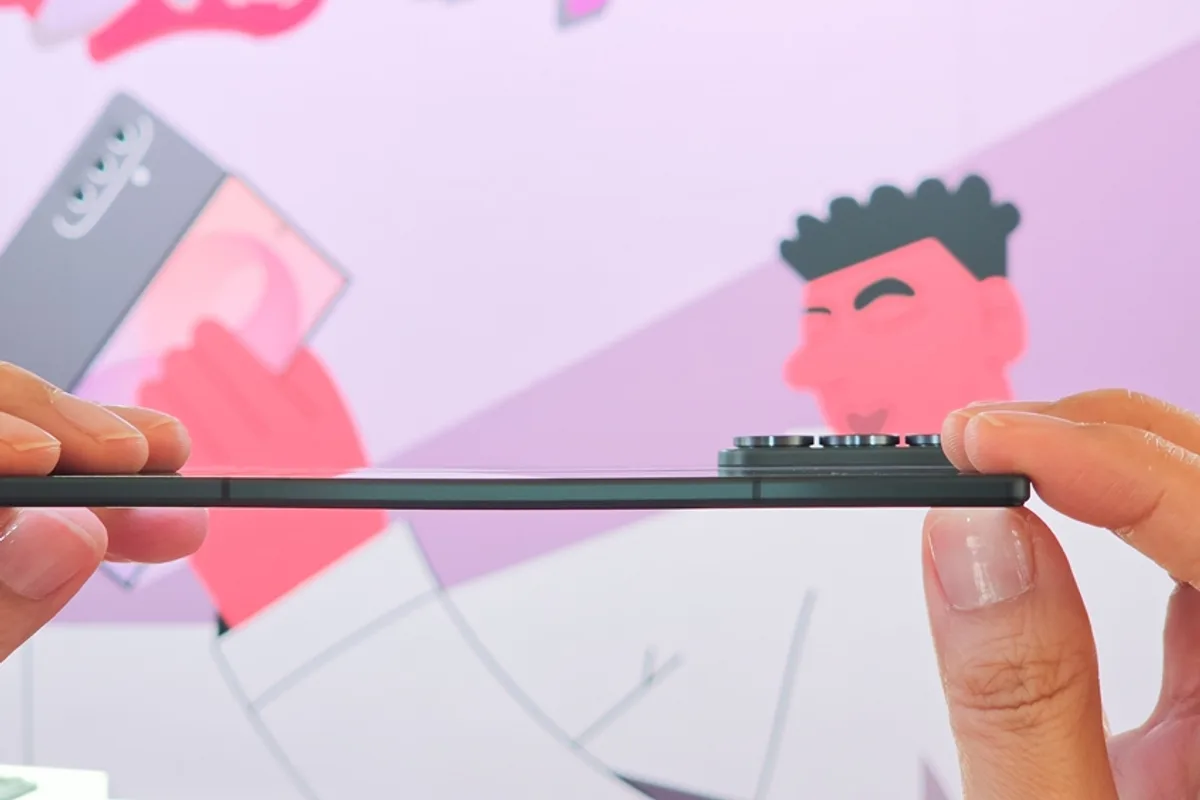
The Fold8 Ultra shows where the extra density went
The Galaxy Z Fold8 Ultra carries a 5,000mAh typical battery while measuring just 4.1mm thick when unfolded. The standard Fold8 reaches 4,800mAh.
The Flip8 stays at 4,300mAh, matching the previous generation's capacity. Its benefit appears elsewhere: Samsung made the new Flip thinner without cutting battery capacity.
Battery chemistry was only part of that packaging gain. Samsung also says changes to the display support structure reduced its thickness by about 10%, freeing internal volume for the battery, cooling hardware and other components.
The engineering achievement is therefore not simply 5,000mAh. It is where Samsung managed to put those 5,000mAh.
Charging had to change too
The Fold8 and Fold8 Ultra use a dual-path charging architecture designed to distribute power more efficiently through the battery system and improve thermal management.
Samsung rates the Fold8 Ultra for 45W wired charging and says it can reach roughly 67% in 30 minutes under its specified test conditions.
The Flip8 uses a different charging architecture optimized for its smaller clamshell layout. The chemistry may be shared, but the thermal and packaging constraints are not.
The uncomfortable specification is 1,200 cycles
Higher energy density solves one problem. Long-term degradation is another.
European energy-label data rates the Z Fold8 Ultra, Fold8 and Flip8 for 1,200 charge cycles before reaching 80% of original capacity. The previous Fold7 and Flip7 were rated at 2,000 cycles under the same regulatory framework.
That difference cannot be blamed entirely on silicon-carbon because the certification applies to the complete battery system rather than one material in isolation.
It does show why density is not the only useful battery metric. Samsung says it designed the new system for long-term stability and reliability, but without publishing the silicon concentration or cell-level degradation data, the exact chemical trade-off remains difficult to quantify.
Early endurance results favour the larger Folds
Tom's Guide measured 14 hours and 9 minutes from the Fold8 Ultra and 12 hours and 20 minutes from the Fold8 in its battery test. The previous Fold7 reached 10 hours and 44 minutes.
Those gains cannot be assigned to battery chemistry alone. The processor, display efficiency, software and larger nominal capacities all affect runtime.
The Flip8 is more revealing in a different way. It retains the same 4,300mAh capacity as the Flip7 and improved only from 12:24 to 12:50 in that test, while Samsung made the hardware thinner.
In other words, silicon-carbon is being used as a packaging technology as much as an endurance technology.
Samsung is joining the race cautiously
This does not look like Samsung chasing the largest battery number available. Rivals already sell phones with much more aggressive silicon content and capacities above 6,000mAh.
Samsung has instead introduced the chemistry in the category where internal volume is most difficult to find and where uncontrolled cell expansion would be especially awkward.
A 5,000mAh Fold8 Ultra at 4.1mm when open is still a meaningful result. The more important signal is that Samsung now considers silicon-carbon mature enough to ship inside a Galaxy at all.