
 By Camille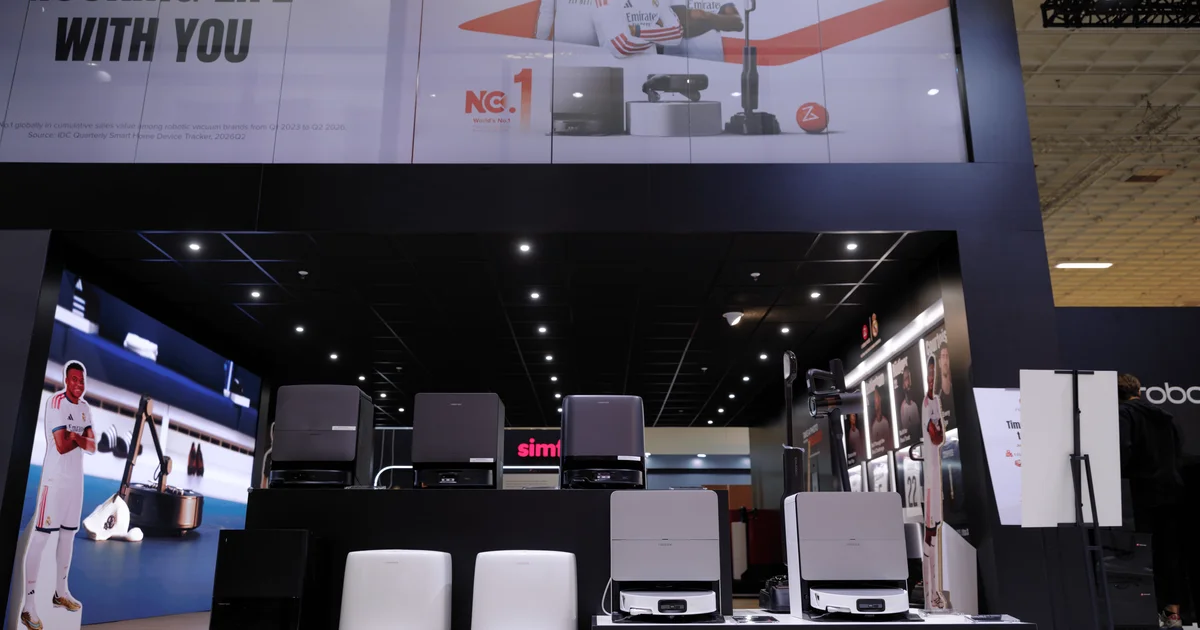
Saros 20 Flow keeps washing its roller while it moves
Saros 20 Flow Complete pairs Roborock's claimed 36,000Pa HyperForce motor output with SpiraFlow 2.0, a roller-mop system fed through 16 pressurized fresh-water outlets.
At its highest setting the roller reaches 240rpm. Roborock specifies up to 15N of downward mopping pressure.
Rather than repeatedly dragging one dirty pad through the house, the system continually feeds the roller with fresh water and separates recovered dirty water.
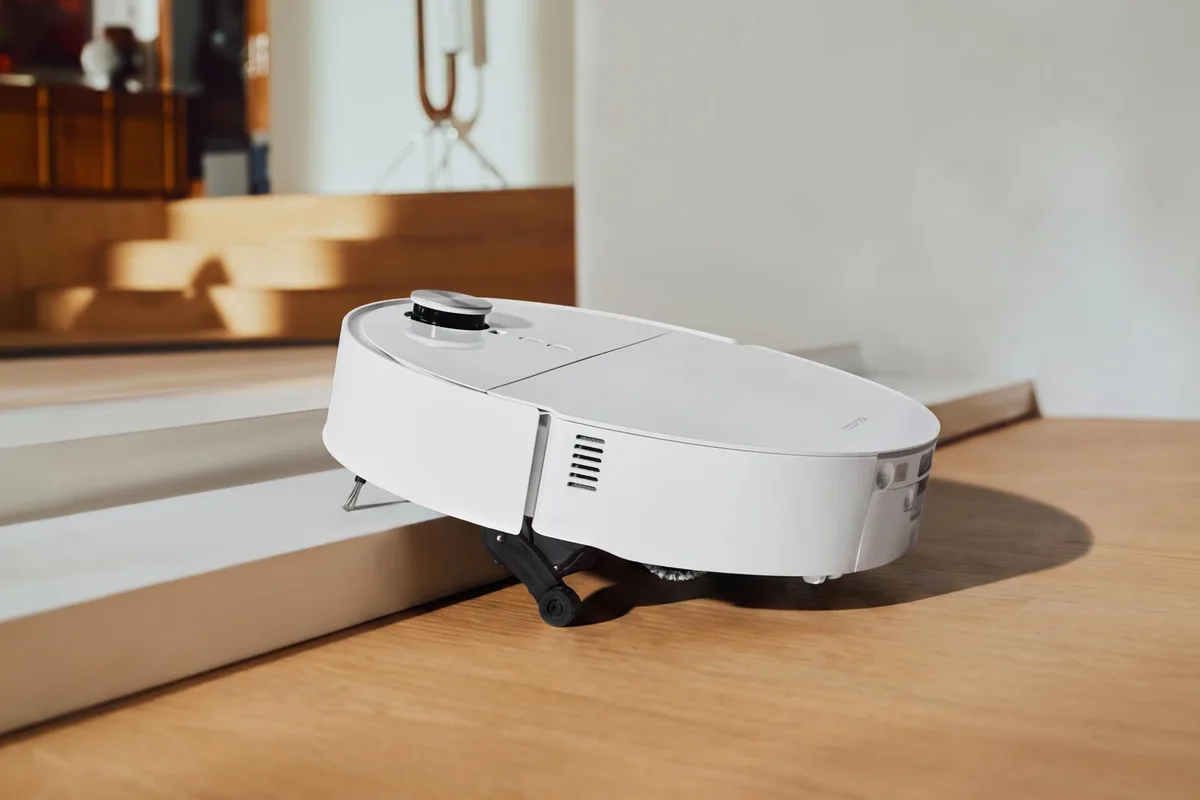
The dock can wash the mop with water heated up to 100°C and dry it with air up to 63°C. A 6,400mAh battery is rated for an estimated 200 square metres of whole-home coverage under Roborock's own test conditions.
8.8cm is a two-stage threshold
AdaptiLift Traverse 3.0 adds a mechanical climbing arm rather than relying on wheel traction alone.
Roborock's maximum 8.8cm figure applies to a specific double-layer obstacle: the first section can be up to 4.5cm high and the second less than 4.3cm.
It is not an 8.8cm vertical step.
The Flow itself stands 8.98cm tall and retracts its LiDAR assembly when moving beneath low furniture.
Sonic uses vibration instead
Saros 20 Sonic keeps the same 36,000Pa headline but replaces the Flow's roller with VibraRise 5.0.
Its extending mop applies up to 14N and operates at 4,000 sonic vibrations per minute. Roborock says the vibrating corner area is 27 percent larger than before.
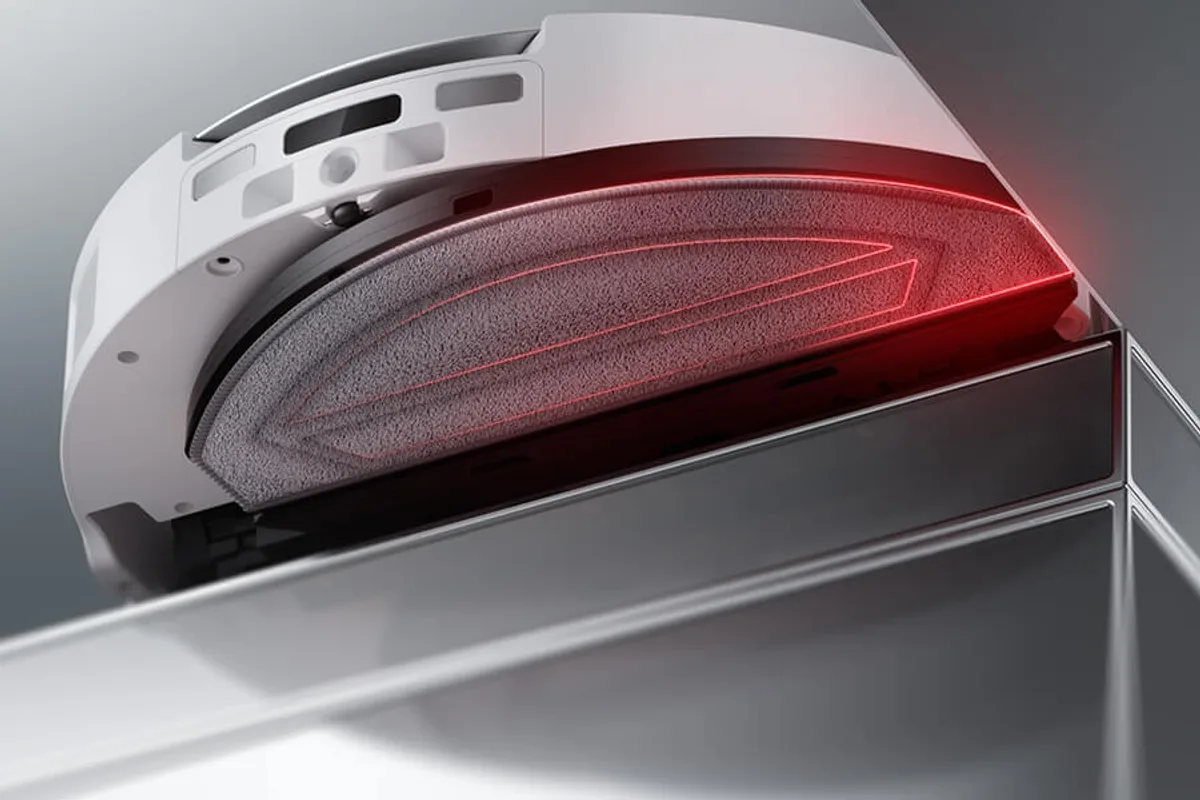
The robot is only 7.95cm high and its AdaptiLift system is also rated for a combined 4.5cm plus 4.3cm double-layer threshold.
The interesting choice is no longer simply which flagship vacuum is stronger. Roborock now has two genuinely different high-end floor-washing mechanisms in the same generation.
F25 Ultra Steam Gen 2 reaches 180°C
The F25 is the odd one out because it still needs somebody to push it.
Pulling the trigger activates VaporFlow 2.0's Turbo Steam mode. Roborock quotes up to 5,000mg of steam per minute, a 30-second preparation time and stable steam reaching 180°C under its test conditions.
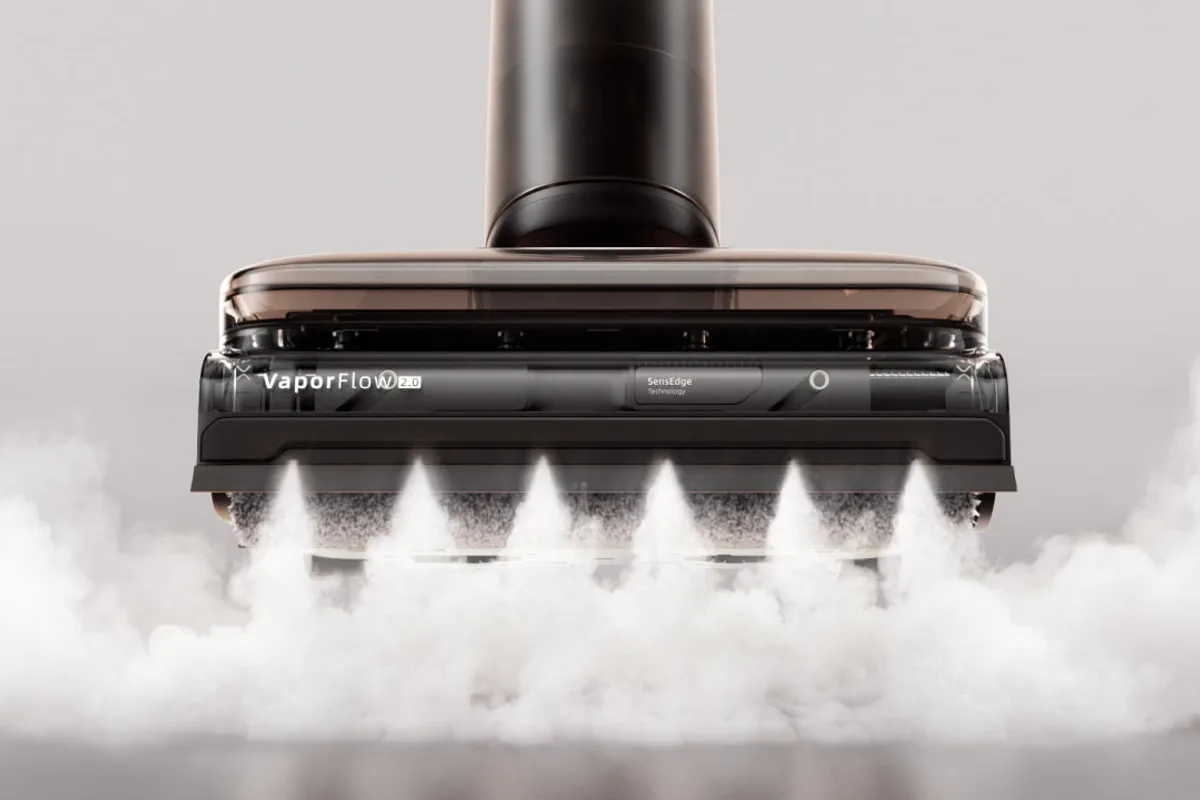
WaveFlow handles greasy residue with water up to 90°C instead.
Roborock also cites TÜV Süd testing for hygiene performance and simulated long-term use on wooden flooring. Those claims are tied to defined test protocols rather than being universal outcomes for every floor and stain.
Runtime is rated at up to 100 minutes. A SensEdge robotic arm brings the cleaning head toward three edges with a claimed zero-millimetre gap.
The lawn mower gets 3D LiDAR
RockMow Z1 LiDAR combines four-wheel drive, active front steering and suspension with Roborock's Sentisphere perception system.
The new sensing stack fuses 360-degree 3D LiDAR and VSLAM. Roborock specifies 200,000 captured points per second and a 70m detection range.
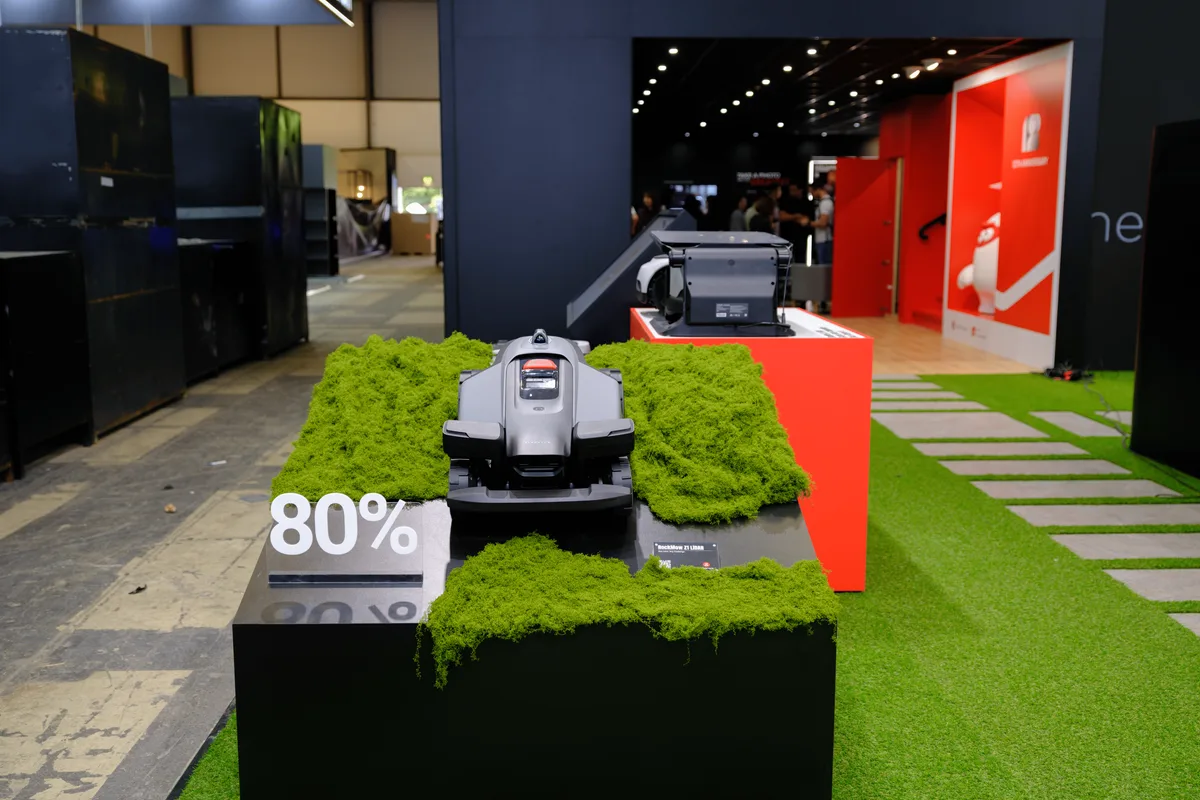
Its mobility figures are unusually aggressive for a consumer mower: slopes up to 80 percent, equivalent to 38.7 degrees, and obstacles up to 8cm.
Six blades provide an adjustable cutting height from 20 to 70mm. Under Roborock's EGMF-based testing, the mower can cover as much as 2,000 square metres per day including charging time.
The French product page currently lists it from €2,799.
RockAqua P1 takes the same autonomy argument underwater
The cordless RockAqua P1 tackles pool floors, slopes, waterlines and shallow platforms.
Roborock says it can operate in water only 15cm deep, using anti-fall sensors around shallow shelves.
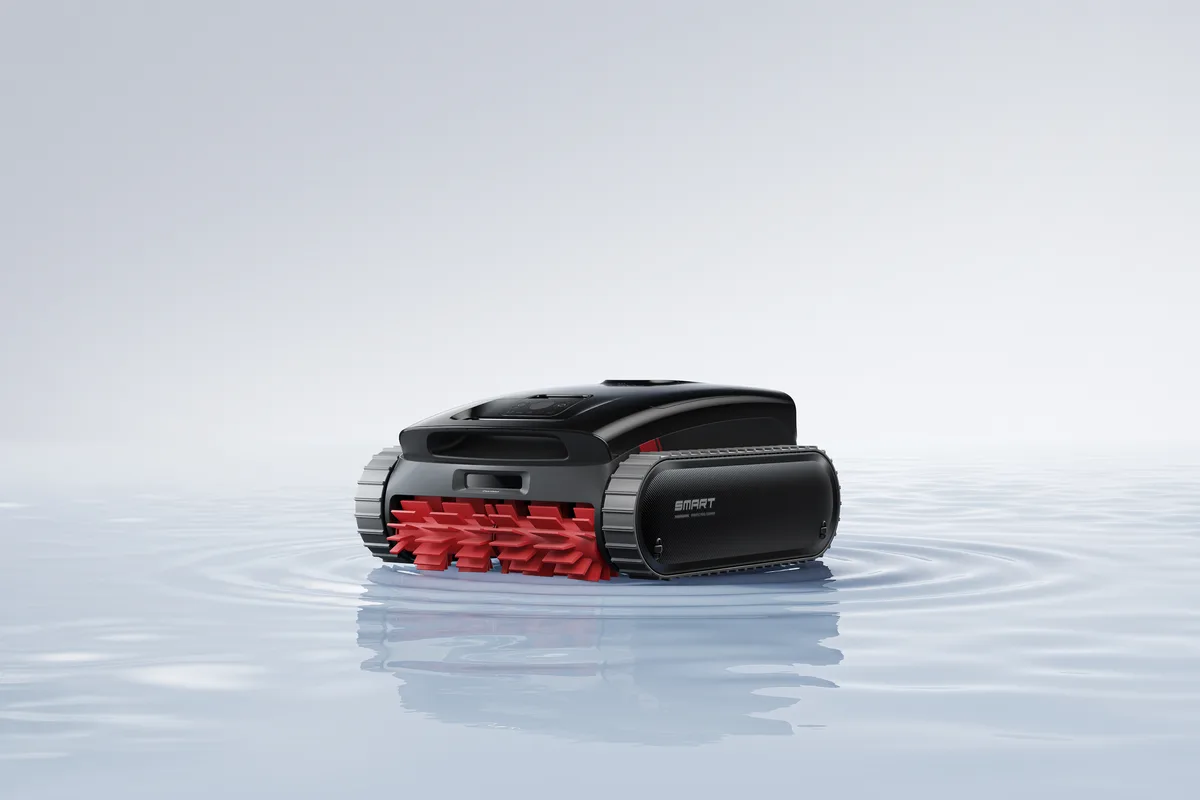
ClearVision patrol mode looks for visible debris such as leaves and prioritizes dirtier areas. A separate waterline mode repeatedly scrubs along the side of the pool.
Water flow is rated at 6,800 gallons per hour, or roughly 25,700 litres per hour. Filtration uses 180-micron and 70-micron layers feeding a 4-litre debris basket.
If cleaning finishes or battery level falls below 15 percent, Auto Waterline Parking brings the robot back toward the edge for retrieval.
Roborock's own product page still says a fuller reveal is coming, so the commercial specification is not complete yet.
Then the Rover starts walking upstairs
Saros Rover is operating on a completely different timescale.
First shown at CES 2026, the development project mounts wheels on articulated legs. Each side can raise and lower independently, allowing the main body to remain relatively level as the robot negotiates a staircase.
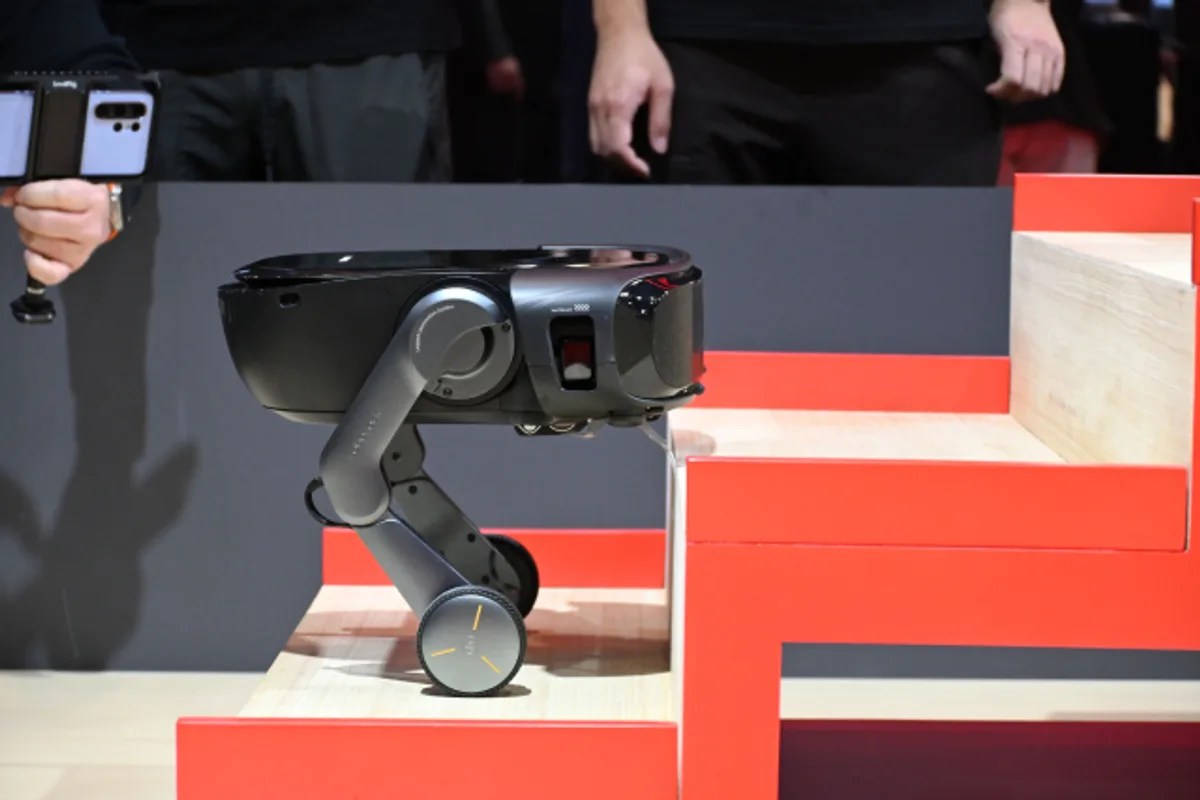
At IFA, a demonstration observed by Tom's Guide showed Rover ascending and descending steps while cleaning them individually. The sequence took about three minutes.
The speed is almost beside the point. Conventional robot vacuums still treat a staircase as the end of their world.
Rover is still a prototype, not another item on the shopping list
There is no confirmed price, release date or complete consumer specification.
Roborock continues to describe Saros Rover as a product in development. A controlled trade-show demonstration proves considerably less than years of autonomous operation in homes with different stair widths, surfaces, edges and lighting.
Battery cost, mechanical wear and fall safety are still unanswered.
Mobility is becoming the specification that matters
The 36,000Pa figure appears on enough of Roborock's new flagships that it almost fades into the background.
Flow physically climbs thresholds. Sonic raises itself for carpet. RockMow drives up severe slopes. RockAqua adapts its route to underwater geometry. Rover goes further and changes the geometry of its own drivetrain.
The common layer is perception and motion control: mapping, obstacle recognition, route planning and increasingly elaborate mechanisms for changing what the machine can physically reach.
At IFA 2026, Roborock still sells vacuum cleaners. Its stand is starting to describe something much broader.