
 By Camille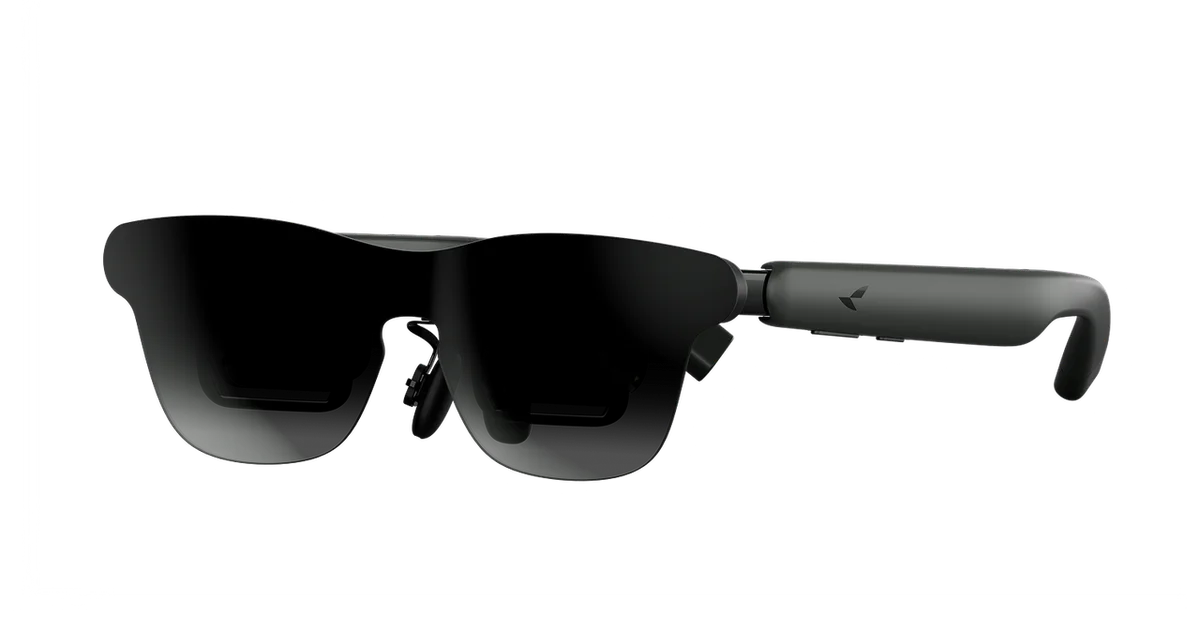
The 59-degree field of view matters more than the headline screen size
RayNeo fits two 0.6-inch SeeYa Micro-OLED panels inside the GT Max, with 1920 × 1080 resolution per eye. Two-dimensional content can run at up to 120Hz, while 3D playback is specified at 60Hz.
Its Peacock Optical Engine 3.0 Max expands the field of view to 59 degrees. RayNeo quotes 38 pixels per degree, 98 percent DCI-P3 coverage and a 200,000:1 contrast ratio.
The virtual display has three scaling settings. RayNeo describes them as 227, 267 and 307 inches, with the 267-inch presentation used prominently during the IFA launch.
Those are perceived screen sizes rather than physical dimensions. The wider field of view is the specification that determines how much of the wearer's vision the display can actually occupy.
Brightness changes when the display is pinned
RayNeo rates the display at up to 1,200 nits in its non-pinned modes. Pinned Mode, which locks the virtual screen at a fixed spatial position, is specified at 336 nits.
The panels use 3,840Hz PWM dimming and the optical system supports a 120Hz refresh rate.
RayNeo also offers several picture presets, including movie, office and eye-protection modes.
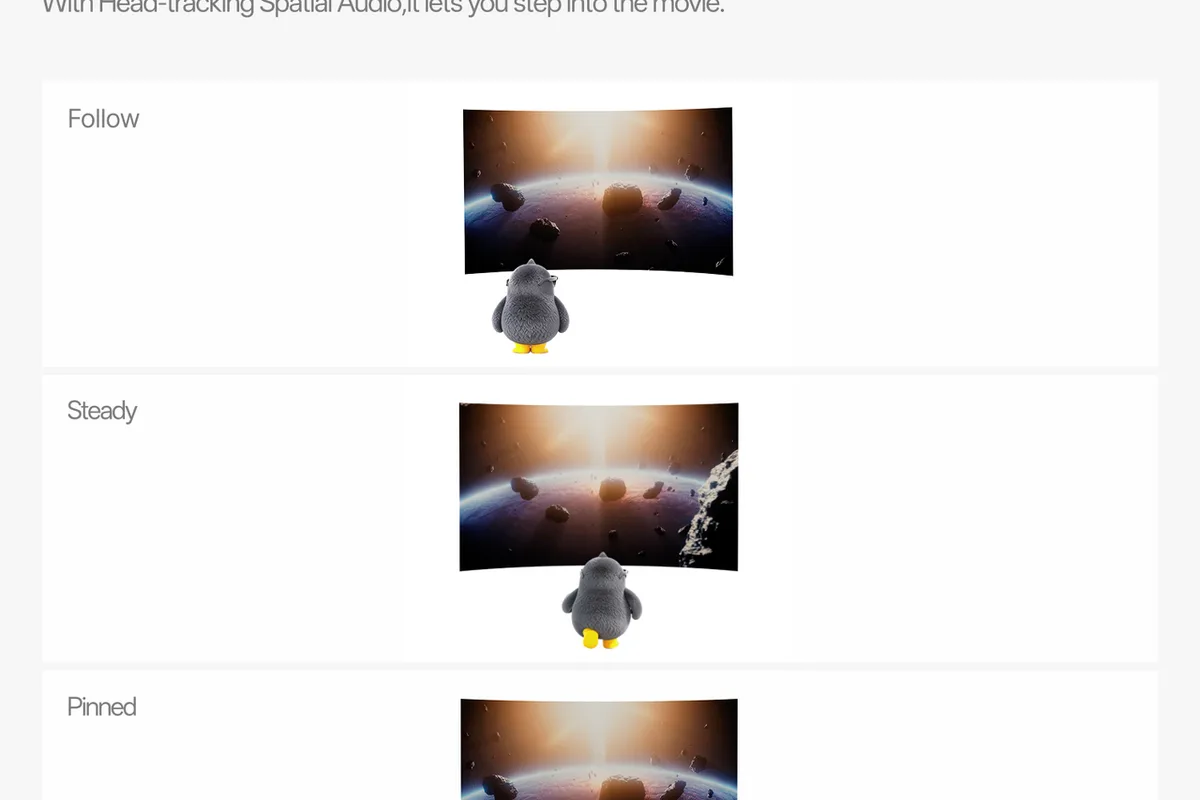
The second chip is there for head tracking
There are two processors inside the display system. Vision 4000 handles image processing, while the Zone 360 chip performs native three-degrees-of-freedom tracking.
That means yaw, pitch and roll are tracked locally. The glasses know how the user's head rotates, but this is not full six-degrees-of-freedom room tracking.
Follow Mode lets the screen move with the wearer's view. Steady Mode reduces movement during travel, while Pinned Mode keeps the display anchored to a virtual location.
The tracking workload stays on the glasses rather than relying entirely on a connected phone or PC.
Dolby Vision has an accessory caveat
RayNeo describes the GT Max and Pocket TV Pro combination as its Dolby Vision AR system. The second half of that sentence matters.
Pocket TV Pro is a separate Google TV device built specifically around the RayNeo ecosystem. It uses a 6,500mAh battery and is rated for up to 5.5 hours of streaming.
The European price is €219. RayNeo also advertises real-time AI SDR-to-HDR conversion for compatible sources.
Bang & Olufsen tuned the four-speaker system
Four racetrack speakers sit inside the temples. RayNeo worked with Bang & Olufsen on tuning and combines the speakers with head-tracked spatial audio.
Whisper Mode 2.0 is intended to reduce how much sound escapes toward nearby people. A €19 optional acoustic tube can direct more of that sound toward the ear.
Independent testing will be more useful than specifications here. Open speakers on glasses have to balance intelligibility, bass response and privacy without sealing the ear canal.
The frame comes in three actual IPD sizes
At 78 grams, GT Max is much lighter than a conventional VR headset but substantially heavier than normal eyewear.
RayNeo sells three physical versions rather than relying entirely on software IPD adjustment: S for less than 64mm, M for 64 to 67mm and L for more than 67mm.
Prescription inserts are supported as well.
USB-C video support determines whether a phone will work
GT Max does not run films or games by itself. It needs an external video source.
Devices with USB-C DisplayPort output can connect directly. RayNeo lists compatible recent iPhones, Android phones, notebooks, PCs and USB-C gaming handhelds among the supported hardware.
HDMI devices such as a PlayStation 5 or Xbox require an adapter. RayNeo's own HDMI adapter costs €64 in Europe.
A USB-C connector alone is therefore not enough. The source device needs to support video output over that port.
European pricing starts at €459 during launch
RayNeo's European store lists GT Max at a €459 introductory price, down from its regular €489 figure. US launch pricing is $399.
International sales start on September 4, the first public day of IFA Berlin 2026.
The standard GT costs €339 during the European launch promotion, weighs 68 grams and uses a narrower 46-degree field of view with a maximum advertised 231-inch virtual display.
The GT Max was formally presented at IFA on September 3 and goes on sale the following day.