
 By Adri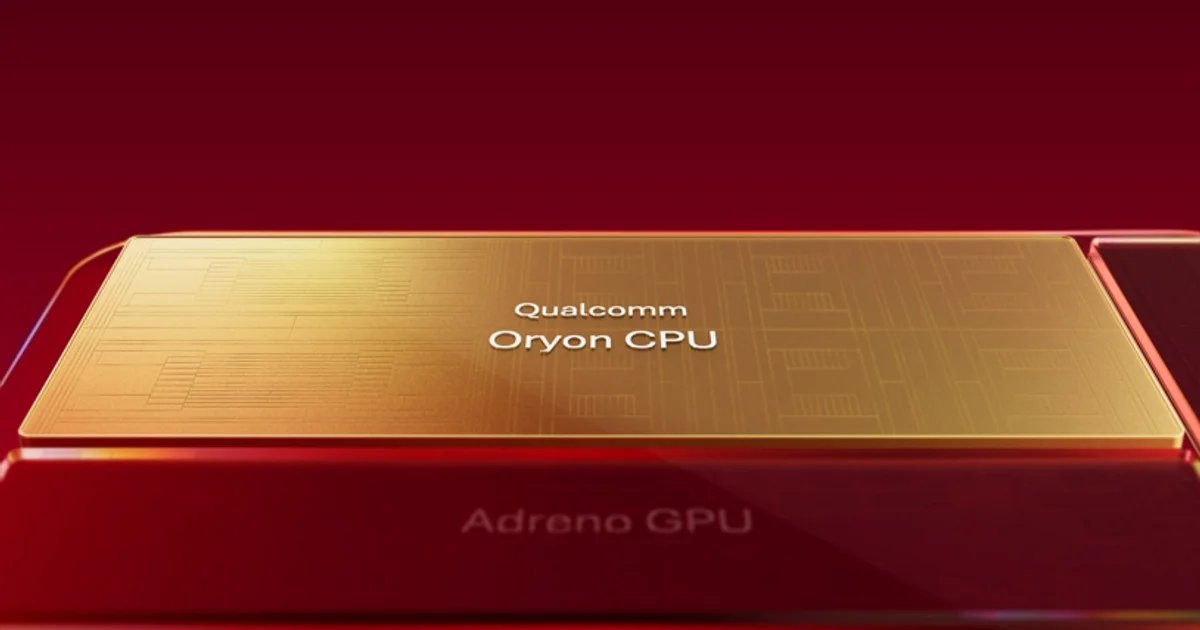
Qualcomm has started revealing the architecture behind its next premium Snapdragon platform, beginning with the CPU.
The new Oryon design reaches 5GHz, which Qualcomm describes as a first for a mobile CPU. The company is careful not to frame clock speed as the entire performance story, however.
A 5GHz core still stalls when the data it needs is somewhere else.
The 5GHz milestone is not being credited to process technology alone
Qualcomm says the result comes from controlling the full CPU design, including the microarchitecture, implementation choices and surrounding CPU subsystem.
It also emphasizes IPC, or instructions per clock. Frequency tells us how many cycles are available. IPC helps determine how much useful work the processor can complete during those cycles.
Memory behaviour has a major influence on both.
The architecture uses large per-core L1 instruction caches and keeps L2 close to the cores inside the CPU complex. The new piece for this mobile generation is Qualcomm Oryon Flex Cache.
Flex Cache lets different core types share the same pool
Qualcomm describes Flex Cache as a shared pool available to heterogeneous CPU cores, with capacity allocated dynamically according to workload demand.
A Prime core handling a particularly large working set can therefore draw on more of the available pool rather than hitting a rigid local allocation and immediately spilling data into system memory.
That is a different goal from simply making a cache bigger. It is about making available cache capacity less static.
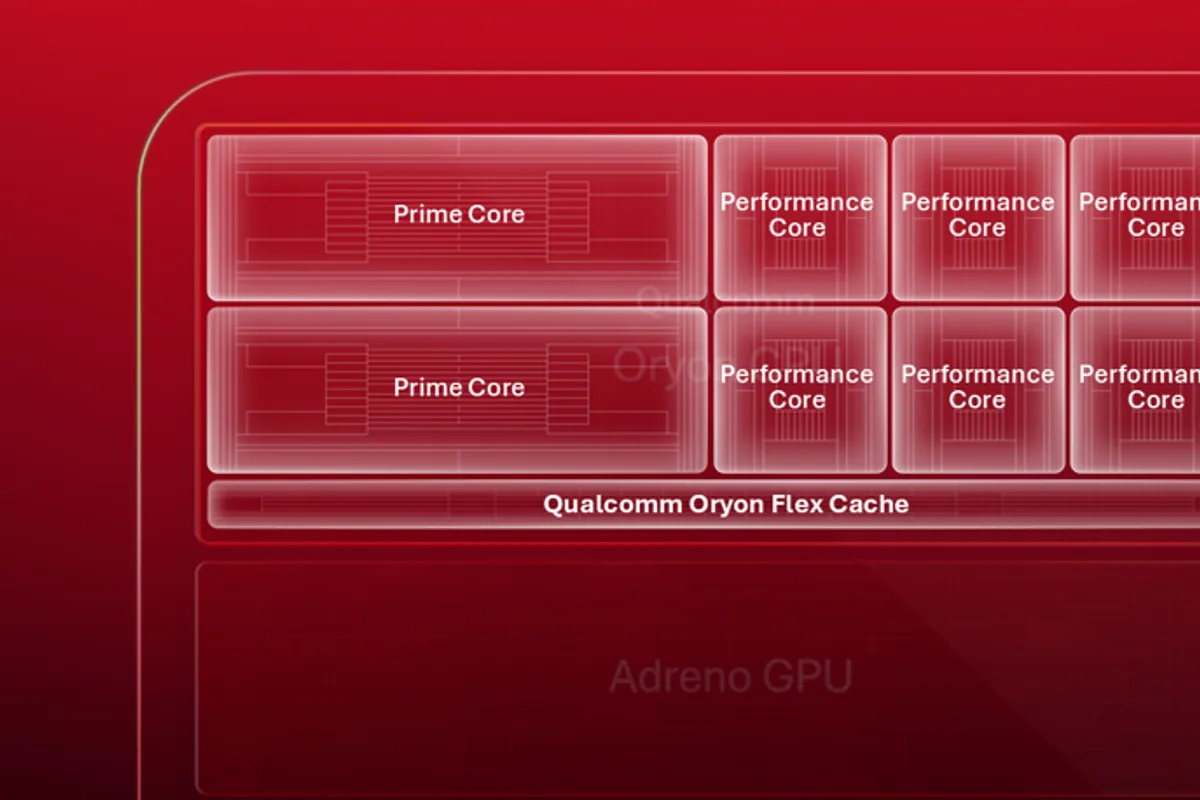
Qualcomm has not disclosed the exact Flex Cache capacity in this CPU preview, so there is no responsible way to compare its size directly with upcoming rival chips yet.
The allocation model is the more interesting part for now.
A cache miss is particularly expensive inside a phone
Processors use cache because it is much faster and closer than system DRAM. Once useful data is no longer resident, the CPU has to reach farther down the memory hierarchy.
That introduces latency and data movement.
Data movement also costs energy. More parts of the SoC have to become involved, and mobile devices have very limited thermal headroom compared with desktop systems.
Keeping a working set local is therefore both a performance and a power-management problem.
Core migration is where a shared pool becomes interesting
Modern mobile CPUs use heterogeneous cores because one core design is rarely optimal for every workload.
A task may start on one core type, become more demanding, migrate to a faster core and later move again as conditions change.
If each handoff effectively begins with cold data, the receiving core spends time repopulating the information it needs.
Flex Cache is designed to reduce that penalty by giving those heterogeneous cores access to the same underlying pool. Qualcomm's argument is that relevant data can remain resident while work moves between cores.
The gain is partly about faster access, but also about avoiding unnecessary eviction and reloading.
Games are an obvious workload for the architecture
A modern game keeps simulation, logic, physics, networking, audio and graphics preparation active at the same time. Its CPU workload is neither tiny nor stationary.
Qualcomm says better access to local cache can help stabilize frame rates and reduce stutter as larger working sets move through the CPU.
That claim still needs independent testing in shipping phones. Scheduler behaviour, cooling, game engines and sustained power limits can all overwhelm a theoretical cache advantage.
The architectural target itself is sensible: very high clock speeds have limited value if the core repeatedly waits on memory.
Multitasking stresses the same system in a different way
Switching between applications continuously moves work between active, background and resumed states.
If useful state remains accessible in a shared cache when another core takes over, resuming that workload can require fewer trips to system memory.
Qualcomm also points to video editing. Decode, effects and export stages can hand frames between different CPU tasks and cores.
Keeping those handoffs closer to the CPU is exactly the kind of problem Flex Cache is intended to address.
Agentic AI makes the CPU orchestration problem larger
Mobile AI is often presented as an NPU benchmark. Real agent workflows involve considerably more than neural-network inference.
The NPU may execute models, while the CPU handles planning, application logic, tool calls, I/O and the transitions between multiple stages of a request.
One user command can therefore become a chain of tasks that moves across the CPU rather than remaining on a single core.
Qualcomm specifically positions Flex Cache around that behaviour. Data can stay resident as work migrates instead of repeatedly falling back to system memory.
The 5GHz peak accelerates a fast thread. Flex Cache is meant to keep the wider workflow from starving it.
System memory is becoming a contested resource
LPDDR performance keeps improving, but the DRAM subsystem is shared by many engines inside a premium mobile SoC.
CPU, GPU, NPU, image processors and other accelerators all need bandwidth. Reducing CPU traffic can therefore leave additional room for something else.
That becomes increasingly relevant as local AI models grow while phone makers remain constrained by memory capacity, board space and power.
Qualcomm explicitly connects Flex Cache with current memory constraints: retaining a large working set locally prevents some of that pressure from reaching system DRAM.
5GHz still tells us nothing about sustained performance
Peak frequency is an operating point. It does not tell us how long a phone can maintain it.
Qualcomm has not yet provided enough information in this preview to judge 5GHz power consumption, sustained clocks, device temperatures or the exact cache capacity.
Those omissions matter more on a phone than almost anywhere else.
A processor capable of hitting an extreme frequency briefly and one that maintains most of its performance through a long gaming session can produce very different user experiences.
Qualcomm has not named the final flagship platform yet
For now, Qualcomm refers to the chip as its next-generation premium Snapdragon platform rather than providing its final commercial name in the CPU announcement.
The company is revealing the CPU, GPU and NPU architecture in stages ahead of Snapdragon Summit 2026.
The CPU preview already shows where the design philosophy is heading. Five gigahertz is the easy number to market. Flex Cache is an attempt to make sure those five billion cycles per second spend less time waiting for data to arrive.