
 By Adri
Arc B390 reaches 12 Xe cores
Acer lists Intel Arc G3 Extreme with Arc B390 graphics at the top of the PA07-I51 range. The integrated GPU reaches 12 Xe cores.
A lower configuration pairs an Arc G3 processor with Arc B370 graphics.
Arc B390 uses Intel's Xe3 graphics architecture and supports XeSS 3. Intel's current feature set combines AI upscaling with newer frame-generation techniques, including Multi-Frame Generation.
The 24GB memory pool is shared
Atlas 7 supports up to 24GB of LPDDR5X running at 7,467MT/s. The integrated GPU accesses system memory rather than carrying a separate dedicated VRAM pool.
That is a healthy capacity for a handheld PC, although some of it must serve Windows and CPU workloads as well as graphics.
Acer installs up to a 1TB PCIe Gen4 NVMe SSD in an M.2 2280 slot. UHS-II microSD is also supported.
1080p at 120Hz is an ambitious native target
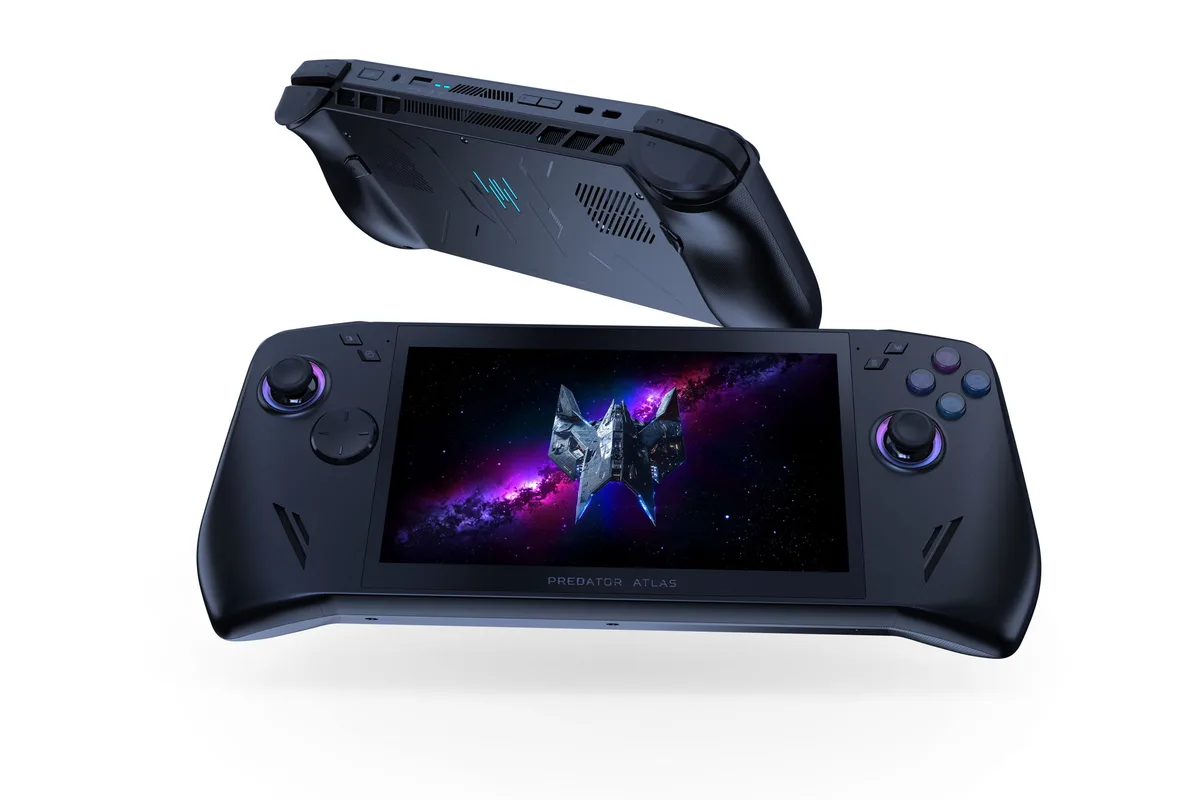
The display is a 7-inch IPS-level 1920 × 1080 panel with 120Hz refresh and VRR. Acer rates brightness at 500 nits.
Native 1080p at triple-digit frame rates is a substantial workload for any integrated GPU in demanding games.
That makes the surrounding technologies important. VRR can keep lower and fluctuating frame rates visually smooth, while XeSS gives developers and users a path to rendering below native resolution when the B390 cannot sustain the desired performance.
Cooling uses one metal fan and one conventional fan
Acer builds a dual-fan system around the processor. The primary AeroBlade unit uses 89 metal blades, each 0.1mm thick.
The company claims more than a 10 percent airflow improvement over a plastic fan based on internal testing. A second plastic fan operates alongside it, while Vortex Flow channels guide exhaust through the chassis.
No independent Atlas 7 temperature, noise or sustained-power data is available from the announcement itself.
Battery capacity changes the weight class
The 80Wh version weighs less than 750g. Choosing the 60Wh battery takes the specification below 700g.
Acer lists a 65W USB-C power adapter.
It does not quote gaming endurance in hours, leaving power limits, display settings and the final Arc G-Series efficiency to determine what either battery actually delivers.
Dual Thunderbolt 4 makes docking unusually straightforward
Two Thunderbolt 4 ports give Atlas 7 enough high-speed connectivity for charging, displays, storage and docking hardware.
Intel Killer Wi-Fi 7 BE1775s and Bluetooth 5.4 handle wireless connections. UHS-II microSD and a 3.5mm combo audio jack are also built in.
The machine runs Windows 11 Home and uses PredatorSense for performance modes, system monitoring and RGB controls.
The controller hardware varies by configuration
Hall-effect analog triggers are standard in Acer's specification. The joysticks can be conventional carbon-film units or optional TMR sticks depending on model.
TMR sensing measures magnetic-field changes without the resistive contact used by a traditional potentiometer. Acer describes the option as providing zero dead zones and improved anti-drift behavior.
That option status is important: buyers will need to check the exact regional configuration rather than assuming every Atlas 7 carries TMR sticks.
Price and sustained performance are still missing
Acer plans to ship Predator Atlas 7 in EMEA from November 2026, with North American availability during Q4.
No price has been announced.
That leaves the Arc B390 in an unusual position for now. The hardware around it looks serious, but its real handheld value needs both a retail price and independent measurements of sustained gaming performance.