
 By Tsuky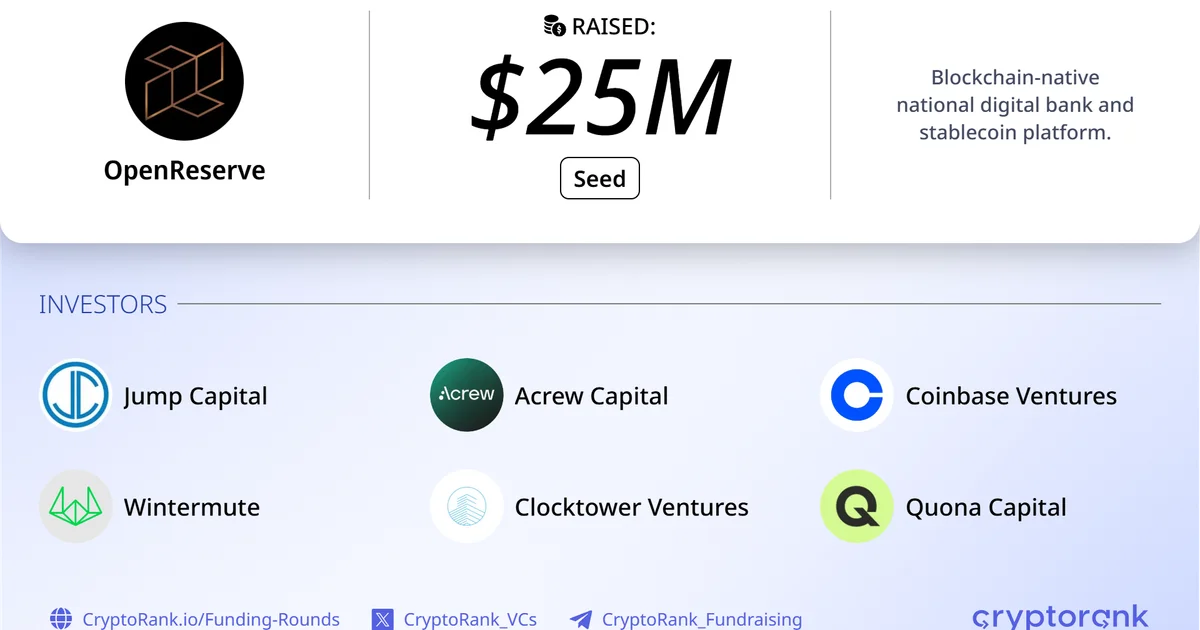
The approval is real, but the bank is not open
The Office of the Comptroller of the Currency approved OpenReserve Bank, National Association's de novo charter application on September 2, 2026.
The application had been filed on April 13 and places the proposed bank in Salt Lake City, Utah.
OpenReserve remains a bank “in organization.” Preliminary conditional approval is a major regulatory step, but it does not authorize the company to begin taking customer deposits tomorrow.
The first hard number is $210 million
Before opening, OpenReserve must raise at least $210 million in initial paid-in capital after organizational and preopening expenses.
It is also required to maintain a Tier 1 leverage ratio of at least 12 percent throughout its first three years of operation.
The preliminary approval sets time limits around the process. OpenReserve has twelve months to meet the capital requirement and eighteen months to begin business unless regulators extend or modify those deadlines.
FDIC deposit insurance and the remaining preopening approvals are still required.
OpenReserve deliberately chose the full-bank route
The charter type changes what this company could eventually become.
Several digital-asset businesses have pursued national trust structures centered on custody and fiduciary activities. OpenReserve is organizing as a full-service national bank.
Its OCC-approved business plan includes deposits, lending, payments, treasury services, digital-asset services, foreign correspondent banking and banking-as-a-service.
Tokenized functionality is planned across deposit products.
The target is the gap between banking hours and blockchain time
OpenReserve describes its model as continuous banking.
Traditional financial infrastructure still contains settlement windows, cutoff times and multiple disconnected ledgers. Public blockchain networks do not stop because a banking day has ended.
OpenReserve wants to connect those two operating rhythms through a programmable core where conventional bank money and tokenized assets can move with fewer breaks between systems.
Its current platform preview lists tokenized deposits, digital vaults, lending, Treasury products, tokenized money-market funds and tokenized securities among the intended building blocks.
ReserveUSD is a separate regulatory project
The company is also developing ReserveUSD, or rUSD, a dollar stablecoin aimed at institutional capital markets.
OpenReserve plans to place stablecoin issuance and redemption inside a separate subsidiary.
That distinction matters. The OCC's preliminary approval for OpenReserve Bank does not automatically amount to final permission to launch every stablecoin service described by the group.
The stablecoin subsidiary remains subject to its own regulatory path.
One institution could connect deposits, lending and digital assets
Crypto finance has often divided these jobs among specialist companies.
Custodians hold assets. Stablecoin issuers manage reserve-backed tokens. Exchanges provide trading and traditional banks handle deposits, credit and much of the underlying fiat infrastructure.
OpenReserve's design attempts to put more of that workflow within one federally supervised banking structure, while keeping separate legal entities where required.
For institutional clients, the practical goal is less friction when capital moves between bank deposits, digital assets, collateral and settlement.
The OCC also wants to see what is under the hood
Blockchain-native does not mean exempt from conventional bank technology controls.
Preopening conditions require detailed information about OpenReserve's information systems and operating architecture, including risk assessment and management planning.
The electronic banking platform must also undergo independent security review and testing.
Those requirements will matter considerably if the same infrastructure is expected to handle regulated deposits and always-on digital settlement.
A $25 million startup round is not bank capital
OpenReserve previously raised a $25 million seed round led by a16z crypto.
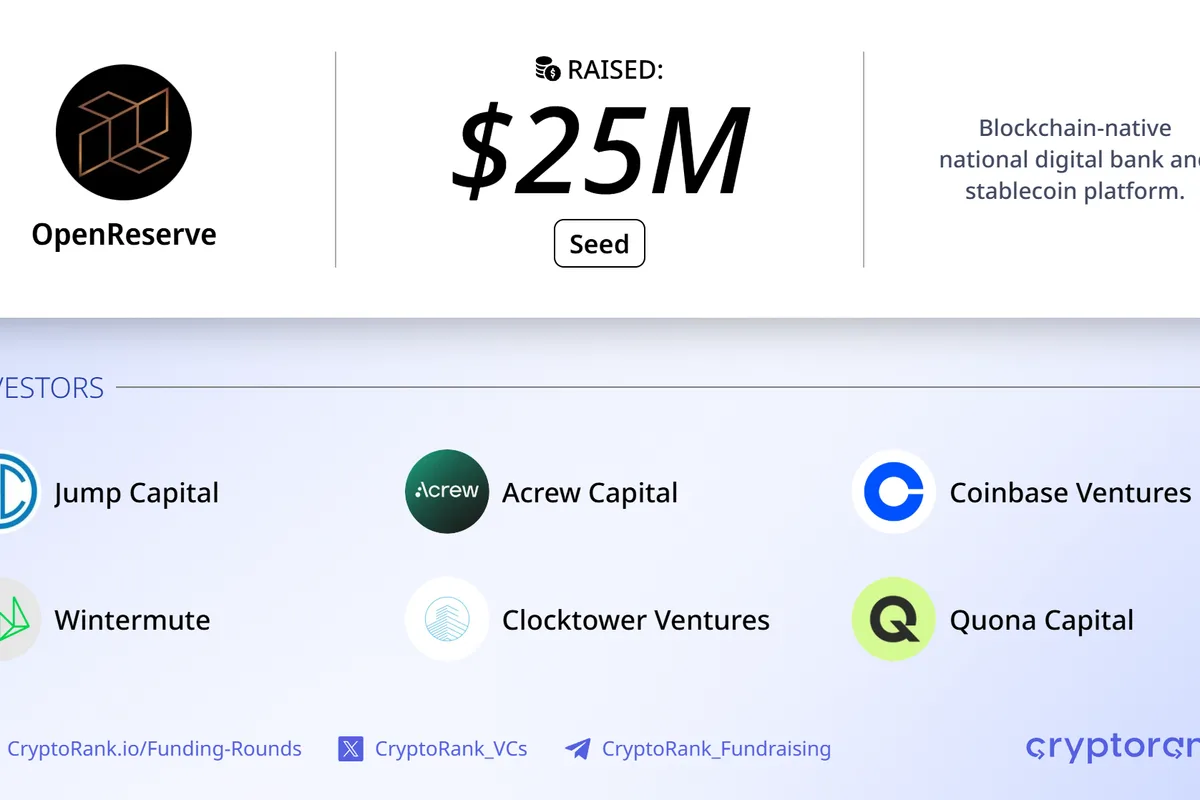
Investors associated with the company include Coinbase Ventures, Jump Capital, Acrew, Wintermute, Clocktower and Quona.
The OCC's $210 million requirement is a useful reminder that venture funding and regulatory bank capitalization solve different problems.
The team is built around former MoneyLion executives
OpenReserve was founded by Dee Choubey and Richard Correia, both closely associated with MoneyLion.
Choubey founded MoneyLion in 2012. Correia served as its president and chief financial officer before joining OpenReserve.
The wider leadership group also pulls from banking, cybersecurity and regulatory backgrounds as the company prepares for the much less glamorous work between conditional approval and an operating bank.
Crypto is no longer only asking banks for access
For much of the industry's history, the regulatory story was about crypto companies trying to secure accounts, payment rails and custody relationships from established banks.
OpenReserve is attempting the reverse move: build around blockchain-native settlement first, then place an actual national bank around it.
The OCC has allowed that process to continue. Final authorization, FDIC insurance, operational testing and $210 million of initial capital still sit between the idea and the first deposit.