
 By Adri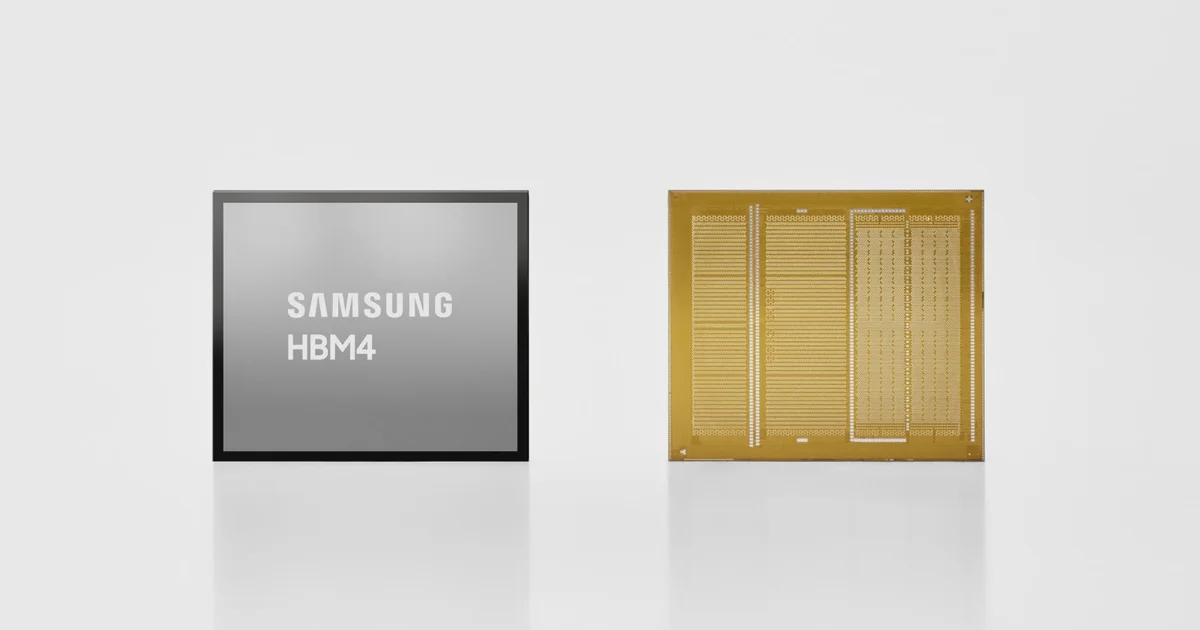
OpenAI is deepening its semiconductor cooperation with Samsung Electronics.
On September 9, OpenAI Korea General Manager Harrison Kim said the companies were working together on next-generation chip production and research.
There is an important limitation to put around that statement immediately.
No new manufacturing contract, specific Samsung-OpenAI chip or additional production schedule was announced.
This is an expansion of existing work between the two companies, not the launch of a finished processor.
The relationship began with an extraordinary amount of memory
Samsung and OpenAI formalized a much broader AI infrastructure partnership in 2025.
Samsung Electronics became a strategic memory partner for Stargate.
The scale was already unusual. OpenAI projected that its memory requirements could eventually reach as much as 900,000 DRAM wafers per month.
At that point, the problem is no longer negotiating the price of a few HBM modules.
It becomes a question of production capacity, packaging, advanced process technology and a roadmap capable of supporting multiple generations of accelerators.
Samsung now has commercial HBM4 in production
The timing is favorable for the Korean manufacturer.
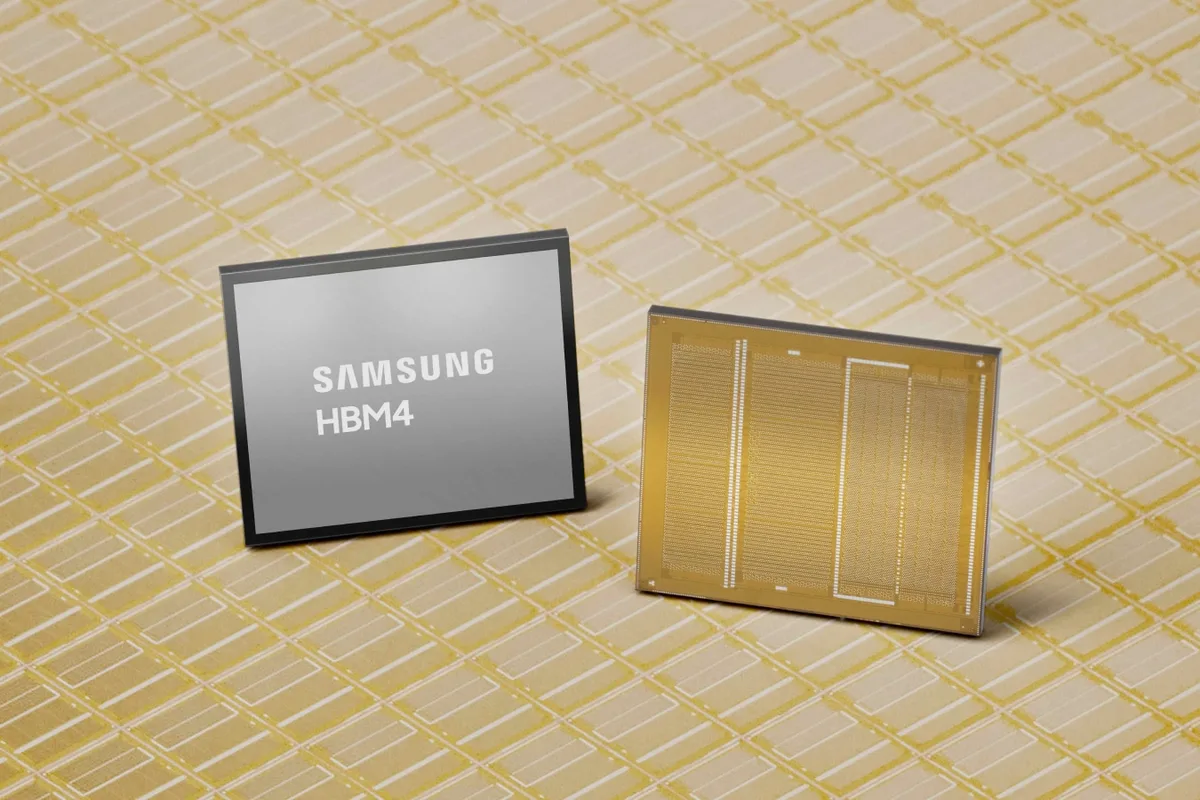
Samsung entered mass production of HBM4 this year and has begun commercial shipments.
Its announced HBM4 runs at a consistent 11.7Gbps per pin and can be pushed as high as 13Gbps.
A single stack can reach up to 3.3TB/s of memory bandwidth.
Samsung also claims roughly 40 percent better power efficiency than HBM3E, a specification that matters considerably more when tens of thousands of accelerators are operating inside the same data-center campus.
Current twelve-layer configurations range from 24GB to 36GB, with sixteen-layer versions planned to extend capacity to 48GB.
But OpenAI needs considerably more than memory
The important word in the September comments is chips, not simply DRAM.
OpenAI has spent several years moving away from a model in which all of its AI infrastructure depends on processors architected entirely by other companies.
In June, OpenAI and Broadcom unveiled Jalapeño, OpenAI's first inference accelerator designed around the company's own understanding of model-serving workloads.
Broadcom is involved in industrializing the platform, while TSMC manufactures the silicon.
That means Samsung's new work should not automatically be interpreted as replacing TSMC on Jalapeño.
OpenAI describes its chip effort as a multi-generation platform, and its Samsung cooperation concerns future semiconductor technologies. Memory, foundry manufacturing, packaging, interconnects and heterogeneous integration could all become relevant.
Samsung happens to own nearly all of those building blocks
That breadth is probably the most interesting reason to work with Samsung.
The company does not simply manufacture DRAM.
Samsung Electronics combines advanced memory, logic foundry capacity, packaging technology and expertise in integrating memory with system semiconductors.
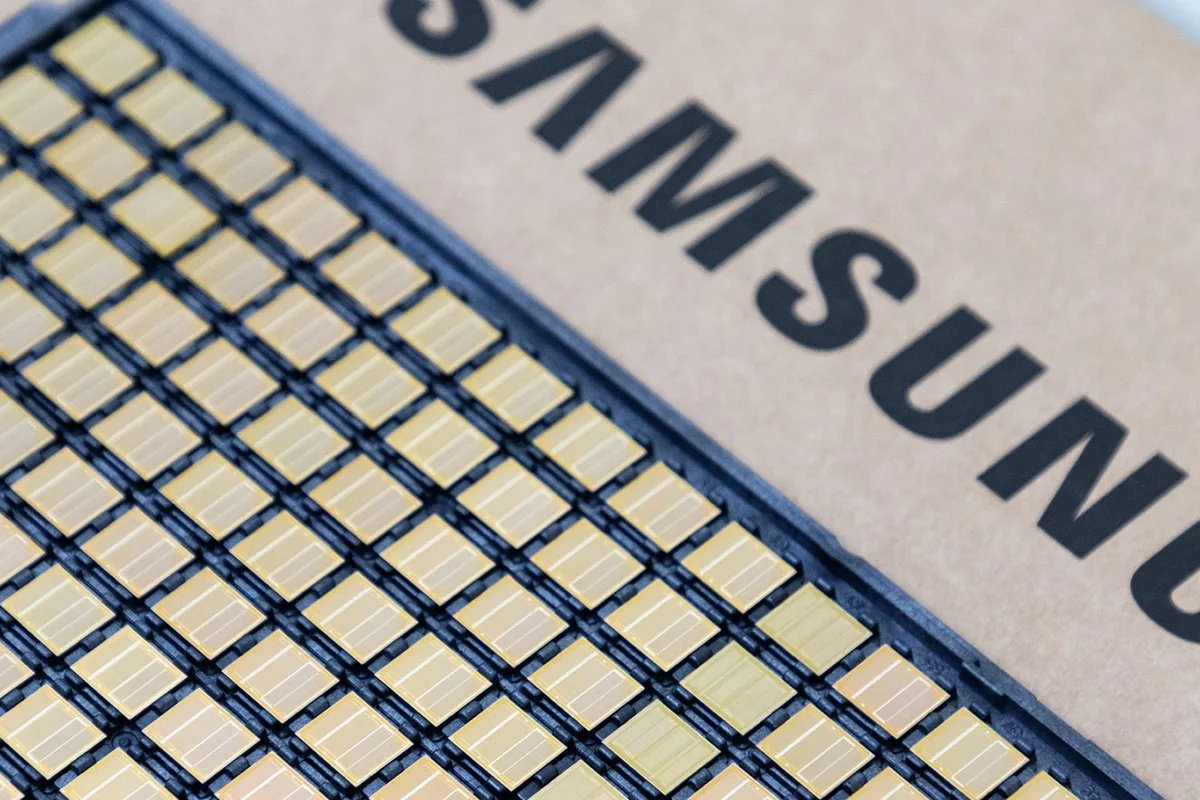
Those layers are increasingly difficult to optimize independently inside modern AI systems.
An accelerator can contain excellent compute units and still lose effective performance if memory cannot feed them quickly enough. High-performance memory is less useful when package design introduces additional power, distance or thermal constraints.
The interesting engineering increasingly happens where the accelerator, HBM, interconnect and package stop behaving like four separate products.
Future accelerators can be designed around memory much earlier
That creates one particularly important possibility.
A customer that can describe a future accelerator years in advance gives a memory and packaging supplier time to optimize around it rather than simply attaching standardized components after the architecture is finished.
Samsung already says it is broadening work with major GPU companies and hyperscalers around next-generation ASIC development.
Its future HBM4E and HBM5 roadmaps are also moving toward greater customization.
Samsung expects customized HBM samples built to individual customer specifications to begin reaching customers in 2027.
OpenAI is exactly the kind of buyer capable of justifying that level of co-design.
Competition with SK Hynix is not going anywhere
The OpenAI relationship does not give Samsung exclusive control of Stargate's memory supply.
SK Hynix also joined OpenAI's memory infrastructure plans.
The two Korean manufacturers therefore remain direct competitors for unusually large and technically demanding AI orders.
That competition matters because HBM has become one of the most restrictive components in the AI supply chain.
If HBM capacity is unavailable, producing more logic wafers does not solve the problem. The finished accelerator cannot be assembled at the required rate.
OpenAI is gradually becoming its own hardware architect
The other shift is happening inside OpenAI.
The company is no longer simply reserving third-party GPUs through cloud providers.
It now works directly with memory manufacturers, designs accelerators with Broadcom, participates in system architecture decisions and builds Stargate with multiple infrastructure partners.
OpenAI says Jalapeño reached tape-out in nine months, with its own AI models assisting parts of the design process.
That means Samsung is increasingly dealing with an OpenAI organization capable of discussing architecture directly rather than acting only as an end customer asking for more capacity.
Samsung is also becoming a major OpenAI customer
The relationship runs in both directions.
In June, Samsung Electronics began deploying ChatGPT Enterprise and Codex to all of its employees in Korea and to its Device eXperience workforce worldwide.
OpenAI described it as one of its largest enterprise deployments.
Samsung is using the tools across software development, R&D, manufacturing, marketing and corporate workflows.
It is therefore becoming both an infrastructure supplier to OpenAI and a large-scale consumer of OpenAI's models.
The real question is how far up the chip stack Samsung will move
For now, the missing details should remain missing.
OpenAI has not announced that Samsung will manufacture its next accelerator. Samsung has not announced an OpenAI-exclusive ASIC. No replacement for Broadcom or TSMC has been confirmed.
What is confirmed is already meaningful.
A partnership that began around an enormous memory requirement is expanding into research and production for next-generation semiconductors.
Samsung's ideal outcome would be to sell OpenAI several layers of the same system: HBM, logic silicon, advanced packaging and potentially foundry capacity.
OpenAI benefits from the opposite dynamic: multiple suppliers and multiple manufacturing options as its compute requirements continue to expand.
The next genuinely important announcement will therefore not be another statement that the partnership is deepening.
It will be a specific component that finally shows which part of OpenAI's future hardware stack Samsung has actually won.