
 By Adri
Nvidia reported $96.2 billion in total revenue for the second quarter of fiscal 2027, which ended July 26. Revenue increased 18% sequentially and 106% from the same period a year earlier.
Data Center generated $89.0 billion of that total, up 117% year over year. Nvidia is no longer a broadly diversified chip company with a fast-growing AI segment in any meaningful financial sense. Its quarterly results are now dominated by the infrastructure race surrounding large-scale AI.
The next target is $108 billion
For the third fiscal quarter, Nvidia expects revenue of $108 billion, plus or minus 2%. The guidance assumes no Data Center compute revenue from China.
Gross margin is expected to land at roughly 74%. The company posted a 75% GAAP gross margin in the quarter just reported, alongside GAAP net income of $59.7 billion.
Reuters also reported that Nvidia is projecting roughly 70% revenue growth for the following fiscal year. That longer runway mattered to investors because concerns around AI spending have increasingly shifted from present demand to the durability of the infrastructure cycle.
Rubin is arriving into a market that is still expanding
Nvidia is now transitioning its data-center roadmap toward Vera Rubin. The company says the platform is in full production, with systems already running at partners including CoreWeave, Google Cloud, Microsoft Azure, Oracle Cloud Infrastructure and Nebius.
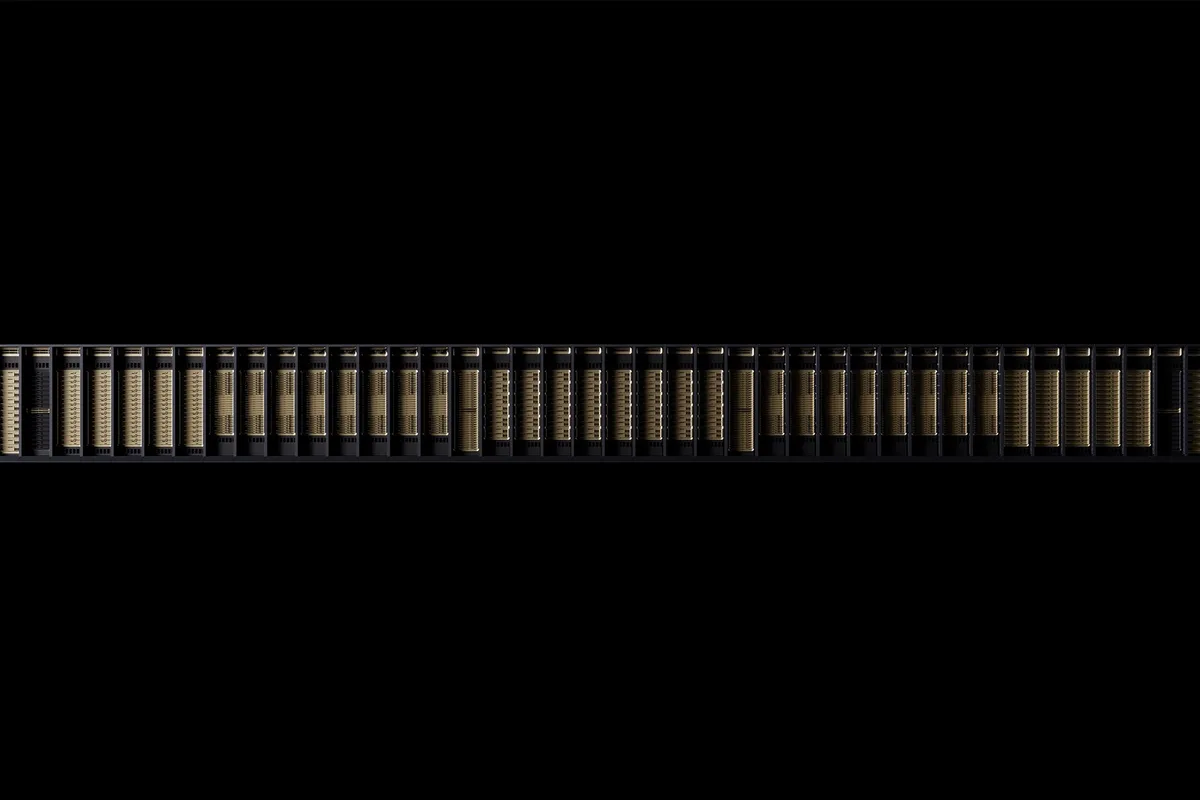
Rubin is designed as more than a GPU replacement. The platform combines the Rubin GPU with the Vera CPU, NVLink 6, ConnectX-9 networking, BlueField-4 and Spectrum-6 infrastructure. Nvidia increasingly sells the data-center architecture as an integrated system rather than treating the accelerator as an isolated component.
The company claims up to 10x higher agent throughput at scale compared with Grace Blackwell for applicable workloads. That is a vendor benchmark rather than a universal performance multiplier, but the production ramp itself is already underway across Nvidia's manufacturing ecosystem.
The market wanted evidence that AI spending had not peaked
Nvidia entered the earnings cycle with an unusual problem for a company still doubling revenue: expectations had become almost as extreme as the growth itself. Investors have been questioning how long hyperscalers can keep expanding capital expenditure at the current pace and when those data centers must begin producing adequate returns.
Custom silicon is another pressure point. Large cloud providers and frontier-model companies are investing in their own accelerators, reducing the assumption that every new AI workload must ultimately run on Nvidia GPUs.
The earnings report temporarily pushed those doubts aside. Reuters reported that Nvidia shares climbed 6.8%, a move that could add close to $296 billion to the company's market capitalization. Intel, Micron, Broadcom and SK Hynix also rose as enthusiasm spread through the semiconductor sector.
Data Center now tells almost the entire Nvidia story
The most revealing figure is not a performance claim for Rubin or a forecast about agentic AI. It is the proportion of Nvidia's current business already tied to data centers. Roughly 92% of quarterly revenue came from that segment.
That leaves Vera Rubin entering production while its predecessor is still benefiting from extraordinary demand. Nvidia is not launching the architecture into a replacement cycle; its customers are still adding capacity.
The company now expects another $108 billion quarter.