
 By Adri
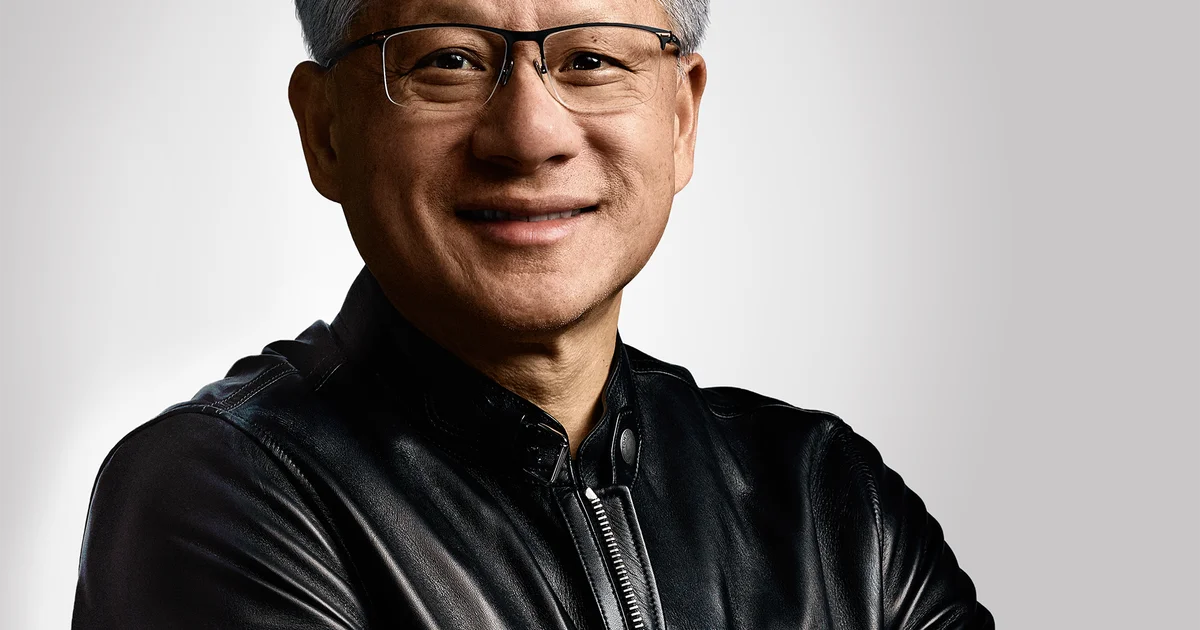
Nvidia is one of the most strategically important companies in the global artificial intelligence industry. Its processors power large-scale training and inference systems, while its networking and computing platforms form a central part of modern AI data centers. That position gives the company's leadership access to information with substantial commercial and geopolitical value. An allegation involving a possible foreign intelligence effort targeting chief executive Jensen Huang therefore carries consequences beyond ordinary corporate reputation management. However, the most important distinction in the story is between an allegation and a confirmed security breach. Nvidia has announced an investigation. It has not announced that its systems were hacked or that confidential technology was successfully obtained.
The board has established an independent inquiry
Nvidia published its official statement on Sunday, November 8. The board said it was initiating an independent investigation after recent reporting alleged that founder and chief executive Jensen Huang had been targeted by a foreign intelligence effort. A committee of independent directors will oversee the review. External independent legal counsel will assist the committee. The arrangement separates the examination of the allegations from the company's ordinary executive management.
The announcement does not constitute a finding of wrongdoing. It also does not establish that an intelligence operation succeeded. Nvidia specifically stated that its board currently has no reason to believe national security or company secrets were compromised. That represents the company's assessment at the start of the process. It is not a final investigative conclusion. The board says the inquiry will examine the available information and provide further updates when appropriate. No completion date has been announced.
The media reporting that prompted the inquiry
The investigation follows a New York Times report published in October. The newspaper described a relationship between Jensen Huang and Alice Huang, a former executive at Megaspeed, a Singapore-based data center company. Megaspeed has purchased advanced AI computing equipment from Nvidia. According to the New York Times, US authorities investigated Alice Huang and reportedly concluded that she had connections to Chinese intelligence.
Those allegations remain attributed to the newspaper and its sources. The publicly available material does not establish that Alice Huang transferred Nvidia trade secrets or that Jensen Huang participated in an intelligence operation. The distinction is critical. A reported intelligence assessment is not the same thing as a publicly demonstrated theft of proprietary technology. The precise evidence behind the allegations has not been fully disclosed.
Jensen Huang acknowledges personal misconduct
Separately, Jensen Huang acknowledged in a message to Nvidia employees that he had been unfaithful to his wife. He apologized to his family and colleagues and accepted responsibility for his personal behavior. His admission has attracted attention because of the surrounding reporting. However, an acknowledgment of an extramarital relationship does not establish espionage or the disclosure of protected information.
Huang said he would cooperate fully with the board's investigation. He also reaffirmed his commitment to the company and to supporting US national security. Nvidia's board said it retains confidence in Huang and his leadership team. The company has not announced his resignation, suspension or replacement. His continued role should not be confused with a declaration that every question under investigation has already been resolved.
Why Megaspeed is relevant to the security concerns
Megaspeed operates in the computing infrastructure market and has bought Nvidia AI chips. That commercial relationship is significant because advanced accelerators have become subject to increasingly restrictive US export controls. Washington has introduced measures intended to limit China's access to certain high-performance computing technologies and the equipment required to manufacture them. The restrictions affect how semiconductor companies and their customers conduct international business.
Reuters reports that US authorities have examined Megaspeed amid suspicions concerning access to chips restricted from export to China. Those suspicions are not equivalent to a publicly established violation by Nvidia or its chief executive. Export-control compliance depends on specific transactions, product classifications, destinations and applicable authorizations. The available reporting does not establish that Huang personally approved an unlawful transfer. His interactions with a customer executive are therefore a subject of scrutiny rather than proof of illegal activity.
The broader security risks for semiconductor leaders
Advanced semiconductor companies handle information that is valuable well before a product reaches the market. Future architectural plans, manufacturing schedules, engineering specifications and customer agreements may provide competitive advantages. Some information can also have implications for national security when it concerns restricted computing capabilities. Senior executives regularly interact with governments, customers and manufacturing partners. Those discussions can involve commercially sensitive issues even when no confidential engineering documents are exchanged.
Intelligence risks can therefore extend beyond conventional cyberattacks. Organizations may be concerned about unauthorized disclosure during personal communications, attempts to influence decisions or efforts to acquire nonpublic business information. These are general security concerns associated with strategically important companies. They should not be presented as confirmed methods used against Huang. Nvidia has not published findings identifying the specific mechanisms of any alleged intelligence operation.
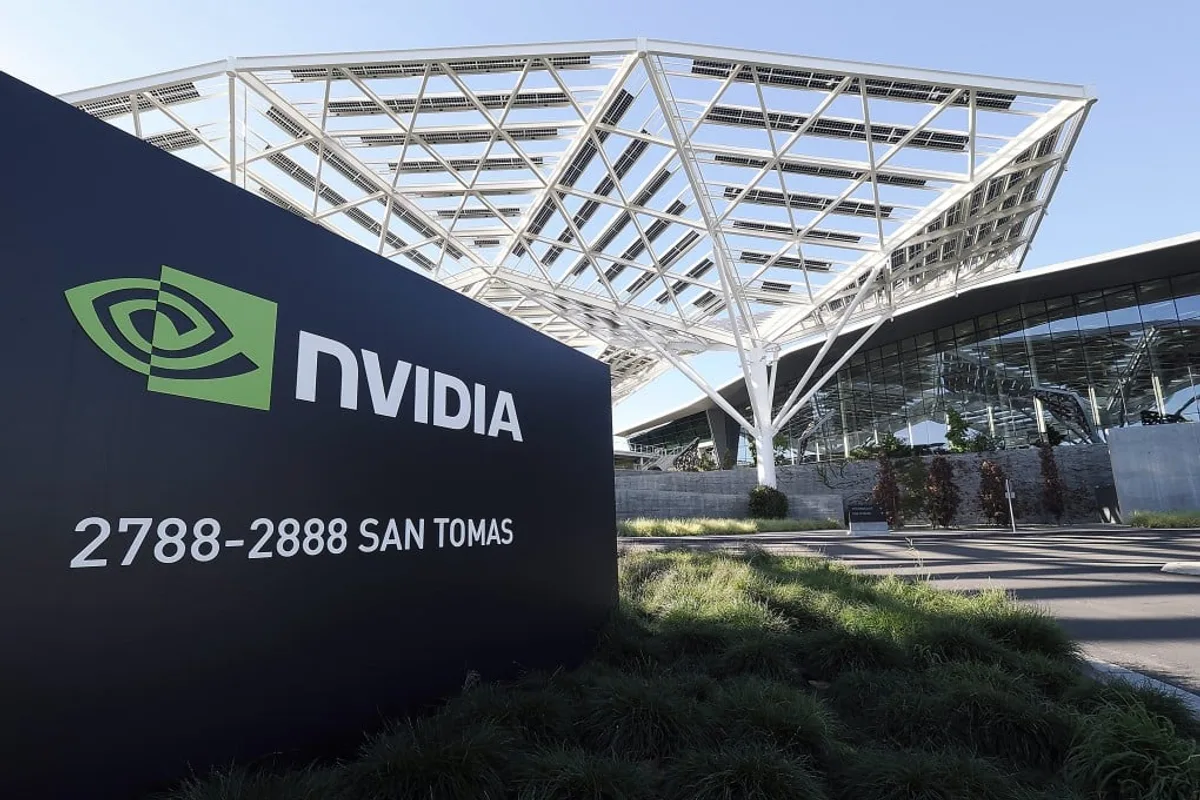
Nvidia's headquarters in Santa Clara, California. The company has not reported a confirmed compromise of its proprietary technology in connection with the investigation.
This is not an announced hacking incident
The word espionage often creates an immediate association with malware, network intrusions and stolen databases. That is not what Nvidia's November 8 statement establishes. The company has not disclosed a ransomware incident, source-code theft or unauthorized access to its development systems. It has not identified compromised customer infrastructure or published technical indicators of a cyberattack. Instead, the announced inquiry concerns reports of a possible foreign intelligence effort directed at its chief executive.
The investigation may consider communications, information access or other matters, but its precise scope has not been publicly detailed. It would therefore be misleading to describe the case as a confirmed cyber breach. There is also no official evidence that Nvidia GPU customers have suffered a security compromise because of the matter. The possible intelligence concerns and the security of deployed computing systems must be evaluated separately.
The board is emphasizing leadership continuity
Nvidia's statement contains an explicit message about Jensen Huang's position. The board says it has confidence in the chief executive and the wider leadership team. Huang has committed to cooperating with the investigation. No immediate change in executive responsibilities was announced.
That commitment to continuity matters because Huang has led Nvidia since co-founding it in 1993. He plays a prominent role in the company's technology strategy, partner relationships and product announcements. His responsibilities extend across semiconductor architectures, AI infrastructure and the commercial positioning of new computing platforms.
For investors, the possibility of uncertainty surrounding a long-serving leader is understandably significant. But speculation about a future leadership change remains speculation. The independent committee has not published conclusions requiring such a step.
US lawmakers are seeking answers
The allegations have prompted political interest in Washington. Reuters reports that senior Republican lawmakers in the US House of Representatives requested a briefing from Huang. A November 4 letter raised questions about possible risks to national security and China's access to sensitive American technology. The lawmakers want more information about the circumstances described in the New York Times reporting.
A congressional request for information is not a legal finding. It does not establish that restricted technology has been transferred or that the chief executive committed an offense. Lawmakers may investigate sensitive commercial relationships without having reached a conclusion about misconduct. The political inquiry and Nvidia's board investigation could proceed on different schedules and examine different questions. No final congressional finding arising from the November 8 announcement has been identified.
Export restrictions make the controversy particularly sensitive
The United States has tightened controls on advanced computing exports to China since 2022. Nvidia has been directly affected because its high-performance accelerators are used in many sophisticated AI systems. The company has had to navigate changing restrictions while maintaining commercial relationships across international markets. This creates a complicated balance between business expansion and government security objectives.
Customers based outside China can also attract attention when authorities suspect that restricted technology could reach unauthorized destinations. Such concerns require evidence about actual equipment movements and transactions. The existence of a customer relationship alone does not prove circumvention. The investigation into reports concerning Huang may intensify the political debate, but it does not automatically change export regulations. No new chip export ban has been announced as a direct consequence of Nvidia's November 8 statement.
Investors face an additional governance uncertainty
Nvidia's importance to the AI infrastructure market makes the investigation commercially relevant. Investors evaluate the company according to demand for accelerators, production capacity, gross margins, competitive developments and management execution. A sensitive review involving the chief executive introduces another uncertainty.
Reuters reported negative trading movements outside the main market session following the latest disclosures. Analysts have also discussed the possible consequences of a prolonged investigation for investor confidence. Some have raised hypothetical scenarios involving leadership changes. Those are market assessments rather than decisions made by Nvidia's board.
Out-of-hours trading can also be less liquid than the regular market. A price movement observed during that period should not be treated as a definitive measure of the company's long-term prospects. The financial impact will depend on what the investigation establishes and whether the case changes actual business operations.
No confirmed disruption to GPU deliveries
Nvidia supplies computing platforms to cloud providers, enterprise customers and other infrastructure operators around the world. Its products depend on a complex manufacturing and distribution ecosystem. A governance investigation could create uncertainty, but it does not automatically interrupt that ecosystem.
The company has not announced a general suspension of GPU shipments associated with the intelligence allegations. It has not stated that product launches or customer deliveries are being delayed because of the review. Reuters reports that South Korean officials did not expect disruptions to contracted Nvidia GPU deliveries based on the information available at the time.
That is a current assessment, not a guarantee that no future problem could arise. Nevertheless, no verified announcement supports treating the investigation as an immediate supply-chain disruption. Customers should distinguish potential risks from actual changes to shipping commitments.
Corporate security extends beyond protecting computer networks
The investigation also highlights the broader challenge of protecting sensitive information in large technology organizations. Engineering documentation can be protected through access controls, encryption and internal procedures. But senior executives may also possess knowledge of confidential commercial negotiations, future strategies and relationships with government agencies. Those forms of information are not always contained in a single database.
Security therefore includes policies governing communications, confidentiality and the handling of restricted information. Organizations may examine how sensitive details are shared with partners and whether internal safeguards remain appropriate. These considerations explain why a board might investigate a possible intelligence targeting operation even without evidence of a computer intrusion. They do not establish that Nvidia's existing controls failed. The company's committee will need evidence before such conclusions can be justified.
The central questions remain unanswered
Several issues require further examination. The first concerns the accuracy and completeness of the reported intelligence allegations. Another involves the nature of any communications or information requests considered relevant by investigators. The committee may also need to determine whether company procedures should be strengthened or changed. The most consequential question is whether any protected information was actually compromised.
Nvidia has not answered those questions in its initial statement. It has explicitly said that the board currently has no reason to believe secrets or national security were compromised. The review is intended to examine the available information rather than announce a predetermined outcome.
No schedule for completing the inquiry has been released. Nvidia has also not committed to publishing the entire investigative report. Future disclosures may therefore provide conclusions without necessarily making every underlying document public.
An investigation is confirmed; espionage is not established
As of November 9, 2026, the confirmed development is Nvidia's decision to open an independent investigation. A committee of independent directors, supported by outside counsel, will examine the reported targeting of Jensen Huang. The chief executive has pledged to cooperate, and the board continues to support him. There has been no announced leadership change.
The allegations concerning foreign intelligence activity remain based on media reporting and the intelligence assessments described in that reporting. No publicly verified finding establishes that Huang transferred Nvidia trade secrets. There is likewise no confirmed cyberattack or disclosure of sensitive computing technology connected to the allegations. Nvidia says it currently has no reason to believe its information or US national security was compromised.
That statement may be revisited if new evidence emerges. For now, the case should be understood as a serious governance and national security inquiry rather than a demonstrated espionage success. Its importance comes from the position Nvidia occupies in the global AI industry and the strategic information associated with that role. The outcome will depend on the independent investigation's findings, not on speculation about what may have happened.