
 By Adri
The economics of artificial intelligence are often discussed in terms of accelerator chips, model sizes and training costs. Electricity is becoming just as important. A data center filled with advanced processors can generate no useful computing output unless its electrical and cooling infrastructure is ready. The availability of power can therefore determine when a computing investment begins producing value. That is the context behind a striking Financial Times report concerning Anthropic. The newspaper says the company has agreed to a transaction worth about $3.4 billion involving industrial gas generators with a combined capacity of 1.7 gigawatts. It would represent a significant expansion of an AI developer's involvement in physical energy infrastructure. The essential qualification is that the buyer's identity and detailed contractual terms have not yet been officially confirmed.
What the Financial Times reported
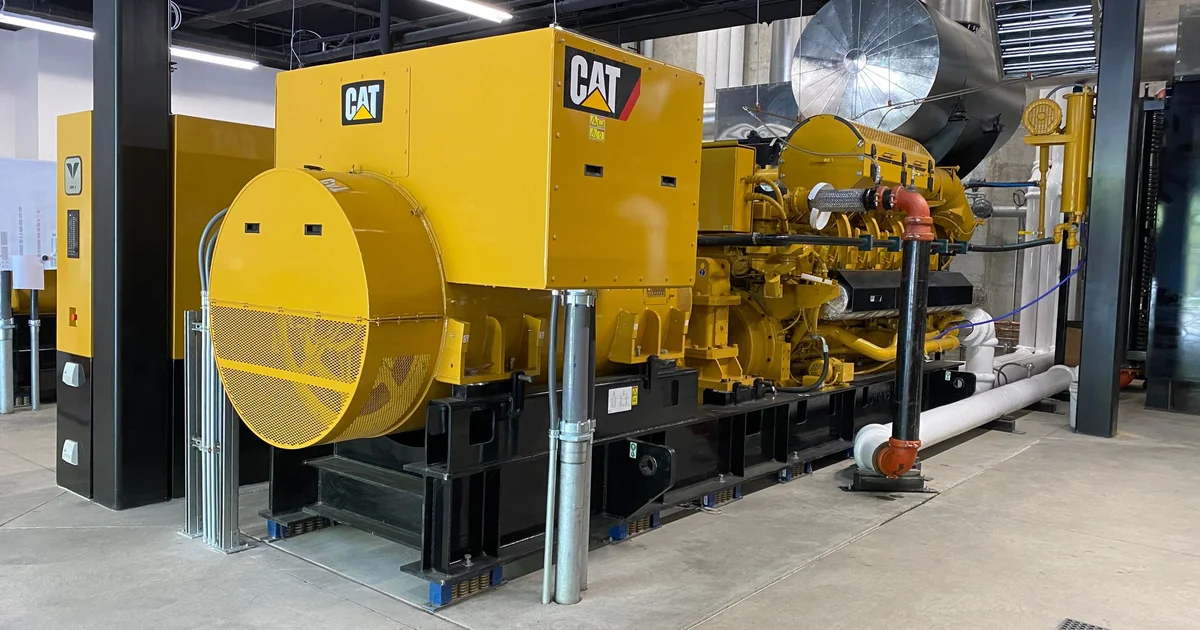
The reported transaction involves OnePWR Solutions, an energy infrastructure company based in San Antonio, Texas. According to the Financial Times, OnePWR had placed orders for large Caterpillar gas-fired generators roughly two years earlier. It subsequently needed financing to complete the purchases. Anthropic reportedly first considered buying electricity generated by OnePWR's planned facilities. Instead, it took over commitments associated with the equipment orders. That change would give the AI company greater involvement in securing the machinery needed to produce electricity, rather than depending exclusively on a supplier's ability to deliver power under a commercial supply arrangement.
The newspaper says the transaction also covers engineering and construction capabilities needed to install the equipment. Anthropic did not acquire OnePWR itself, according to the report, and no OnePWR employees transferred to the AI company. This matters because the arrangement has sometimes been described too loosely as an acquisition. The reported purchase concerns generating equipment commitments and associated infrastructure capabilities, not ownership of the entire supplier. Reuters repeated the account on November 8 while explicitly stating that it had not independently verified the transaction. Neither Anthropic nor OnePWR had responded to the news agency's requests for comment when it published the story.
An investment bank confirms a deal, but not Anthropic's involvement
One important piece of public documentation supports part of the story. Investment bank Piper Sandler lists a transaction involving OnePWR Solutions, also identified as CK Holdings Group. Its record describes the sale of a power-generation platform to an unnamed frontier AI laboratory. The amount is $3.4 billion, and the transaction is dated September 2026. Piper Sandler says it acted as OnePWR's exclusive financial adviser and describes the sale as completed.
The similarities to the Financial Times account are significant. The seller, reported transaction period and dollar amount align. However, the bank does not disclose the purchasing company's name. Its summary also does not establish the complete contractual perimeter of the sale. Consequently, the record cannot by itself confirm that Anthropic bought the Caterpillar equipment commitments described by the newspaper. It provides partial corroboration, not full independent verification.
That distinction is especially important in a transaction involving several possible legal and commercial components. A platform sale, a transfer of equipment orders and an agreement for engineering services may be closely related, but the public documents do not establish how every element was legally structured. The reported details should remain attributed until a company announcement or contract disclosure resolves the remaining questions.
The real asset may be a place in the manufacturing queue
The reason for taking over existing orders becomes clearer when the industrial supply chain is considered. Large power-generation equipment cannot always be delivered quickly. Gas engines, turbines, transformers and high-capacity electrical systems rely on specialized manufacturing facilities and component suppliers. As demand increases, the time between placing an order and receiving the equipment can stretch substantially. Data center construction is adding to demand already coming from utilities and industrial customers.
The Financial Times reports that OnePWR's orders were placed before the recent increase in equipment prices and manufacturing lead times. The generators could reportedly be delivered in the near term and over the following two years. For Anthropic, obtaining those positions in the production schedule could shorten one of the longest parts of an infrastructure project. That would be a different benefit from simply negotiating a lower purchase price. Equipment delivered earlier may allow an associated data center to become operational earlier, provided the other construction requirements are met.
But a manufacturing slot is not a commissioning date. The machines still need suitable sites, fuel infrastructure, electrical integration, permits and installation work. None of those elements has been documented in sufficient detail to establish when the reported 1.7 GW could become operational. The announcement of an equipment commitment should therefore not be treated as proof of new generating capacity already available on the grid or at Anthropic facilities.
What 1.7 gigawatts actually measures
The reported capacity is substantial. A total of 1.7 gigawatts corresponds to 1,700 megawatts of nominal generating capacity. That figure describes the aggregate rated power of the equipment. It does not mean Anthropic currently draws 1.7 GW continuously or that the generators will operate at full output throughout the year.
Generating capacity is different from delivered electricity, and both are different from the power consumed by computing equipment. Some electricity may be required for auxiliary systems. Power conversion introduces losses. Data centers need cooling and other supporting infrastructure. The amount available to processors depends on those systems and the site's overall design. Without the operating configuration, it is not possible to derive a reliable number of GPUs or servers from the reported generator capacity.
The annual electricity produced would also depend on operating hours and utilization. A facility operating continuously at a high load has a different energy output from one used intermittently as backup or supplemental generation. The public reporting does not establish the final operating duty of the equipment. It would therefore be misleading to turn the capacity figure into a definitive annual electricity or emissions estimate.
On-site generation can reduce dependence on grid connection schedules
The reported strategy fits a wider shift toward generating electricity at or near large data center campuses. In industry terminology, this is sometimes described as behind-the-meter generation. Rather than relying entirely on a utility to deliver additional power through the public network, a site can develop dedicated generation equipment. That can provide more control over the design and scheduling of a power supply.
However, a gas-fired installation is not independent of external infrastructure. It needs a dependable fuel supply and sufficient gas transportation capacity. It must also incorporate cooling, controls, electrical protection systems and maintenance arrangements. Large data center workloads can create demanding operating conditions, especially when utilization changes quickly. The generating equipment must be integrated with those patterns of electricity demand.
Some projects may use batteries or additional electrical systems to manage sudden load changes. Others may combine on-site generation with a conventional grid connection. The Financial Times report does not establish which configurations Anthropic intends to use for the particular equipment involved. Those details will determine the actual resilience and economics of the resulting facilities.
Anthropic has publicly discussed gas-powered data center infrastructure
Although the OnePWR transaction has not been confirmed by the named companies, Anthropic's broader interest in on-site energy generation is documented. Its recent public financial disclosures discuss planned data center facilities that depend on dedicated natural gas-fired power generation. The company has also advertised a senior role focused on gas supply and transportation in North America.
The job description refers explicitly to data centers using behind-the-meter generation. It describes responsibilities covering gas procurement, transportation contracts, fuel planning and coordination with infrastructure development teams. These are operational functions associated with securing electricity at the physical source. They extend beyond the software and model-development activities with which Anthropic is most closely associated.
The job advertisement does not identify OnePWR as a supplier. Nor does it prove that any specific generating installation has already entered service. It nevertheless demonstrates that Anthropic is preparing for a business model in which fuel procurement and power-system reliability are direct concerns. That context makes the reported arrangement more understandable without independently confirming it.
Why an AI laboratory would move closer to the energy supply chain
An AI model developer traditionally obtains computing capacity through cloud platforms and infrastructure partners. Those arrangements allow the developer to focus on models, applications and customers while partners handle much of the physical infrastructure. But the system becomes more complicated as demand for computing capacity rises. A project may have access to chips while lacking a completed building, cooling equipment or enough electricity to operate at scale.
These constraints can determine when a new model training cluster or inference service becomes available. Buying computing capacity does not eliminate them; it places responsibility for solving them elsewhere in the supply chain. When multiple companies are competing for the same resources, direct control over scarce equipment becomes strategically attractive.
The reported OnePWR transaction would represent that approach in practice. Instead of relying solely on an energy supplier's future delivery, Anthropic would secure some of the underlying equipment commitments itself. That could reduce dependence on one intermediary's financing and procurement timetable. It would not eliminate dependence on Caterpillar, installation contractors, gas suppliers or regulatory authorities.
The distinction is between greater commercial control and complete infrastructure independence. Only the former is supported by the reported structure.
The environmental consequences cannot be ignored
Natural gas can provide substantial electricity generation capacity using established industrial technology. It also produces emissions. Burning natural gas releases carbon dioxide, while methane leakage can occur across the extraction, processing and transportation chain. Methane is a powerful greenhouse gas, making those upstream losses important when evaluating the full climate impact.
Gas-fired facilities can also generate local air pollutants, including nitrogen oxides. Their environmental performance depends on the machinery, efficiency, pollution controls, operating hours and applicable regulatory requirements. Those factors cannot be established from nominal generating capacity alone.
The reported deal does not disclose the precise generator models, their installation sites or the expected annual utilization. It does not provide a complete emissions-control plan. Consequently, there is no reliable basis for calculating the actual annual emissions of these specific facilities. The environmental consequences will need to be assessed when concrete project details become available.
Local communities may also examine noise, air quality, fuel infrastructure and the effect of major industrial construction. Those considerations vary by location and cannot be resolved without knowing where the generators will operate.
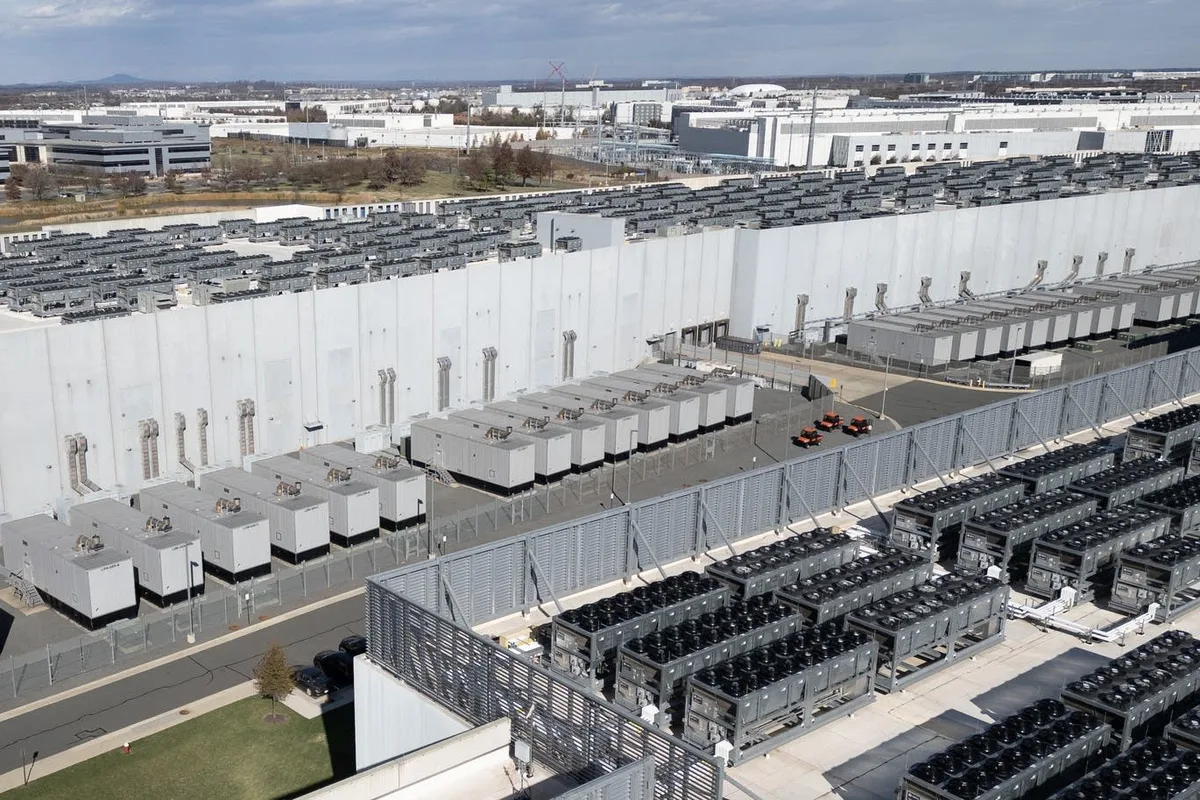
Illustrative photograph of on-site power-generation infrastructure serving a data center. It is not an identified Anthropic installation.
The broader energy-equipment market is already expanding
Other industrial agreements demonstrate how large the market for dedicated data center power systems has become. In January 2026, Caterpillar announced a strategic arrangement with American Intelligence & Power and Boyd CAT involving 2 GW of fast-response natural gas generating equipment. That project was intended to support a large AI infrastructure campus, with deliveries scheduled across 2026 and 2027. It is separate from the OnePWR transaction.
Nevertheless, its scale provides useful context. Power-generation commitments measured in gigawatts are no longer confined to traditional utility projects. Large computing campuses are becoming major customers of equipment normally associated with substantial industrial or electricity-generation installations.
The resulting competition can increase demand for manufacturing slots, skilled installation teams and grid-related infrastructure. An existing equipment order may become valuable not simply because of the hardware it represents, but because it allows a buyer to avoid starting at the back of an extended production queue.
The reported $3.4 billion is not an electricity bill
The purchase price needs careful interpretation. According to the reporting, the transaction covers equipment commitments alongside engineering and construction capabilities. That does not necessarily represent the complete cost of every future power plant involved. Land, site preparation, fuel connections, electrical equipment, financing and ongoing operations may create additional expenses.
Nor does the transaction value establish an electricity price. Calculating the eventual cost of each megawatt-hour would require information about fuel prices, generating efficiency, operating hours, maintenance and the full capital structure. Those details have not been disclosed. The payment schedule is also unknown. A transaction value cannot automatically be interpreted as a single cash payment already made in full.
The agreement's accounting treatment within Anthropic's wider infrastructure commitments is not publicly established either. The reported amount should not simply be added to all other announced commitments without knowing whether it is already included in them.
Securing electricity also creates financial exposure
Taking direct responsibility for a major power-equipment commitment creates risks as well as opportunities. A generator may arrive before the associated data center is ready. A building may be completed while its fuel connection or operating permits remain outstanding. Either situation can delay the economic return on expensive equipment.
AI infrastructure also faces demand uncertainty. Companies expect substantial growth in model usage, but the cost of running inference and the competitiveness of different technologies continue to change. A project planned around one set of commercial assumptions may encounter a different market by the time it becomes operational.
The investments therefore need to support sustained demand over periods much longer than a typical model release cycle. Recent financial reporting indicates that Anthropic is preparing infrastructure commitments extending across many years. Those commitments must not be confused with spending already completed. The reported generator transaction would add another significant physical-infrastructure component to this long-term strategy, if the buyer's identity and terms are confirmed.
Gas generation introduces a different set of dependencies
Generating power on-site can reduce dependence on one part of the electricity delivery system. It does not eliminate supply-chain exposure. A gas-fired facility needs pipelines or other suitable fuel infrastructure, reliable supply contracts, operational staff and maintenance services.
Growing demand for natural gas can also affect regional supply conditions. Large projects may require new transportation capacity or modifications to existing infrastructure. These are not merely technical details. They can influence project schedules, operating costs and whether construction is authorized.
Some facilities may still maintain connections to the public electricity grid. The configuration depends on engineering requirements and local rules. No detailed site-level design has been published for the generation equipment described in the Financial Times report. It would therefore be premature to conclude that Anthropic is building entirely self-sufficient data centers disconnected from public infrastructure.
What is confirmed, reported and still unknown
The evidence available on November 9, 2026, supports a careful distinction. Piper Sandler confirms that OnePWR sold a power-generation platform to an unnamed frontier AI lab in a transaction valued at $3.4 billion in September. The Financial Times identifies Anthropic as the company that reportedly took over commitments covering 1.7 GW of Caterpillar gas-fired generators. Reuters relayed that account but could not verify it independently. The companies named in the report had not publicly confirmed the arrangement when the story was published.
Important details remain absent, including installation locations, exact equipment specifications, commissioning schedules, financing arrangements and operating costs. There is also no established evidence that the reported generating capacity is already supplying Claude infrastructure. The underlying industry shift, however, is clear. Securing computing hardware is no longer enough to guarantee that an AI project can be launched on schedule. Companies increasingly have to confront the availability of electrical infrastructure as a strategic constraint.
If the reported transaction is confirmed, Anthropic will have taken an unusually direct role in procuring the machinery needed to power its future computing facilities. The next significant milestones will be confirmation of the buyer and contract terms, followed by evidence of actual equipment delivery and commissioning. Until then, $3.4 billion and 1.7 GW describe a reported industrial arrangement, not an operating power system.