 By Adri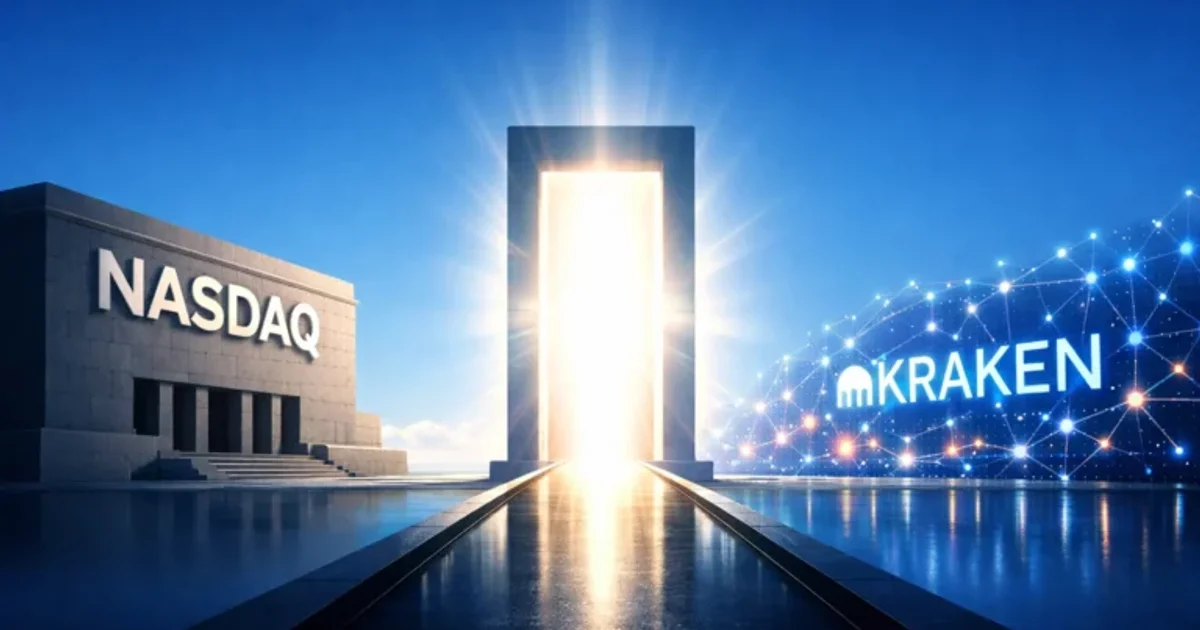
Nasdaq announced the agreement on September 10.
The investment will come through Nasdaq Ventures, its strategic investment arm focused on technologies and infrastructure for capital markets.
The amount is $100 million.
Bloomberg reported that the transaction values Payward at about $21 billion.
Payward is the parent infrastructure company behind Kraken and businesses including xStocks and NinjaTrader.
Nasdaq and Payward have been working together since March
The $100 million commitment does not begin the relationship.
The companies announced their first tokenized-equities collaboration in March.
Payward contributes Kraken's crypto-native trading infrastructure and xStocks.
Nasdaq brings regulated-market infrastructure, surveillance technology and experience handling the rights attached to listed securities.
The new investment turns that technical collaboration into a much tighter strategic relationship.
Nasdaq Equity Tokens are currently targeted for Q2 2027
The proposed assets are called Nasdaq Equity Tokens, or NETs.
Nasdaq says it expects to launch the framework in the second quarter of 2027.
That remains a forward-looking target rather than a guaranteed commercial launch date.
Distribution, trading and post-trade infrastructure still have to be developed.
Regulation could also affect how and where the product is ultimately offered.
A tokenized stock is not necessarily the same thing as owning a stock
This distinction is central to the project.
A blockchain token can follow the market price of a public company without necessarily giving its holder the same legal position as a registered shareholder.
Some structures represent claims or synthetic exposure rather than direct ownership.
Nasdaq says its NET design is intended to preserve the rights and protections associated with the underlying security.
That makes the project substantially more complicated than creating a token whose price mirrors Nvidia or Apple.
Voting and corporate actions become infrastructure problems
A share is more than a changing number on a screen.
Depending on the security, ownership can carry voting rights, dividends and participation in stock splits, mergers and other corporate actions.
A tokenization system therefore has to synchronize those events with the blockchain representation.
If dividends and voting rights break when the asset moves on-chain, only part of the original security has been reproduced.
Nasdaq has made that continuity a major part of its tokenization strategy.
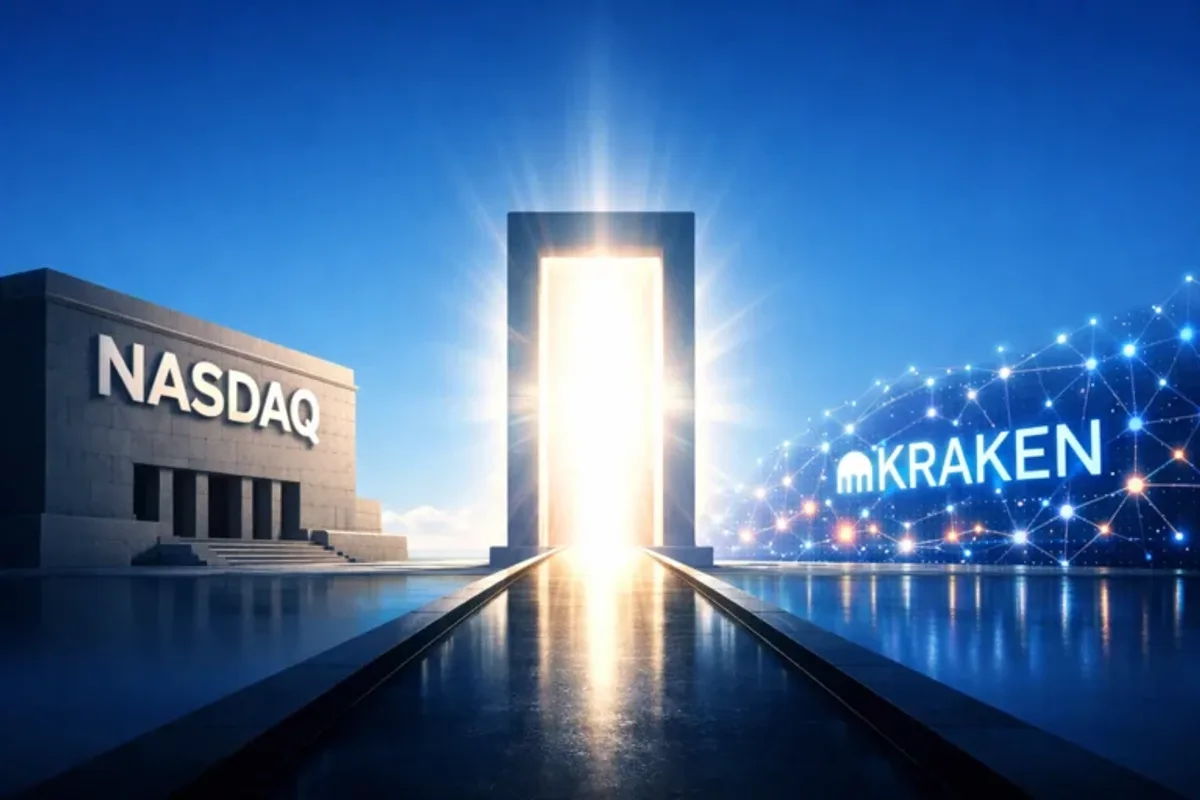
xStocks is intended to provide the crypto-native bridge
Payward already operates tokenized-equity infrastructure through xStocks.
The partnership is designed to make the future NET framework interoperable with that ecosystem.
The goal is therefore larger than recording a token in a private database.
The companies want securities to move between different market environments while retaining the form and protections intended for issuers and investors.
The broader promise is an always-on market
Nasdaq explicitly describes the strategy in terms of always-on markets.
Blockchain networks do not need to wait for a traditional exchange opening bell before recording transactions.
Crypto markets already operate continuously.
Tokenized securities could eventually extend trading and settlement far beyond conventional market hours.
That does not mean every Nasdaq stock automatically becomes a 24/7 instrument in 2027.
Liquidity, listing rules, market makers and jurisdictional requirements remain separate constraints.
On-chain settlement targets the wait between trading and final delivery
Payward co-CEO Arjun Sethi highlighted the scale of the existing US clearing system.
According to figures cited by Payward, more than $2 trillion of stock trades run through US clearing infrastructure every day.
Most offsetting purchases and sales are netted before final settlement.
Billions of dollars in collateral can still be required while the remaining obligations wait to settle.
The US move from T+2 to T+1 in 2024 already shortened that cycle.
Payward argues that on-chain settlement can reduce the delay further.
Instant settlement is not automatically more efficient in every case
Traditional clearing also has an important advantage: netting.
Thousands of offsetting transactions can cancel one another before only the residual balance has to settle.
Settling every individual trade immediately can reduce some forms of counterparty exposure while increasing liquidity requirements elsewhere.
The engineering challenge is therefore not simply replacing slow settlement with fast settlement.
A useful system has to preserve the efficiency of netting while gaining the programmability and flexibility of blockchain-based rails.
Kraken will adopt Nasdaq's market-surveillance technology
Technology is also flowing in the opposite direction.
Payward plans to deploy Nasdaq market-surveillance systems across its trading venues.
The agreement covers crypto, equities, tokenized equities, futures and options.
Surveillance systems are used to identify suspicious patterns, potential manipulation and other forms of market abuse.
As Kraken expands into traditional financial instruments, it is also importing more of the infrastructure traditionally associated with regulated exchanges.
The line between a crypto exchange and a conventional broker is disappearing
Kraken is no longer simply a venue for bitcoin and altcoins.
Payward has expanded into derivatives, equities and broader financial infrastructure.
Nasdaq is moving in the other direction.
Its Digital Liquidity Networks business, launched in August, combines liquidity infrastructure, tokenization and technology serving the digital-asset market.
Crypto-native platforms are adding conventional assets while conventional exchanges build crypto-compatible rails.
The $100 million deal is significant, but Nasdaq is not buying Kraken
This is a strategic minority investment in Payward, not an acquisition.
Nasdaq Ventures is providing $100 million.
Against the roughly $21 billion valuation reported by Bloomberg, that amount represents less than 1% of the implied enterprise value.
Not every economic term of the investment has been publicly disclosed.
Its importance lies more in the industrial alignment than in control of Payward.
2027 will test the difference between tokenizing a price and tokenizing ownership
Creating an asset that tracks a stock price is relatively easy.
Recreating the infrastructure around a regulated security is much harder.
The system has to identify owners, respect jurisdictional restrictions, process corporate actions, monitor trading behavior, handle settlement and maintain a reliable link with the underlying security.
Nasdaq and Payward are trying to build that second category.
That is why the project matters more than another crypto platform offering synthetic stock exposure.
Blockchain is entering the stock market through infrastructure rather than bitcoin
Nasdaq's investment is not a direct bet on the price of bitcoin.
It is a bet on financial plumbing.
The thesis is that characteristics associated with crypto infrastructure — continuous operation, programmability and shared-ledger settlement — can be applied to traditional securities.
If NETs launch as planned in 2027, the important result will not simply be seeing a Nasdaq stock represented by a token inside an app.
The real test will be whether that share can move from regulated market infrastructure onto blockchain rails without losing the rights and protections that made it a share in the first place.