
 By Adri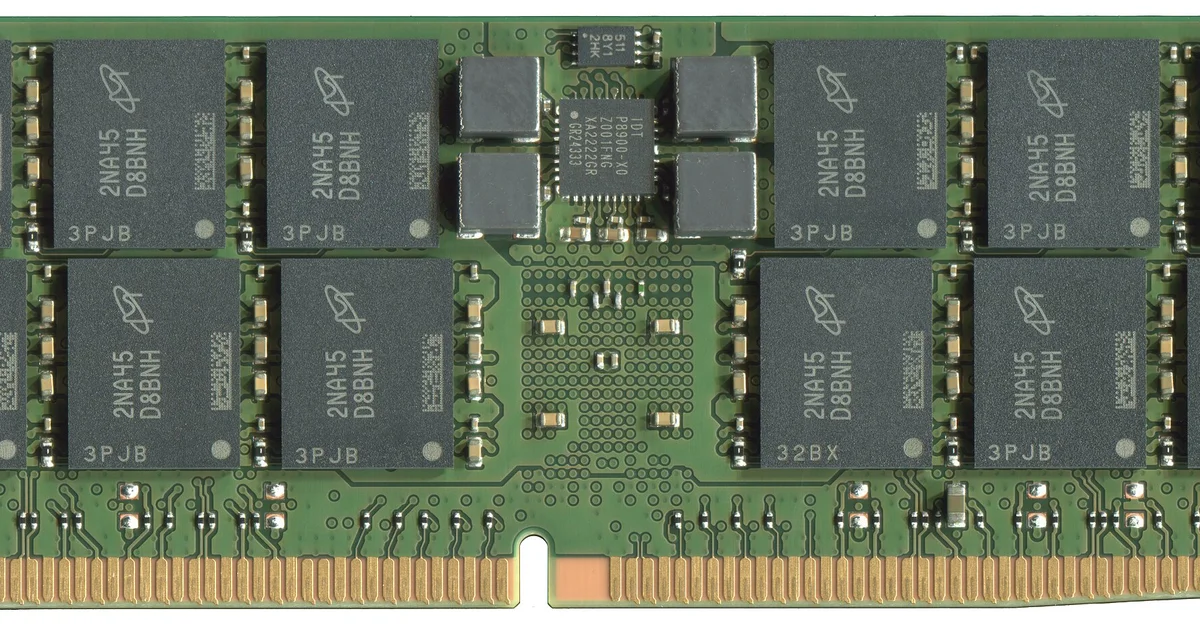
512GB without adding more DIMM slots
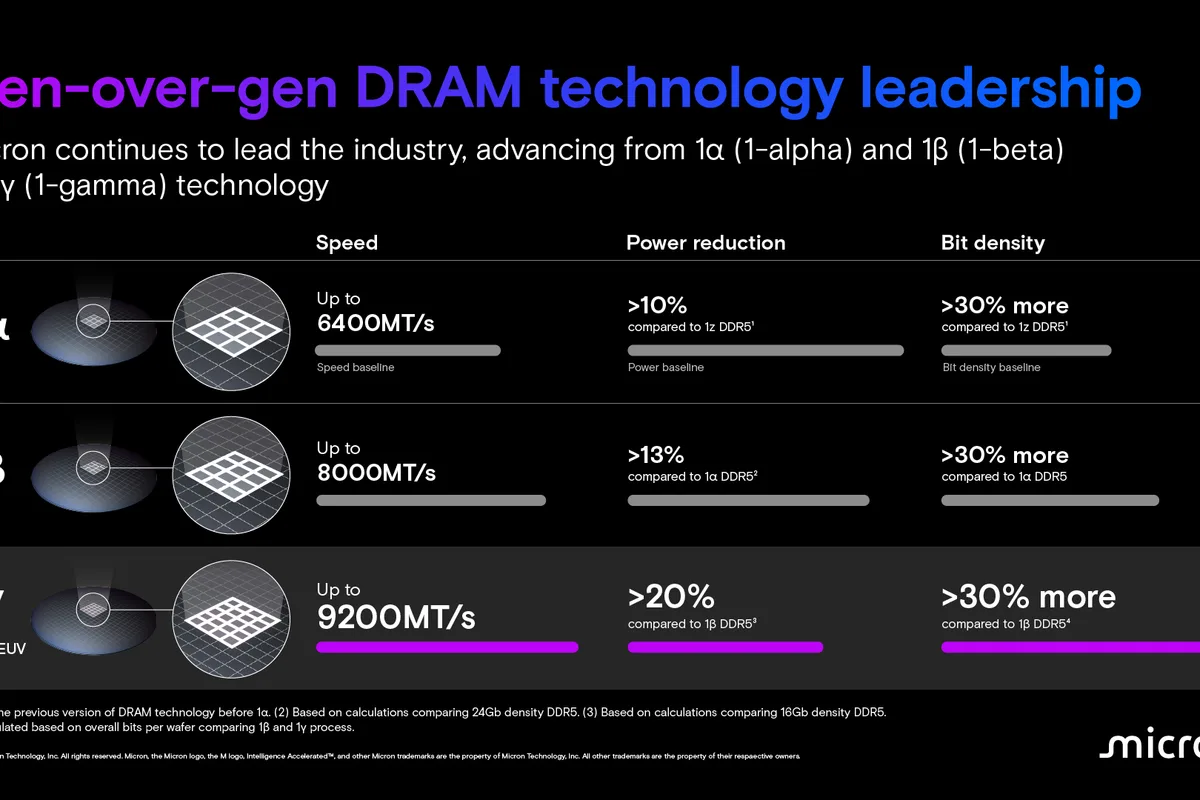
Micron says it has successfully demonstrated a 512GB DDR5 RDIMM across multiple server platforms. The module is rated for speeds of up to 9,200 MT/s, while AMD and Intel are both validating it for next-generation server systems.
The density comes from vertically stacked DRAM dies connected through through-silicon vias. TSV packaging allows Micron to place considerably more memory behind a single slot without increasing the number of DIMMs installed in the machine.
Populate a 24-slot dual-socket server with these modules and the total reaches 12TB of DDR5. That capacity remains directly attached to the CPUs rather than relying on a separate CXL expansion tier.
The 16-watt comparison is hard to ignore
Micron says one 512GB RDIMM consumes 16.0W in its comparison, while four 128GB modules providing the same capacity consume 44.2W combined. The company therefore claims a reduction of more than 60 percent.
That number comes from Micron's own test methodology and should not be treated as a universal system-level power saving. It does illustrate a basic advantage of density, however: reaching the same capacity with fewer DIMMs means fewer modules and support components drawing power.
A difference of roughly 28 watts is not dramatic in isolation. Multiply it across large memory configurations and racks of servers, and both electrical consumption and cooling requirements start to look rather different.
System memory is becoming part of the AI bottleneck
Micron is positioning the module for AI and analytics, but the use cases extend well beyond model training. The company also points to in-memory databases, virtualization, simulation, caching and data-intensive enterprise workloads where keeping larger datasets in DRAM avoids slower trips to storage.
For one memory-bound Spark SVM workload, Micron reports performance of up to 1.4 times that of a 256GB DDR5 configuration. It is a vendor result rather than an independently reproduced benchmark, so the figure needs that context.
The broader point is easier to defend. AI infrastructure is not made of accelerators alone. CPUs still feed those accelerators, preprocess data, run databases, host caches and handle workloads whose working sets can extend far beyond GPU memory. More memory per socket can reduce pressure elsewhere in that pipeline.
Production is still a year away
Micron expects volume production of the 512GB RDIMM in the second half of 2027. AMD and Intel validation is still under way, so this announcement is a technology milestone rather than a product launch for immediate deployment.
The 9,200 MT/s rating should be read the same way. It is the module's headline capability, not evidence that every future dual-socket platform will run fully populated memory channels at that speed. Platform topology and CPU memory-controller limits will still matter.
Micron has not announced pricing. A 512GB high-density server RDIMM using advanced die stacking is unlikely to be mistaken for consumer desktop memory anytime soon.