
 By Adri
According to an August 28 WIRED investigation based on current and former employees, Meta is testing several kinds of robots inside its data centers.
Meta declined to comment on the specific trials described in the report. The experiments range from very simple remote physical actions to attempts at automating cable work that technicians normally perform by hand.
A robot arm for the physical layer of a reboot
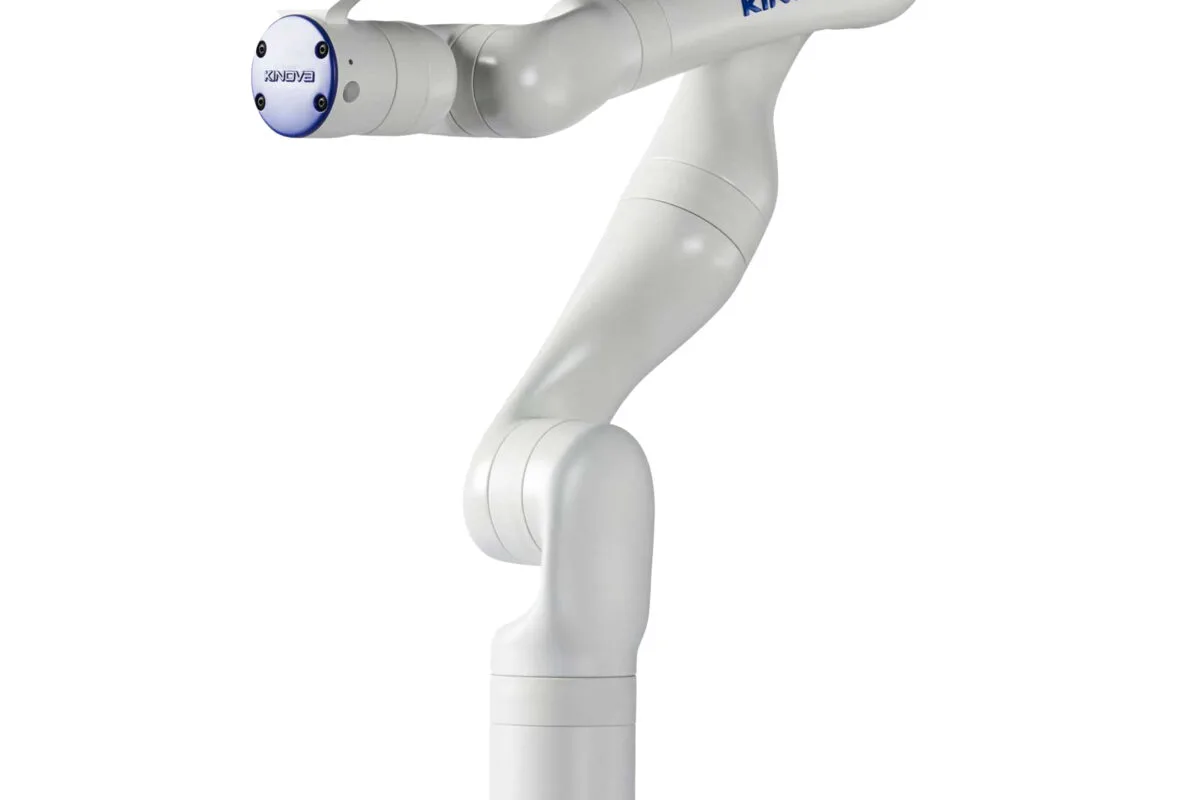
One experiment uses a Kinova Gen3 arm to power-cycle servers or physically cut their electricity.
Meta has also deployed a much simpler device at some facilities: essentially a robotic finger that can press the power button on a Mac mini or another machine after receiving a remote command from a human.
That distinction matters. The robot does not necessarily need to understand why the server failed. Existing monitoring and remote staff can handle diagnosis while the machine performs the one step software cannot complete by itself.
Cables expose the difficult part
At Meta's Altoona campus in Iowa, two dual-arm robots from Watney Robotics have reportedly been tested on cabling work since June 2025.
They remain human-supervised and are slower than people.
Replacing a network cable is a useful robotics benchmark because the environment is unforgiving. A system has to identify the correct connector, manipulate it without damaging the port and navigate dense racks where small errors can affect expensive hardware.
Even moving through the building introduces problems. Workers told WIRED that some Meta robots struggle with cables on the floor, corners and battery downtime.
The simpler automation is already in production
Meta had publicly demonstrated data-center robots before these newer experiments. In 2023 it showed a self-driving tugger for transporting heavy server racks and an internally developed wheeled robot that scans barcodes for inventory.
Those systems now operate at multiple Meta facilities, including sites in Iowa and Virginia, according to WIRED's sources.
The inventory robot has expanded into failure inspections, although its grayscale camera creates a surprisingly basic limitation: it cannot reliably tell green indicator lights from red ones. Some fault checks still require a person.
At Meta's newer Prometheus campus in New Albany, Ohio, ABB mobile robots equipped with six-axis arms are also reportedly being tested for reseating components and potentially broader maintenance tasks.
The data center itself was designed around people
Robotic dexterity is only one side of the problem. Server hardware, racks, connectors and maintenance procedures have spent decades evolving around human hands.
A five-minute repair for a technician may contain a series of small movements that are difficult to reproduce reliably with a machine.
WIRED reports that Meta still considers some operations unsuitable for robots, including the dense cabling involved in Nvidia GB300 systems.
This suggests that deeper automation may eventually require changes to server and rack design rather than simply placing better robots in today's facilities.
Meta has publicly described the destination before
Although Meta would not confirm the individual tests in WIRED's reporting, its broader robotics goal is not entirely secret.
At a conference in 2025, Meta senior robotics manager Eric Xu described putting robots into data centers as a long-term goal. He highlighted faster incident response, environmental monitoring and preventive maintenance as potential uses.
The reason to investigate those systems is growing with Meta's infrastructure footprint. The company operates its own facilities for services including Facebook, Instagram, WhatsApp, Threads and Meta AI while building new sites optimized for increasingly demanding AI workloads.
Robots and hiring are happening at the same time
The employment implications are much less settled. One Meta data-center employee told WIRED that successful cable automation could replace as much as 80 percent of some people's workload. That is the worker's estimate, not a published Meta target.
Meta spokesperson Francis Brennan instead said the company faces a shortage of skilled workers and needs more people to build and operate its infrastructure.
Meta is spending accordingly. Its America's Workforce Academy offers free training for skilled-trade roles, and the company says its initial first-year investment is $115 million. Graduates are guaranteed jobs through Meta partners.
Rapid infrastructure expansion can create both conditions at once: more total work and a stronger incentive to automate repetitive portions of that work.
A collection of small robots may matter more than one humanoid
The most revealing part of Meta's approach is how narrow many of the machines are.
One moves racks. One records inventory. One pushes a button. One manipulates power. Another tries to handle network cables.
That is less dramatic than a general-purpose humanoid maintaining an entire facility, but it avoids requiring a single robot to reproduce every skill of a data-center technician before automation becomes useful.
The current experiments still depend heavily on people for supervision, troubleshooting, movement between some areas and the jobs the robots cannot physically perform.