
 By Adri
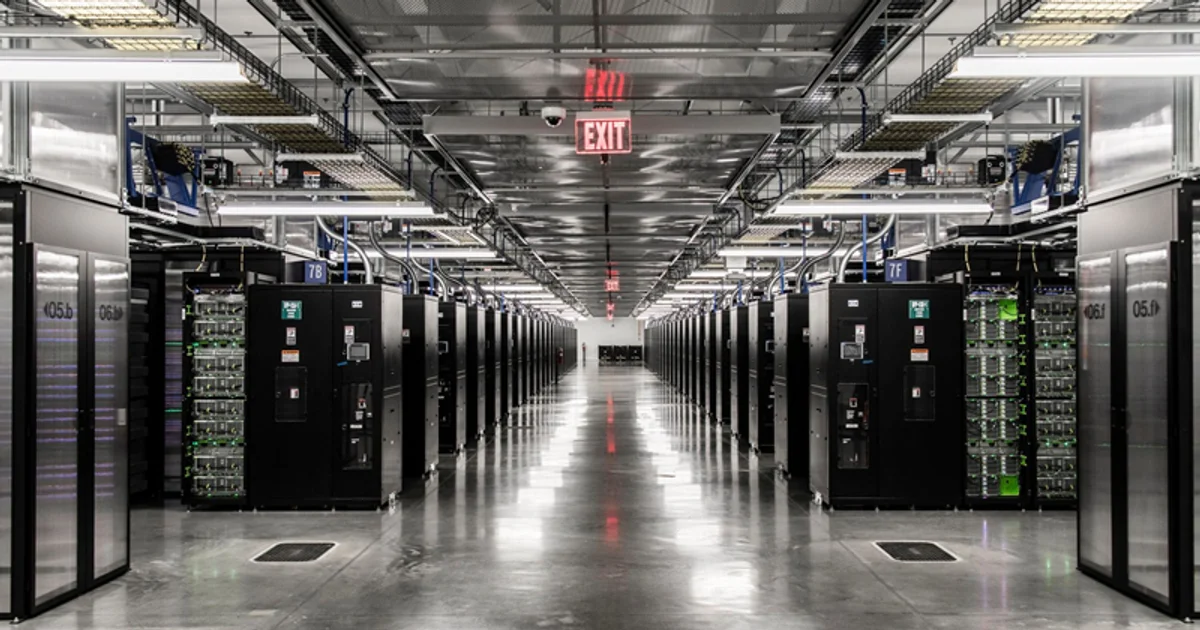
Meta's advertising business remains highly profitable, but its computing infrastructure ambitions have grown much faster than the financial requirements of a conventional social media company.
Training advanced AI models, deploying consumer agents and building massive data centers demand sustained capital investment.
The company is now preparing a new financial instrument to help support those activities.
On October 21, Meta announced that its board of directors had approved the establishment of publicly traded, non-voting Class C common stock.
The new shares could be used for capital raising, acquisitions, employee compensation and other corporate purposes.
Crucially, the structure would allow Meta to issue equity without directly reducing the voting power associated with its existing Class A and Class B shares.
The announcement does not represent an immediate financing transaction. Meta has created the framework for potential future issuance but has not announced a specific capital raise through additional Class C stock.
One additional share for each existing share
Meta intends to establish the new Class C stock with an effective date of January 19, 2027.
The company plans to distribute one Class C share for every outstanding Class A or Class B share.
This distribution is expected to have an economic effect similar to a two-for-one stock split.
A stock split does not automatically double an investor's wealth. It increases the number of shares while reducing the economic value represented by each individual unit.
Meta's arrangement is slightly different because the additional stock belongs to a separate class.
Its trading price may eventually differ from the Class A share price, reflecting investor demand and the rights associated with each class.
The important distinction is that Class C shares will not carry voting rights.
Meta says the planned distribution will therefore leave the voting power of existing shareholders unchanged.
The record date and payment date have not yet been determined.
The amended corporate charter must also become effective before the distribution can be completed.
The structure protects Zuckerberg's control
Meta has long operated with a dual-class share structure.
Its publicly traded Class A shares carry ordinary voting rights, while Class B shares provide enhanced voting power.
The arrangement allows founder and CEO Mark Zuckerberg to maintain substantial control over major corporate decisions.
Issuing large quantities of additional voting stock could reduce the relative influence of existing shareholders.
Non-voting equity provides an alternative.
Meta can potentially raise capital without transferring an equivalent share of decision-making authority to new investors.
The company says an independent special committee unanimously recommended the new structure after evaluating its potential consequences.
The board subsequently approved the proposal.
Meta has also entered into a Founder Alignment Agreement with Zuckerberg, covering aspects of his service and the sale of certain Class C shares received in the distribution.
These measures are intended to preserve the company's founder-led governance model.
Supporters of such a structure may value long-term strategic consistency.
Critics can reasonably question whether investors holding securities without voting rights will have sufficient influence over decisions involving exceptionally large capital commitments.
That governance question becomes more important as the scale of Meta's AI investments increases.
Capital expenditures could reach $145 billion in 2026
Meta also updated its annual capital expenditure guidance.
The company now expects spending between $135 billion and $145 billion in 2026, including principal payments on finance leases.
Its previous guidance ranged from $130 billion to $145 billion.
The lower bound increased by $5 billion, while the upper bound remained unchanged.
It would therefore be inaccurate to describe the announcement as an additional $145 billion of spending beyond Meta's existing plans.
The figure represents the company's expected full-year investment range.
That spending supports infrastructure across its established services and AI initiatives.
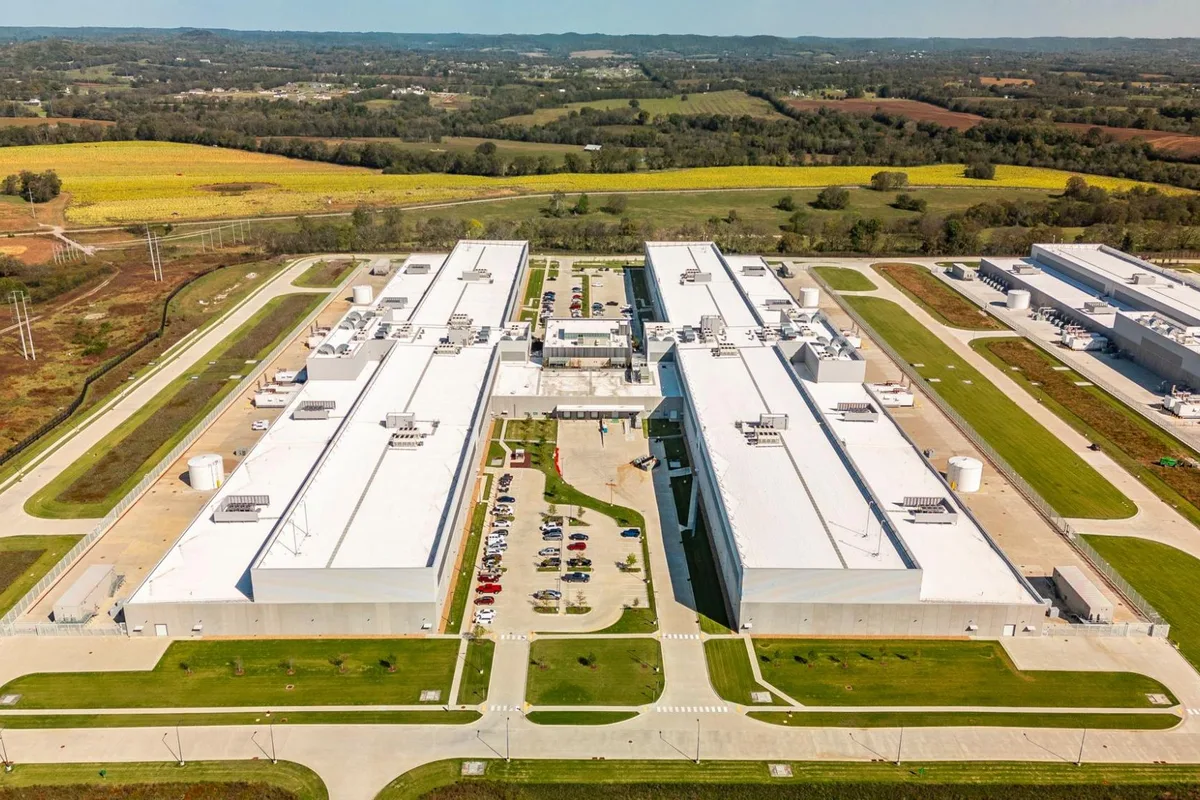
Major requirements include data centers, computing equipment, networking capacity and related technical infrastructure.
Meta expects to continue investing aggressively during 2027 but has not provided a complete annual capital expenditure forecast for that year.
The company says additional capacity will support AI model training, the growth of its core platforms and the launch of new products.
Revenue growth remains strong despite pressure on operating margins
Meta reported third-quarter revenue of $64.601 billion for the period ending September 30, 2026.
That represents a 26% increase from $51.242 billion in the same quarter of 2025.
Advertising contributed $63.061 billion, remaining the group's dominant revenue source.
The figures demonstrate that Meta's existing platforms continue generating substantial commercial growth.
However, expenses increased much faster than revenue.
Total costs and expenses reached $51.613 billion, up 68% year over year.
Operating income declined from $20.535 billion to $12.988 billion.
Operating margin consequently fell from 40% to 20%.
These changes require an important qualification.
Meta recognized a $9.89 billion legal charge in the quarter relating to a settlement with US state attorneys general over claims involving teen mental health and social media.
That charge significantly affects comparisons with the previous year.
Meta says it still expects 2026 operating income to exceed the prior year's figure when the third-quarter legal charge is excluded.
Net income reached $9.86 billion, compared with $2.709 billion a year earlier.
Differences in tax expenses and exceptional items also affect that comparison.
The financial results therefore show a growing advertising business alongside substantial investment requirements and legal expenses.
Negative free cash flow highlights the cost of expansion
One of the clearest signs of the financial pressure is Meta's quarterly free cash flow.
The company reported negative free cash flow of $2.12 billion, compared with positive free cash flow of $10.625 billion one year earlier.
Negative free cash flow does not mean Meta recorded a net accounting loss.
The company remained profitable, but its infrastructure investment requirements exceeded the cash remaining after the relevant capital spending.
Operating activities generated $32.786 billion of cash during the quarter.
Purchases of property and equipment totaled $33.942 billion, while principal payments on finance leases added $964 million.
Those outflows explain the reported free cash flow deficit.
Meta also held $82.45 billion in cash, cash equivalents and marketable securities at the end of September.
The new stock structure should therefore not be presented as evidence of an immediate liquidity crisis.
It is better understood as an additional source of financial flexibility while the company pursues unusually capital-intensive growth.
Why AI agents are changing the infrastructure equation
Social platforms already require substantial computing resources to store content, deliver video, operate advertising systems and generate recommendations.
Advanced AI adds another layer of demand.
Training large models requires clusters of accelerators, high-speed networking and significant electricity and cooling capacity.
Inference requires resources to execute those models after training.
Agent-based applications may increase demand further.
An AI agent capable of researching travel options, comparing products or coordinating a transaction may call models repeatedly while interacting with external tools.
Each workflow can involve several reasoning steps, searches and verification operations.
The resulting infrastructure cost depends on user activity, model efficiency, task complexity and utilization rates.
This creates a different economic challenge from operating a conventional messaging or social media application.
Meta has also developed specialized processors and other infrastructure optimizations intended to improve AI efficiency.
Ultimately, profitability will depend on the relationship between the cost of delivering AI services and the revenue or productivity benefits those services generate.
Muse is becoming a central part of Meta's AI strategy
Meta's quarterly results provide an early indication of how the company intends to turn its infrastructure investment into consumer products.
Mark Zuckerberg said more than 10 million users in the United States and Canada created Muse accounts during the first six weeks after launch.
That figure refers to account creation. It is not equivalent to 10 million daily active users.
Meta sees Muse as a potential interface for personal assistance, shopping, business interactions and other activities.
The company aims to build a network in which personal agents can connect users with businesses and services.
Such a network could become more valuable as participation grows.
Zuckerberg also acknowledged that operating Muse is more expensive than launching many of Meta's previous consumer products.
That creates an incentive to monetize the service earlier than the company has traditionally done with some new platforms.
Potential business models include revenue associated with transactions and commercial interactions.
However, Meta has not yet demonstrated that these models can generate revenue sufficient to cover the full cost of operating the agent business at scale.
CFO Susan Li expects the company's newer AI businesses to begin contributing incremental revenue in 2027 and potentially become a meaningful source of diversification.
Those statements are forecasts rather than established commercial results.
Reality Labs investment is being redirected toward AI
The company's strategic priorities are also changing internally.
Reality Labs, which develops virtual and augmented reality products, continues to generate substantial operating losses.
Meta expects losses of approximately $18 billion to $19 billion in 2026.
The company forecasts that figure will narrow to around $15 billion in 2027.
Executives attribute part of the planned improvement to shifting investment toward higher-priority areas, particularly artificial intelligence.
This does not mean Meta is abandoning its VR headsets, smart glasses or immersive computing products.
The company is increasingly seeking to combine those devices with AI capabilities while changing the allocation of its resources.
Meta adopted its current name in 2021 to emphasize its ambitions around the metaverse.
Five years later, its investment strategy is increasingly centered on artificial intelligence as the foundation for future products and commercial opportunities.
Class C stock could serve purposes beyond data-center construction
It would be too narrow to treat the new share class as a dedicated mechanism for purchasing AI accelerators.
Meta identifies several potential uses.
These include raising capital, compensating employees, financing acquisitions and supporting general corporate needs.
Equity compensation is especially relevant to technology companies competing for specialized engineering and AI research talent.
Publicly tradable shares can provide an attractive component of employee compensation packages.
Stock can also be used in acquisitions, reducing the need to fund every transaction entirely with cash.
Class C securities would give Meta another instrument for such activities while preserving the voting allocation associated with Class A and Class B.
This does not eliminate every form of dilution.
Issuing additional shares can reduce the economic ownership percentage of existing investors.
The absence of voting rights means those shares would not directly dilute existing voting control.
Investors will need to distinguish economic dilution from voting dilution when assessing future transactions.
The market welcomed the announcement, but the risks remain significant
Meta shares rose more than 4% in after-hours trading following the announcement, according to Reuters.
The response reflected a combination of strong advertising revenue, early interest in Muse and increased financing flexibility.
However, Meta's investment strategy still carries several uncertainties.
AI infrastructure spending may continue absorbing significant cash if capital requirements remain elevated.
Revenue directly attributable to new AI agents is still at an early stage.
Legal liabilities also present substantial financial risk.
The third-quarter accounts include the $9.89 billion charge associated with the multistate teen mental health settlement.
Reuters also reported a separate $25 billion penalty ordered in New Mexico in litigation involving Meta's handling of user data and related practices.
These legal issues are distinct from AI infrastructure spending but affect the company's broader financial outlook.
Meta will have to demonstrate both that its established advertising business remains resilient and that emerging AI products can eventually justify their investment costs.
January 2027 will be the first milestone
Meta intends for its revised capital structure to take effect on January 19, 2027.
The Class C distribution will then depend on the announced corporate procedures and dates to be established.
Meta plans to qualify the new class for trading on Nasdaq, while its existing Class A shares are expected to remain listed.
Creating the stock class does not guarantee that the company will immediately issue additional securities for a specific fundraising transaction.
As of October 22, 2026, the confirmed development is the approved establishment of a future non-voting share class and an intended distribution to existing shareholders.
The eventual amount of capital raised through additional Class C issuance remains unknown.
With annual investment spending expected to reach as much as $145 billion, Meta is preparing for a future in which computing capacity is as strategically important as its social platforms.
The new shares could provide additional flexibility to pursue that strategy without surrendering the company's existing voting structure.
The remaining question is whether its AI services will generate sufficient economic returns to justify the scale of the investment.