
 By Adri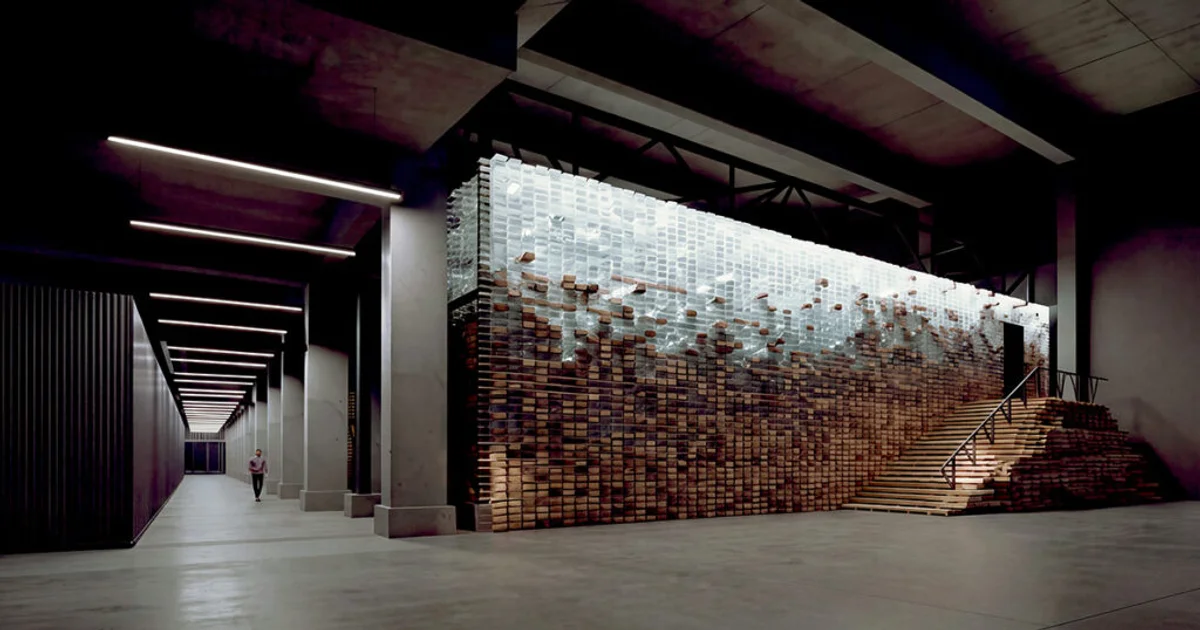
EuroHPC signed the LUMI-AI procurement contract with Bull on August 31.
The machine will be installed at CSC's new data center in Kajaani, Finland, alongside the broader infrastructure that already hosts the current LUMI ecosystem.
Deployment is scheduled for the second half of 2027.
EuroHPC and the LUMI AI Factory consortium expect roughly ten times the AI capacity of today's LUMI and nearly twice its conventional HPC capability.
AMD MI430X accelerators sit at the center of the design
LUMI-AI will use Bull's liquid-cooled BullSequana XH3500 architecture.
Its accelerated compute will be built around next-generation AMD Instinct MI430X GPUs paired with 6th-generation AMD EPYC processors featuring up to 256 cores.
Neither EuroHPC nor AMD has published the final total GPU count or a complete aggregate FLOPS specification in the announcements reviewed.
The tenfold claim should therefore be read as the partners' projected AI-capacity comparison with LUMI rather than a universal ten-times performance increase across every workload.

Ten times more AI capacity does not mean ten times faster at everything
The distinction reflects the way modern accelerator architecture is evolving.
New GPUs can increase throughput dramatically for the lower-precision numerical formats commonly used in AI training and inference while producing much smaller gains in high-precision scientific calculations.
That is why LUMI-AI can be described as roughly ten times stronger for AI while offering less than a twofold increase in conventional HPC capability.
A language model, a climate simulation and a double-precision scientific workload do not exercise the hardware in the same way.
Bull is integrating a system that also depends on IBM and Nokia
The architecture extends beyond Bull and AMD.
IBM will provide storage based on Storage Scale technology.
Nokia will contribute data-center networking expertise to complement Bull's BXI interconnect.
That surrounding infrastructure matters because accelerator utilization can collapse when storage or networking cannot supply data quickly enough.
Large AI training jobs require many accelerators to exchange state continuously while feeding enormous datasets into the cluster.
A powerful GPU that spends time waiting on I/O is expensive unused silicon.
Multi-tenant design is intended to make the machine useful beyond a handful of giant jobs
EuroHPC highlights LUMI-AI's multi-tenant architecture and extensive API-based access.
Those features are designed to support different AI communities and modern development environments rather than treating the machine purely as a traditional batch supercomputer.
That is important for the LUMI AI Factory's intended users.
A startup performing inference experiments and a research team training a large foundation model require very different slices of the same infrastructure.
Compute allocations will be managed jointly by EuroHPC and the LUMI AI Factory consortium according to their respective investments.
The AI Factory already exists; LUMI-AI is its future compute backbone
LUMI-AI should not be confused with the launch of the LUMI AI Factory itself.
The Factory has provided services since April 2025 using the current LUMI supercomputer.
Its strategic sectors include manufacturing, health and life sciences, communications technologies and networking.
It also supports communities working in climate, materials science and language technologies.
The new system is expected gradually to replace LUMI as the current machine reaches the end of its lifecycle.
Europe is also trying to solve an access problem
Reuters reports that demand for AI computing on EuroHPC infrastructure currently exceeds available capacity and that some applications have to be rejected.
That shortage matters for a policy designed to help European teams develop models without every startup having to finance its own GPU cluster.
A publicly supported AI Factory effectively pools infrastructure that would be financially inaccessible to many smaller organizations.
LUMI-AI will not eliminate Europe's compute shortage on its own, but it adds a large new block of capacity to an allocation system already serving multiple countries.
Six countries and EuroHPC split the €387.8 million bill
The contract covers acquisition, delivery, installation and maintenance.
EuroHPC will finance 50% of the total through the Digital Europe Programme.
The remaining half comes from the LUMI AI Factory consortium: Finland, Czechia, Denmark, Estonia, Norway and Poland.
EuroHPC will own the supercomputer.
Bull was selected following a procurement process launched in May 2025, while Finland had been chosen as the hosting location in December 2024.
The data center is designed around liquid cooling and heat reuse
LUMI built much of its infrastructure identity around energy efficiency, and its successor follows the same approach.
LUMI-AI will use liquid cooling and, according to CSC, run entirely on renewable electricity.
Waste heat from the facility is intended to feed Kajaani's district-heating network.
CSC and local energy company Loiste signed a dedicated agreement for that heat-recovery system earlier in 2026.
The new data center is being constructed inside the former industrial site at Renforsin Ranta.
The same facility will also contain a quantum system
LUMI-AI is being paired with LUMI-IQ, a quantum-computing platform supplied by IQM Quantum Computers.
Both will occupy the same data center and are intended to operate as a tightly integrated hybrid research environment.
The consortium describes potential workloads combining traditional simulation, machine learning and quantum algorithms.
That should be understood as a research direction rather than a claim that quantum hardware is ready to replace GPUs for mainstream AI training.
The strategic asset Europe is buying is controlled access to compute
LUMI-AI will not make the underlying hardware supply chain entirely European.
AMD supplies the CPUs and accelerators, while IBM contributes storage technology.
Bull, however, integrates the system in Europe, and EuroHPC and its partner countries will control how the publicly funded capacity is allocated.
That makes the sovereignty argument primarily about compute availability.
Europe does not need to manufacture every transistor in LUMI-AI for the machine to reduce dependence on commercial clouds and capacity located outside its own research infrastructure.
In an AI industry where access to accelerators can determine whether a model is trained at all, controlling the queue can be almost as important as controlling the chip.