
 By Tsuky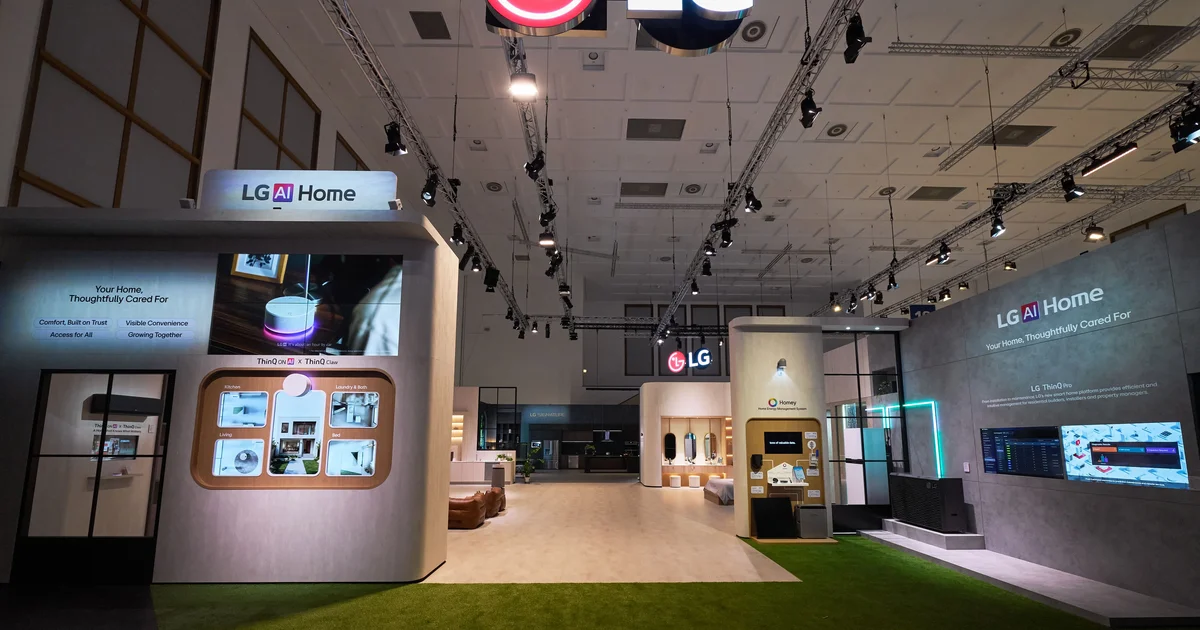
ThinQ Claw is an agent inside ThinQ ON
LG publicly demonstrated ThinQ Claw at IFA Berlin on September 3 after announcing the technology ahead of the show. It is a text-based AI agent integrated with the company's ThinQ ON home hub and wider ThinQ platform.
The agent is designed to interpret intent and context rather than handle every instruction in isolation. LG says its AI Home can use schedules, routines, environmental conditions and appliance usage when deciding what to recommend.
That moves the interface away from individual commands such as turning a device on and toward situations involving several devices at once.
A calendar event can affect the whole house
One of LG's demonstrations starts with a trip in the user's calendar. ThinQ Claw recognizes that the household will be away and proposes switching off lights and the television while pausing automations until the family returns.
Another example uses a child's upcoming school break to suggest different air-conditioning and robot-vacuum routines.
The user does not have to pre-build a specific automation for that exact event. The agent interprets the situation and proposes the steps.
LG also wants the system to remember what people like
ThinQ Claw can retain preferences according to LG, allowing recommendations to become more personalized over time.
In the kitchen, that can mean looking at available food information, recommending a recipe and coordinating relevant appliances. LG also describes scenarios where the system checks indoor air quality and temperature before somebody comes home.
The company is effectively giving the smart-home controller a longer memory than a conventional one-shot voice command.
Homey expands the system beyond LG hardware
The broader AI Home platform uses Homey, the smart-home technology developed by Athom. LG acquired the company in 2024.
Homey already connects hardware from multiple manufacturers, giving LG a route beyond an entirely closed appliance ecosystem.
At IFA, the company is demonstrating a Home Energy Management System that coordinates smart meters, solar panels, home batteries, EV chargers and appliances. Where dynamic electricity pricing is available, the system can adjust when energy is generated, stored and consumed.
More context also means more sensitive context
An agent becomes more useful when it knows more about the household. The same property creates a much larger privacy question.
LG says its LG Shield security framework covers the AI Home ecosystem. Its launch material does not provide a complete feature-by-feature breakdown of which ThinQ Claw data is processed locally, what requires cloud processing or how every remembered preference is retained.
Those details will matter if the service moves from an IFA demonstration to widespread daily use. Calendar information, device states and inferred occupancy reveal considerably more than a simple remote-control command.
This is still a public demonstration, not a universal rollout
IFA visitors can see ThinQ Claw in LG's AI Home Zone in Hall 18 at Messe Berlin.
LG describes the show as the agent's public debut. The global announcement does not specify a general consumer release date or separate subscription price for ThinQ Claw.
The scenarios shown in Berlin therefore describe what LG is demonstrating rather than a guarantee that every ThinQ household can activate the complete agent today.
The interface is the genuinely interesting change
Smart-home platforms already know how to start a vacuum at 5 PM or lower a thermostat when somebody leaves. The tedious part has often been teaching them every rule in advance.
ThinQ Claw tries to move that configuration layer into natural language. A user describes plans or circumstances and the agent maps them onto devices and services.
Whether that is better than traditional automation will depend on reliability, interoperability and permission controls far more than on how convincingly the chatbot talks.