
 By Camille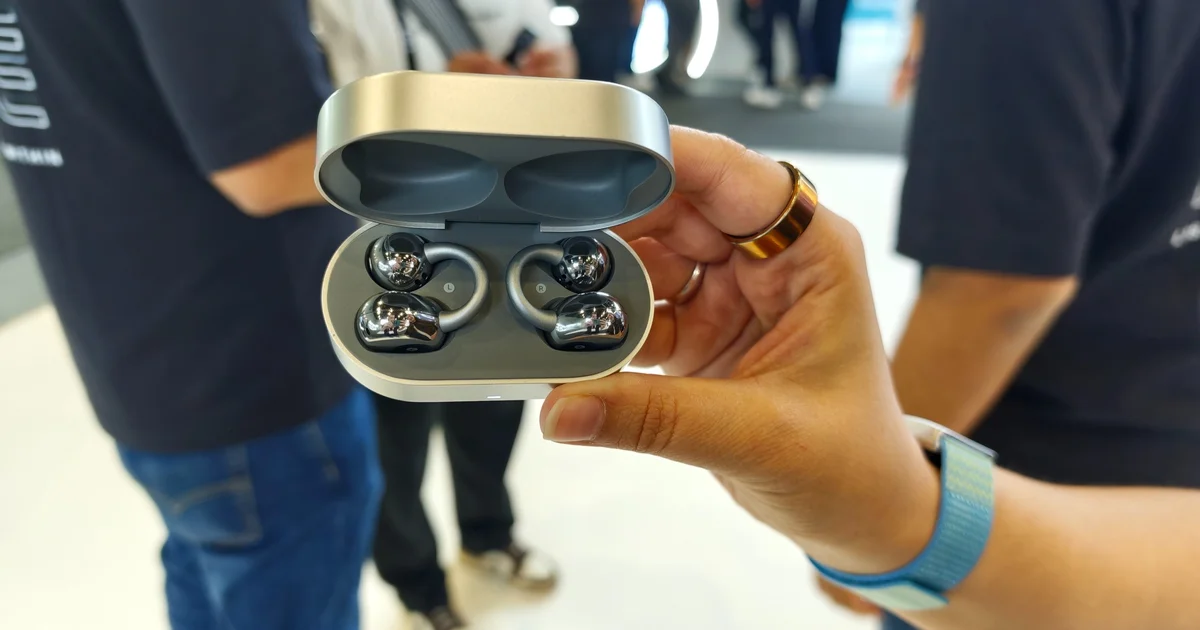
Noise unveiled Master Buds Open at IFA Berlin on September 4.
They are the company's first open-ear model and extend the Master Series beyond conventional in-ear earbuds and over-ear headphones.
Sales are scheduled to begin in late September.
Noise has not yet published the complete final specification sheet or an official final retail price.
Sound by Bose does not mean made by Bose
Master Buds Open are designed and sold by Noise.
Bose contributes acoustic expertise through its Sound by Bose program.
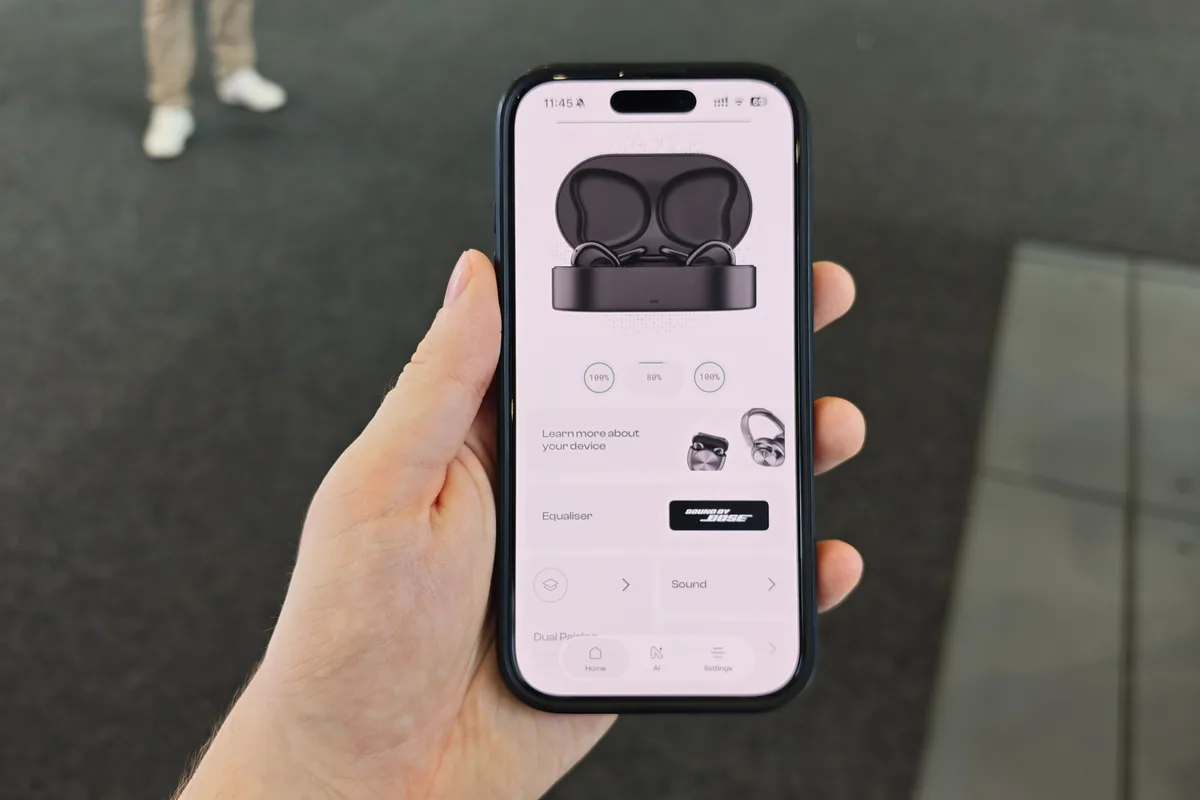
An IFA hands-on demonstration showed a dedicated Sound by Bose EQ profile inside Noise's companion application.
The relationship between the two companies is deeper than a one-off badge.
Bose is an investor in Noise, and the companies have already collaborated on products including Master Buds 2 and Master Buds Max.
The C-shaped clip leaves the ear canal completely open
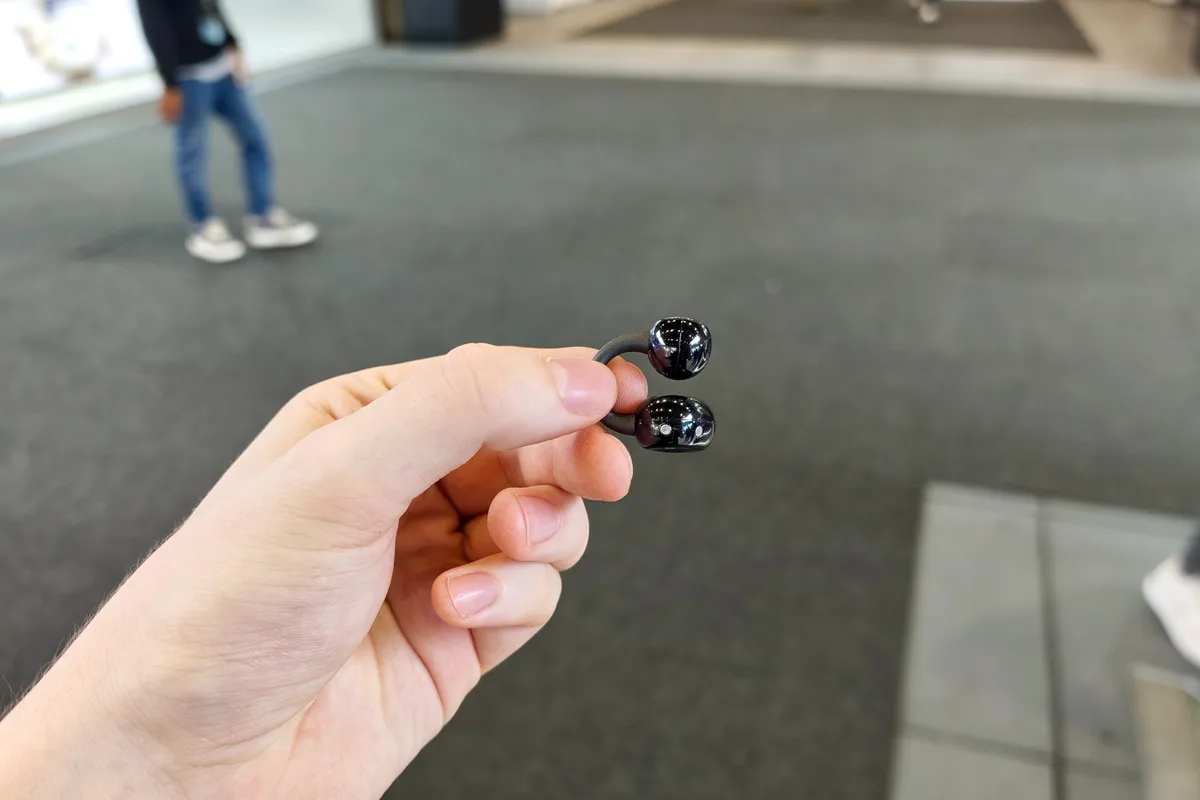
The earbuds wrap around the outer ear using a flexible C-shaped structure.
One section rests behind the ear while the speaker sits in front of the canal without entering it.
There is no silicone seal.
Environmental sound therefore reaches the listener naturally rather than through an electronically generated transparency mode.
That makes open-ear audio particularly attractive for walking, cycling, office use and other situations where complete isolation can be undesirable.
Prototype comfort already looks like one of the strongest features
During the IFA hands-on, the clip was described as secure without feeling excessively tight.
The earbuds also felt extremely light while worn.
That balance is difficult to achieve with clip-style products.
Too much pressure becomes uncomfortable over time, while too little pressure can let the speaker move during exercise or walking.
A final judgment will require hours rather than minutes of wear across different ear shapes.
A 10.8mm driver has to work without an acoustic seal
Noise uses a 10.8mm driver.
Traditional in-ear earbuds use silicone tips to seal the ear canal, which helps retain low-frequency pressure.
Open-ear designs lose that physical advantage.
The driver has to move enough air from outside the canal while limiting how much audio escapes to people nearby.
Noise says the new design targets stronger bass alongside reduced leakage.
Physics still makes deep bass harder than it is with sealed earbuds
Bose tuning cannot remove that fundamental constraint.
Without a seal, low-frequency energy disperses much more easily into the surrounding air.
Open earbuds can still produce useful bass, but generally not the same physical low end as a strong sealed in-ear design.
The IFA prototype was described as delivering respectable bass for the format, alongside clear vocals and good midrange separation.
The prototype also sounded somewhat forward in the treble
Early listening impressions noted prominent upper-frequency energy on some tracks.
That is exactly the kind of tuning detail that may still change before retail production.
The IFA unit was explicitly a prototype.
Its sound should therefore be treated as an early indication rather than a final review result.
Dynamic EQ is designed for changing environments
Noise has announced Dynamic EQ for the earbuds.
The system is intended to adjust playback as listening conditions change.
That makes particular sense for an open design because external noise interacts directly with the music.
A tuning balance that works in a quiet room may feel much thinner on a busy station platform.
Adaptive processing can attempt to preserve a more consistent tonal impression between those environments.
Spatial audio is part of the app
Noise's application also includes a Spatial Audio mode.
The company describes it as creating a more dynamic and immersive sound field.
Noise has not yet detailed a full head-tracking implementation comparable with some more expensive spatial-audio systems.
The confirmed feature is therefore spatial processing itself, not every advanced capability associated with competing platforms.
Four microphones handle calls
Noise lists four microphones with a noise-isolation algorithm for voice communication.
An open form factor makes the wearer's own voice easier to hear naturally, but it does not protect microphones from wind, traffic or nearby conversation.
Software therefore has to identify speech and suppress unwanted environmental sound before transmission.
Call performance remains one of the areas that needs final testing.
Google Fast Pair and multipoint are already confirmed
Google Fast Pair is supported for simpler Android setup.
Multipoint connectivity also allows the earbuds to remain paired with two devices.
That can keep a laptop connected for work while a phone remains available for calls.
For many users, features like this have a bigger everyday effect than a subtle difference between audio codecs.
Noise's companion app is unexpectedly feature-rich
The IFA demonstration showed much more software functionality than expected from a value-focused open-ear product.
The app contains customizable EQ, the Sound by Bose preset, spatial audio and a Gaming Mode for lower latency.
Touch controls can be remapped.
A Focus Mode locks those controls to prevent accidental inputs.
Find My Device provides a way to locate misplaced earbuds.
The AI companion can transcribe meetings
Noise is also adding an AI assistant through its application.
The IFA demo included voice questions, conversation history and meeting or discussion transcription.
Noise also references generated summaries.
It is important to separate the earbuds from the service around them.
Nothing currently published suggests a large AI model is executing entirely inside the tiny earbud hardware.
The microphones are the interface, while the phone application and associated services perform the heavier software work.
Transcription immediately creates a privacy question
Recording a meeting is not merely a convenience feature.
Depending on location and workplace context, recording other people may require disclosure or consent.
Noise will also need to explain in its final policies where audio is processed, how long source material is retained and how transcripts are stored.
Those details were not all established in the initial IFA announcement.
For an AI feature built around private conversations, they are as important as the accuracy of the summary.
The charging case keeps the Master Series vinyl motif
The case uses metallic detailing with a large brushed circular element on its lid.
It continues the vinyl-record-inspired design language already used across the Master family.
Noise has shown silver, gray and gold variants.
The result looks substantially more premium than many inexpensive open-ear charging cases.
That visual positioning matters as Noise tries to push the Master Series beyond its home market.
Battery life is still unconfirmed
Noise has not yet published the final battery-life figure.
Assigning a runtime borrowed from another Master Series product would therefore be incorrect.
The same applies to exact Bluetooth version, water-resistance rating and final codec support.
Noise says more complete specifications will be revealed closer to the late-September launch.
The €119 figure is guidance, not a finalized MSRP
During TechRadar's IFA demonstration, a representative indicated a price of approximately €119.
Separate reporting says Noise has discussed a broader €99 to €199 positioning range before final confirmation.
There is no definitive public retail price on Noise's store yet.
The roughly €119 figure should therefore be treated as a strong indication of intent rather than a locked official MSRP.
Comparison with Bose Ultra Open Earbuds is unavoidable
Bose sells its own Ultra Open Earbuds at a much higher price.
Their US list price is $299.
The similar open-ear concept and visible Bose branding make the comparison immediate.
The products do not come from the same development pipeline, however.
Noise receives Bose tuning expertise while choosing its own hardware, software and build target.
That can produce a Bose-influenced sound without reproducing the exact quality or engineering of Bose's own earbuds.
Bose is increasingly turning its expertise into an ingredient
That may be the more important business story behind Master Buds Open.
The Bose name is no longer restricted to products carrying a Bose logo.
Sound by Bose is appearing across partnerships with other manufacturers.
That gives Bose a way to monetize acoustic expertise in price bands where it may not want to sell a complete Bose-branded device.
Noise receives the opposite benefit: immediate audio credibility as it expands into markets where its brand remains relatively unfamiliar.
Open-ear deliberately gives up isolation
Master Buds Open do not have the physical seal needed for noise cancellation comparable with conventional in-ear earbuds.
That is not an oversight.
They are built around maintaining awareness of surrounding sound.
That can be ideal in an office or outdoors and much less effective on an aircraft or loud subway.
They are not intended to replace every form of personal audio.
Soundcore may be the real rival rather than Bose
If final pricing lands near €119, Master Buds Open will compete more directly with affordable open-ear models such as Soundcore's AeroClip than with Bose's $299 product.
Comfort, leakage, call quality and software will become the important comparison points.
Sound by Bose remains a highly visible differentiator.
The question is whether that difference remains equally obvious after extended side-by-side listening.
Noise has shown a lot before revealing the entire specification sheet
That is the main limitation of the current launch story.
The design is public, the prototype works, and the 10.8mm driver, four microphones, multipoint, Fast Pair, spatial audio and software features have been shown or announced.
Battery life, waterproofing, codec support and final pricing remain incomplete.
Filling those blanks with specifications from Master Buds 2 or assumptions based on the product category would turn a preview into a finalized launch that has not happened yet.
At roughly €119, the interesting question is how much Bose actually carries over
Master Buds Open represent an interesting change in consumer audio.
A smaller manufacturer no longer has to build every part of its acoustic identity alone.
It can integrate expertise from an established audio company, combine that with its own hardware and target a much lower price.
Noise appears to be doing exactly that.
If the earbuds really launch around €119, the Bose name will not automatically make them excellent.
It will, however, make similarly priced open-ear competitors explain why they do not offer the same tuning partnership, multipoint support and unusually ambitious software package Noise has already demonstrated in Berlin.