
 By Adri
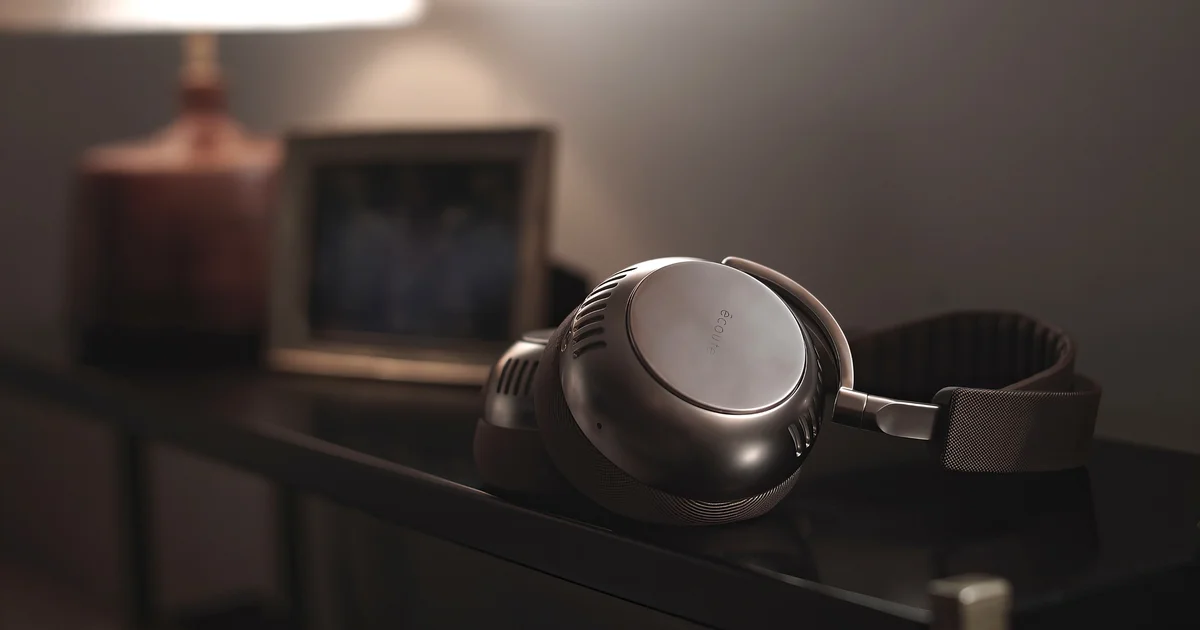
Most modern wireless headphones concentrate much of their audio processing into a small number of integrated circuits.
Bluetooth decoding, digital-to-analog conversion, amplification and active noise cancellation must operate within tight space and power constraints.
Écoute Audio has chosen a different approach.
Its TH2 retains an architecture inspired by traditional high-fidelity equipment, including a genuine vacuum-tube preamplifier in the audio signal path.
The company had already introduced this concept with the TH1. The second generation keeps the same underlying principle while addressing practical aspects including comfort, interference, bass reproduction and noise cancellation.
The TH2 was introduced before October, including through crowdfunding earlier in 2026.
The latest coverage concerns the approaching commercial launch, regional pricing and changes from the first model.
A real tube stage rather than a digital simulation
The component distinguishing the TH2 from most Bluetooth headphones is its Korg Nutube 6P1 preamplifier.
This is a physical electronic component based on dual-triode operation, not merely a software effect intended to simulate vintage audio equipment.
Nutube technology adapts the behavior of a vacuum tube to a much smaller form factor than the tubes commonly found in traditional hi-fi amplifiers.
In the TH2, the tube stage sits after digital-to-analog conversion and before the power amplification circuitry.
It processes an analog signal and provides gain according to the characteristics of the circuit.
Écoute Audio associates the design with warmth, harmonic texture and improved musical detail.
Those remain manufacturer claims until supported by independent measurements or comparative listening tests.
Using a vacuum tube does not automatically guarantee lower distortion or more faithful sound reproduction.
An amplifier can be designed for maximum transparency or to provide a particular sonic character. Those are different engineering objectives.
Independent DAC paths and amplification for each channel
The TH2 uses a dual-mono architecture.
Each audio channel follows a largely independent electronic path from digital-to-analog conversion through amplification.
The manufacturer specifies a dual-core DAC, Nutube preamplification and discrete Class AB power amplification.
This arrangement is intended partly to reduce crosstalk, the unwanted leakage of signal between the left and right channels.
In theory, improved separation can help preserve stereo imaging.
However, the physical architecture alone is not a performance measurement.
Actual separation depends on circuit layout, power distribution, wiring and the acoustic behavior of the headphone drivers.
Headphones using more integrated solutions can also achieve excellent crosstalk performance.
Independent measurements will therefore matter more than the number of separate amplification stages.
40mm drivers and a redesigned acoustic chamber
The processed signal drives two 40mm dynamic transducers.
According to the manufacturer, their Mylar diaphragms use a titanium coating.
For the TH2, Écoute Audio has redesigned the acoustic resonance chamber.
The stated goal is deeper, more controlled bass and improved definition in the higher frequencies.
In closed-back headphones, the air volume around the driver and the damping of that space strongly influence acoustic response.
Changing the chamber can affect low-frequency behavior, resonances and driver sensitivity.
However, greater perceived bass impact does not necessarily mean more accurate reproduction.
Independent testing will need to examine frequency response, distortion and how the sound changes with different ear-pad seals.
The available sources do not provide independent comparative measurements establishing the benefits of the new chamber design.
Vacuum tubes also introduce noise-management challenges
Installing a tube stage inside portable headphones creates unusual engineering challenges.
The device operates close to Bluetooth radio circuitry, digital processors and a battery-powered electrical system.
Sensitive analog amplification stages can be affected by electrical and mechanical interference.
Depending on their construction, vacuum tubes can also respond to physical vibration, a phenomenon known as microphonics.
Écoute Audio says it has improved shielding around the TH2's Nutube components.
The change is intended to reduce interference and lower the background noise.
This may be more significant than a cosmetic update because audible electronic noise can interfere with quiet musical passages.
However, the actual noise floor and behavior during movement remain to be measured independently.
Bluetooth 5.3, LDAC and USB-C keep the TH2 contemporary
Despite its unusual analog design, the TH2 includes modern wireless headphone features.
Bluetooth 5.3 supports SBC, AAC and LDAC audio codecs.
LDAC offers relatively high-bandwidth Bluetooth audio on compatible devices.
It should not be confused with lossless wired PCM transmission.
The headphones also accept a digital signal through USB-C.
The manufacturer specifies digital conversion capability up to 32-bit/384kHz under suitable conditions.
That describes a technical capability, not proof that every recording will sound better at such a high sampling rate.
A standard 3.5mm analog input provides another connection option.
The headphones support the manufacturer's intended active and passive wired operating modes.
This versatility may interest listeners who move between smartphones, computers and dedicated hi-fi equipment.
Revised active noise cancellation
The TH2 includes hybrid active noise cancellation and a transparency mode.
These are now common features in midrange and premium wireless headphones.
Their inclusion is nevertheless notable in a product emphasizing analog amplification.
Active noise cancellation uses microphones and signal processing to reduce selected components of ambient noise.
It is generally more effective against continuous, predictable noise than against every possible sound in the environment.
Écoute Audio claims the TH2 performs better than the TH1.
That improvement needs verification through attenuation measurements and practical listening.
At this price, buyers can reasonably compare its ANC with competing premium headphones known for strong performance during travel.
The distinctive amplification architecture does not remove that expectation.
Eight-band tuning stored in the headphones
Écoute Audio also allows listeners to customize the sound through digital processing.
The TH2 includes an eight-band equalizer with a reported adjustment range of plus or minus 12dB per band.
The settings are applied internally and stored in the headphone firmware.
This allows a preferred sound profile to remain active when switching between sources instead of depending entirely on an individual music application.
Listeners can modify bass levels, midrange balance or treble to suit their preferences.
However, equalization does not eliminate the physical limitations of the drivers or acoustic chambers.
Large boosts at selected frequencies can also reduce available headroom.
The feature provides useful flexibility but does not replace good acoustic design.
A redesigned suspension headband and replaceable components
Comfort is another area of focus for the second generation.
The TH2 uses a hybrid suspension headband with articulated sections intended to distribute pressure more evenly.
Such a design may help reduce concentrated pressure on the top of the head.
However, the headphone also includes additional electronic components, and its perceived weight will need to be evaluated during extended use.
The manufacturer describes a modular design with replaceable ear pads and headband coverings.
These components typically experience wear because of regular contact with skin and hair.
Being able to replace them can extend the useful life of the product.
The practical benefit depends on spare-parts pricing and long-term availability.
A brief demonstration cannot establish comfort over several hours.
Clamping force, heat buildup and fit all require longer-term evaluation.
A claimed 20 hours of battery life
Écoute Audio advertises approximately 20 hours of battery life for the TH2.
It also specifies a charging time of about 3.5 hours.
Those values have not been independently verified in the sources reviewed.
Real-world endurance depends on listening volume, Bluetooth codec, noise cancellation and processing settings.
The inclusion of tube preamplification and separate analog amplification stages introduces additional power-management considerations compared with more integrated designs.
That does not establish the exact power consumption of the Nutube circuitry.
The advertised battery life should therefore be treated as an overall product specification.
For primarily home-based listening, 20 hours may be sufficient.
Frequent travelers will need to decide whether that endurance suits their routines and charging opportunities.
A $999 headphone with several regional prices
The TH2 sits firmly in the premium category.
Écoute Audio lists a $999 suggested retail price in the United States.
Its official store also displays a $899 promotional reservation offer while describing the product as not yet available for immediate shipment.
In the United Kingdom, the fabric-trim version is priced at £999.
The leather version costs £1,099.
European distribution has also been reported by specialist publications, with a recommended price of €999.
These are prices from different territories and offers, not a single worldwide retail figure.
Commercial deliveries are expected to begin in November 2026.
That remains the manufacturer's announced schedule rather than confirmation of immediate availability everywhere.
Does a more complex signal chain necessarily mean better sound?
This is the central question surrounding the TH2.
Écoute Audio favors a design in which conversion, preamplification and power amplification receive separate dedicated circuitry.
That may help the manufacturer control the analog characteristics of its product.
However, using more electronic components does not automatically result in superior performance.
Frequency response, distortion, background noise, channel separation and consistency are more meaningful ways to evaluate technical accuracy.
Subjective listening also matters, especially when a manufacturer deliberately pursues a particular sound signature.
However, listener preference is not the same thing as proof of greater fidelity.
A headphone described as warm may be appealing while differing from a strictly neutral presentation.
The TH2 may therefore be interesting because it offers a different sonic character, without necessarily being more accurate than every competing headphone.
An unusual proposition in a competitive premium market
Écoute Audio is not trying to reproduce the conventional premium Bluetooth headphone formula.
The TH2 combines physical Nutube circuitry, independent audio channels and modern digital features in a distinctive design.
The announced changes to noise cancellation, acoustic chambers and comfort target genuine practical concerns.
But their effectiveness still needs independent confirmation.
At $999, the headphones must offer more than interesting engineering. They also need to perform convincingly in sound quality, comfort, endurance, reliability and noise cancellation.
The planned November release should provide the opportunity to determine whether combining vacuum-tube electronics with a portable headphone delivers a meaningful improvement or primarily a different listening character.