
 By Camille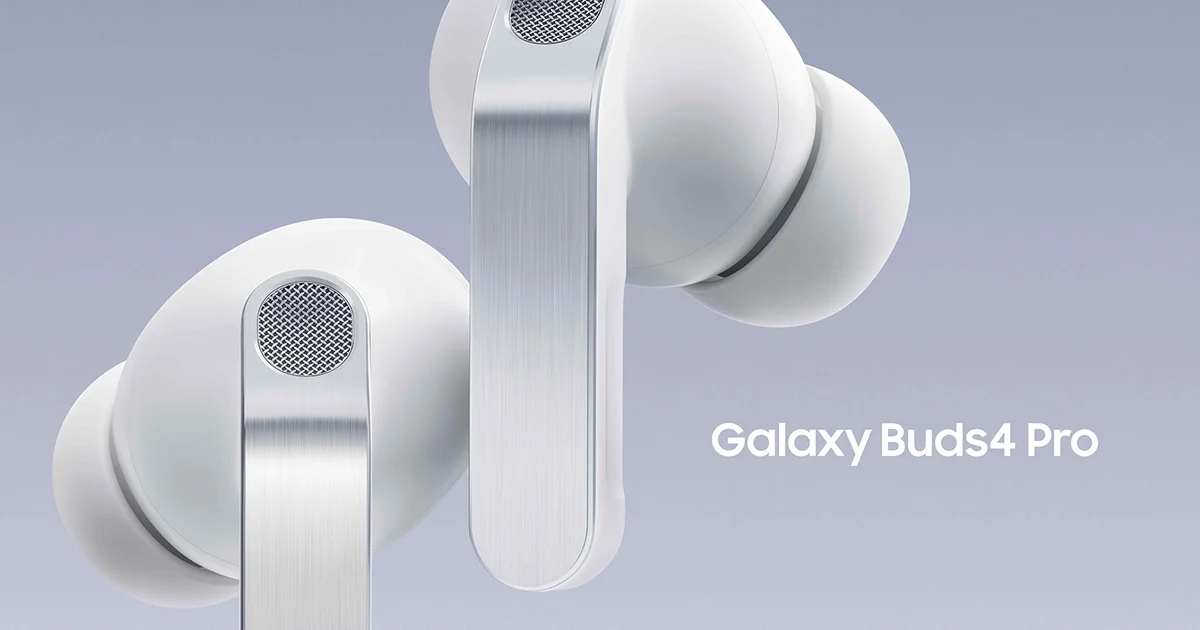
EISA named Galaxy Buds4 Pro its In-Ear Headphones 2026-2027 winner on August 24. Its citation points directly to the two-way driver arrangement, dedicated amplification, adaptive noise control and voice-processing system.
That puts attention on a less marketable part of the design. Plenty of wireless earbuds advertise high-resolution codecs. Fewer explain how the electrical and acoustic sections are divided before software starts correcting the result.
The woofer and tweeter are not sharing one amplification path
Inside each Buds4 Pro is a two-way system with an 11mm woofer and a much smaller dedicated tweeter. Samsung redesigned the woofer to reduce the unused border around its diaphragm and says the effective radiating area is 19.8% larger than on Buds3 Pro.
A larger diaphragm does not translate into a fixed percentage increase in bass. Enclosure volume, excursion, sealing, DSP and tuning still determine the final response.
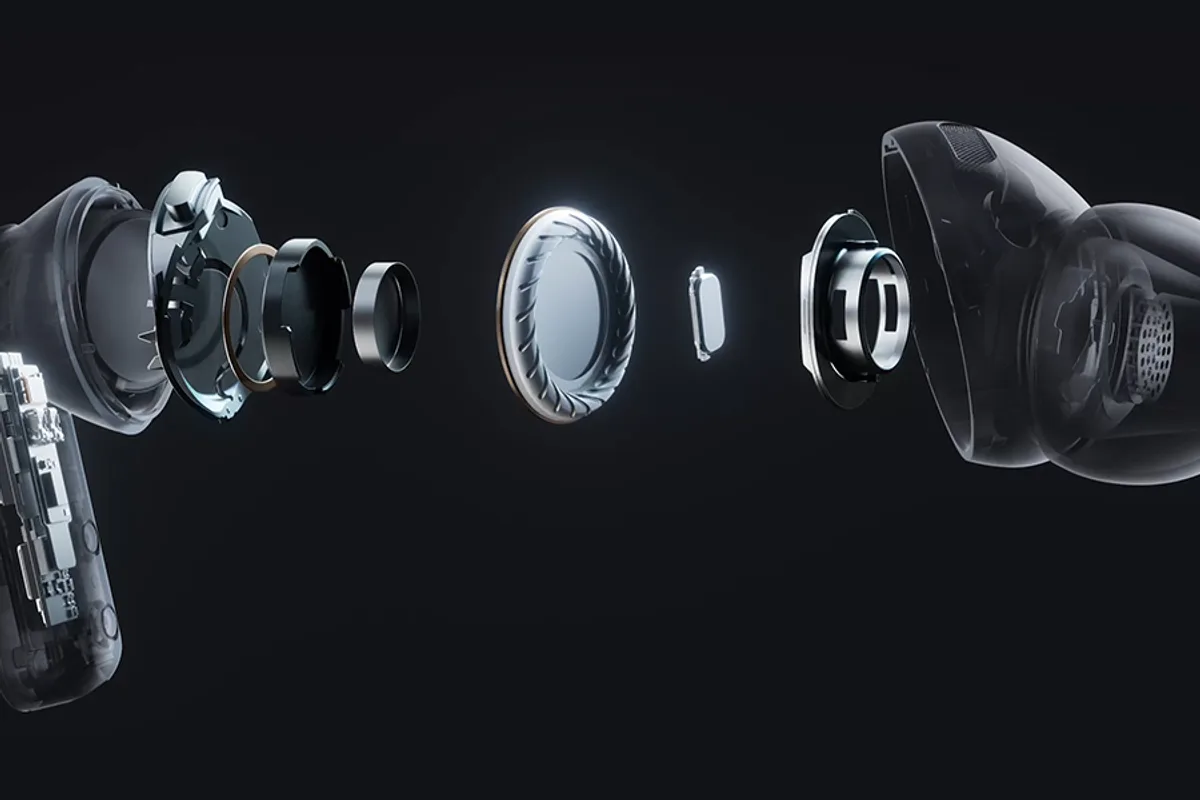
The dual-amplifier arrangement is more unusual. Samsung assigns a dedicated amplifier to each driver, allowing the woofer and tweeter to be controlled independently.
Samsung says the separation reduces interference and gives its engineers more precise control over the two frequency regions. EISA specifically highlights the architecture when describing the earbuds' detail and distortion performance.
That is still an expert-group assessment rather than a standardized laboratory certification. Independent frequency-response and distortion measurements remain the better way to compare the Buds directly with rival products.
24-bit/96kHz is an ecosystem feature
Buds4 Pro supports Samsung Seamless Codec UHQ at up to 24-bit/96kHz. The important qualification is Samsung Seamless Codec.
Bluetooth 6.1 does not automatically provide that mode with every source. SSC UHQ requires a compatible Galaxy phone or tablet, and Samsung limits the feature to specified devices and One UI versions.
UHQ is also not necessarily enabled out of the box. Samsung provides a quality setting that has to be activated on compatible devices.
The earbuds still support more conventional Bluetooth options including AAC, SBC and LC3, so they are not unusable outside the Galaxy ecosystem. The premium 24/96 transmission path is simply not a universal Bluetooth feature.
The transducers matter more than the sample-rate number
A 96kHz link is easy to put on a specification sheet because it can be expressed as one number. It does not describe the frequency response of the earbud, how cleanly its drivers behave, how well it seals or how aggressively its DSP changes the source.
The two-driver architecture potentially gives Samsung more useful control. Bass and treble hardware can be optimized separately before digital equalization and adaptive processing enter the chain.
That is why EISA's emphasis on the woofer, tweeter and amplification is more revealing than simply repeating the Hi-Res label.
Adaptive ANC is compensating for the ear as well as the room
Samsung's Enhanced Adaptive ANC and Adaptive EQ analyze environmental noise, but they also account for wearing conditions and individual ear shape.
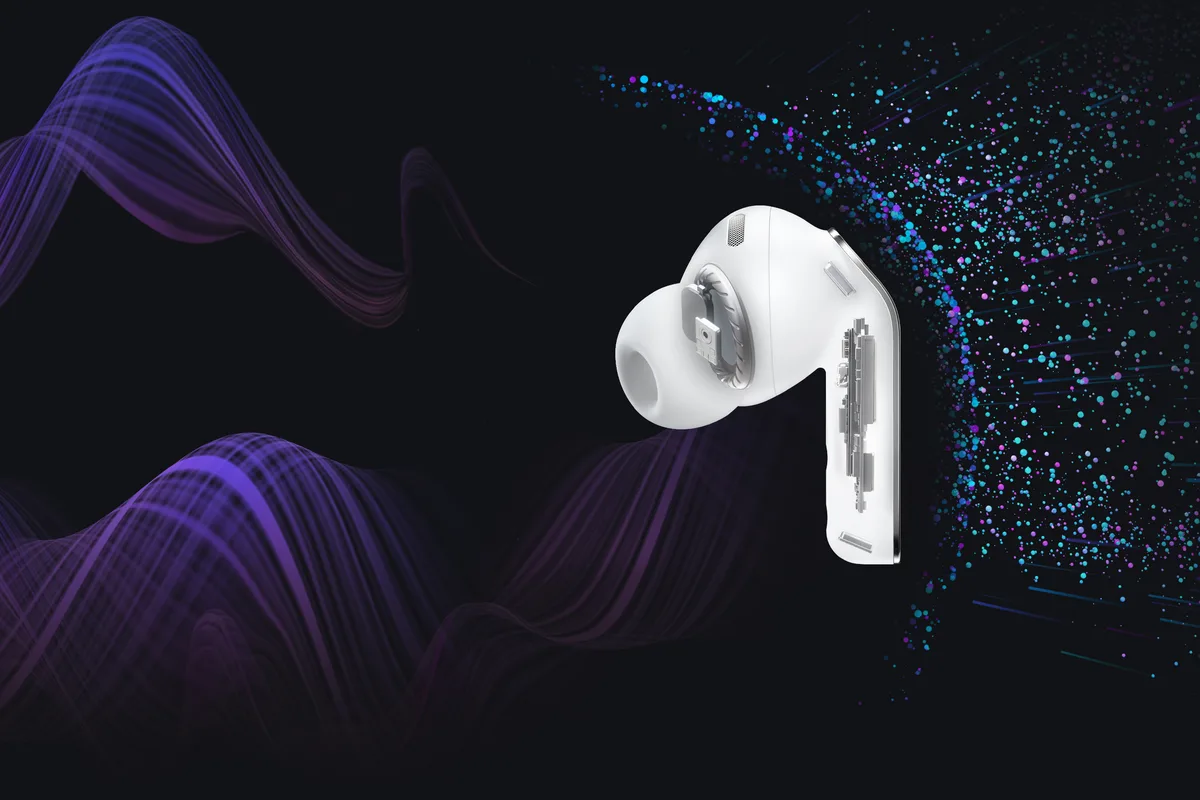
That is useful in an in-ear product because a small change in insertion or seal can alter bass response and noise isolation dramatically. Software that recognizes the change can attempt to keep the tuning and cancellation more consistent.
Buds4 Pro also includes Voice Detect and Siren Detect. The first opens the listening environment when the wearer starts speaking; the second is intended to let emergency alerts through the isolation.
The earbuds carry an IP57 rating. Samsung explicitly excludes the charging case from that water-resistance claim.
Call processing uses another signal path entirely
For voice calls, Samsung combines microphones with a dedicated Voice Pickup Unit and DNN-based noise reduction. The processing tries to isolate the wearer's speech instead of simply reducing environmental sound for listening.
Compatible Galaxy devices can also use Super Wideband voice audio up to 16kHz. Availability can depend on the connected device and mobile network, so it is another feature that needs more qualification than the headline suggests.
The award reinforces an existing product rather than creating a new one
Galaxy Buds4 Pro launched at $249.99 in the US and has been generally available since March 11. Samsung rates playback at up to six hours with ANC enabled and 26 hours including the case, rising to seven and 30 hours with ANC disabled.
Its EISA win does not suddenly change those fundamentals. What it does is draw attention to the part of the design that is easiest to miss when comparing codec logos: Samsung has split the acoustic workload across two drivers, split their amplification as well, and then built its adaptive software around that hardware.