
 By Camille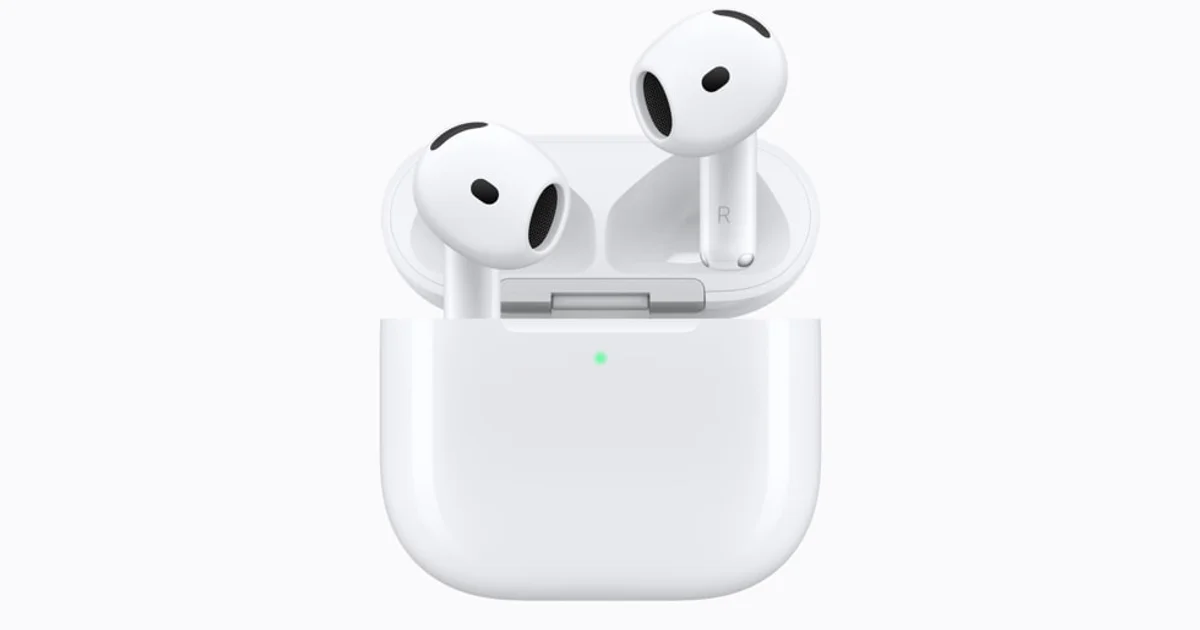
Apple announced AirPods 5 on September 9 with a noticeably different product split. Both versions now include active noise cancellation. The previous AirPods 4 family separated the range into a cheaper model without ANC and a more expensive one with it.
In the US, AirPods 5 start at $129. AirPods 5 with Wireless Charging Case cost $149. Apple lists European pricing at €149 and €169 respectively in several markets, with availability beginning September 18.
Open-fit ANC is now the default
Apple claims AirPods 5 can remove up to 50 percent more external noise than AirPods 4 with ANC. The number comes from Apple's own testing using the IEC 60268-24 methodology, so independent measurements will still matter.
Open-fit noise cancellation remains an awkward engineering problem. Without silicone tips physically sealing the ear canal, the system has much less passive isolation to work with. Fit and ear geometry can therefore influence the result more dramatically than they do with sealed in-ear designs.

Transparency mode has also been revised, with Apple promising a more natural representation of voices and surrounding sounds. Adaptive Audio moves dynamically between transparency and cancellation, while Conversation Awareness lowers playback when the wearer starts talking.
Apple redesigned the acoustic path as well as the algorithms
AirPods 5 use a new multiport acoustic architecture alongside a next-generation Adaptive EQ system. Apple says the combination produces richer, more detailed sound over a wider range of ear geometries.
That last part matters for an open design. Apple cannot rely on a silicone seal to create a repeatable acoustic chamber, so the physical fit varies significantly from one person to another. Compensation across that variation is part of the hardware problem, not merely an EQ preset.
Personalized Spatial Audio remains available with compatible content and uses a TrueDepth-equipped iPhone to create the user's profile.
The extra $20 buys surprisingly useful things
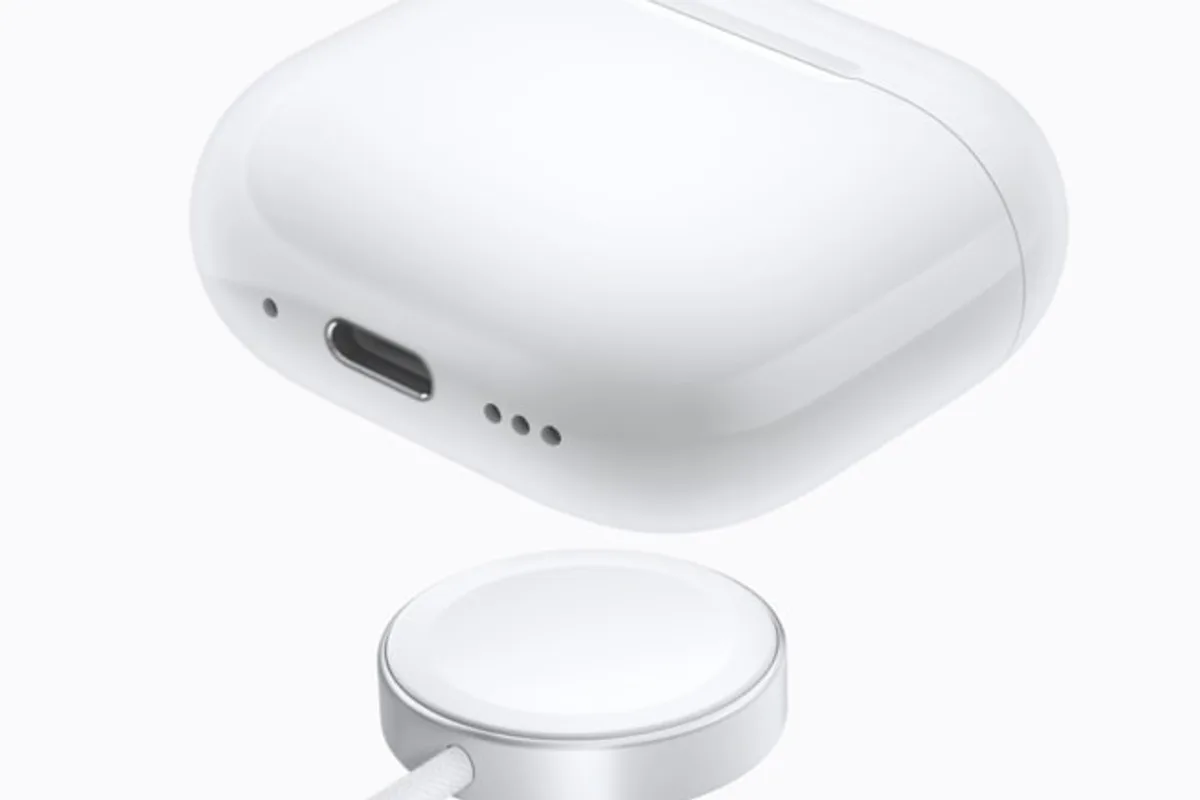
The two AirPods 5 versions share the main audio features. The $149 model primarily adds the Wireless Charging Case, which supports Apple Watch chargers, Qi and USB-C.
It also gets Apple's force sensor with volume swipe. Sliding a finger up or down the stem finally changes volume directly on an open-fit AirPod without reaching for an iPhone or talking to Siri.
Battery life is better on this version as well. Apple rates it for up to five hours of listening with ANC enabled, one hour more than AirPods 4 with ANC, and up to 22 hours with the case while using noise cancellation.
That makes the pricing structure a little odd. Only $20 separates the basic model from the version that adds the two conveniences users are likely to notice every day: wireless charging and physical volume control.
Live Translation turns the earbuds into an interface for the iPhone
AirPods 5 support Live Translation when paired with a compatible Apple Intelligence device. Languages are downloaded through the Translate app, and translation can be started from the AirPods, through Siri, or from the iPhone.
The earbuds are not performing the language model work independently. The iPhone provides the intelligence layer, while ANC and computational audio help present translated speech through the AirPods.
Siri AI follows the same broader model. Apple is positioning AirPods as a hands-free interface for personal context, messages, emails and app actions, while head gestures remain available for simple yes-or-no Siri responses.
The line between regular AirPods and AirPods Pro is getting thinner
AirPods 5 now combine ANC, Adaptive Audio, Transparency mode, Live Translation and Personalized Spatial Audio in Apple's open-fit design. They still do not inherit every Pro feature, particularly the sealed in-ear fit and hearing-health capabilities.
That changes the buying decision. The regular AirPods are becoming less of a feature-compromise product and more of a different physical format for people who simply do not want silicone tips.
AirPods 5 launch on September 18 for $129 in the US, while the Wireless Charging Case version costs $149 and adds longer battery life and stem-based volume adjustment.