
 By Camille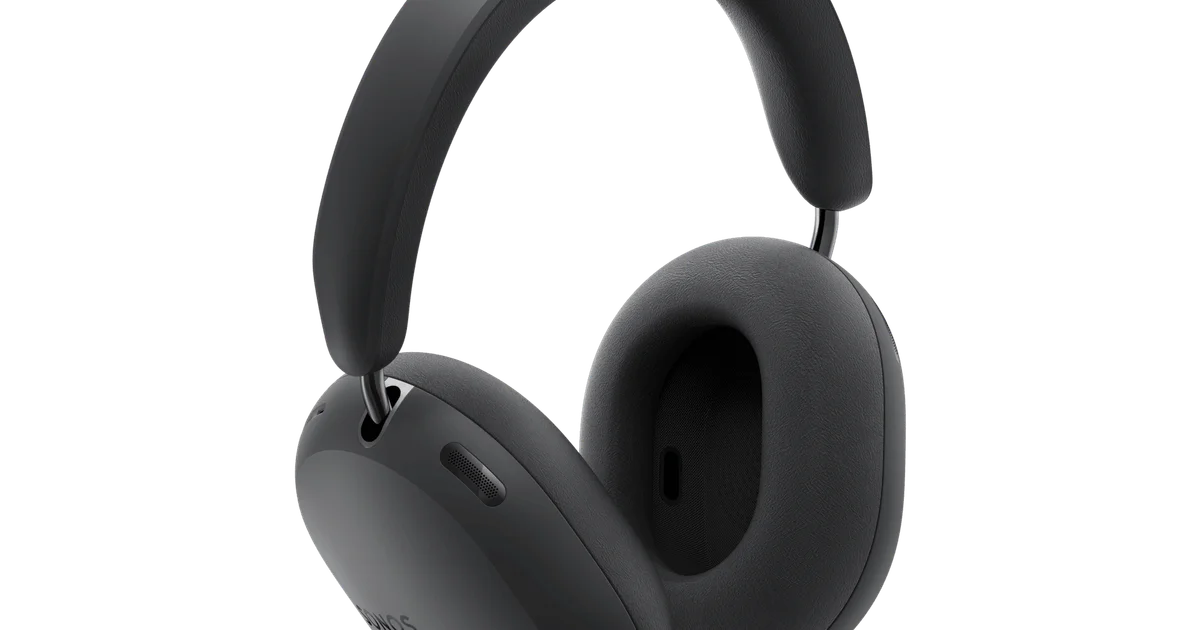
Sonos announced Ace Ultra on September 1, with general availability scheduled for September 29. It is priced at €449 in France and $449 in the US, sitting above the original Ace rather than immediately replacing it.
The familiar pieces remain. These are over-ear wireless headphones with Bluetooth, spatial audio, Dolby Atmos, active noise cancellation and physical controls. The larger change is underneath: Sonos has rebuilt both the acoustic hardware and the connection between the headphones and its home audio platform.
Headphone Engine 2 fixes the strangest limitation of the original Ace
Ace Ultra is the first Sonos headphone based on Headphone Engine 2. The hardware enables Headphone Linking, which launched in Early Access alongside Sonos 27.
Once linked, the headphones can join a compatible Sonos system over Wi-Fi. Press the Content Key and whatever is currently playing on the system can move to Ace Ultra. Press it again and playback moves back to the speakers.
A phone does not need to remain within range to carry the audio stream. Wi-Fi is built into the headphones for the Sonos-system connection itself.
That distinction matters. The original Ace could already take television audio from compatible Sonos soundbars, but the feature did not turn the headphones into a general-purpose member of the multiroom system. Headphone Linking expands the idea beyond TV sound.
Sonos is also being careful with the rollout. Headphone Linking is explicitly marked Early Access, optional and subject to change while development continues.
The 40mm driver is new, not just retuned
Each earcup contains a new Sonos-designed 40mm driver. The company claims deeper bass, finer detail and low distortion, although those are claims that will need comparative listening and measurements before they mean very much.
What is already clear is that this is more than a software retune of the old Ace. The acoustic driver itself has changed.
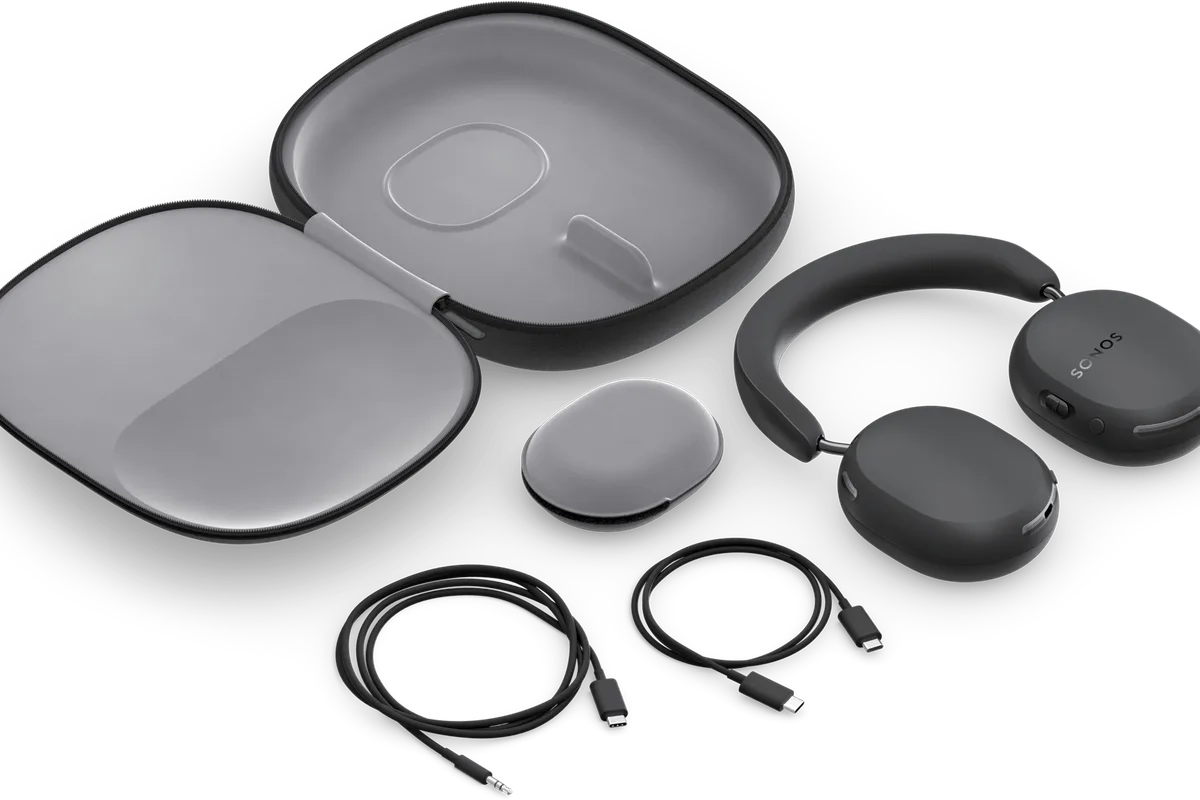
Lossless playback is available over USB-C and through Qualcomm aptX on compatible Bluetooth devices. Ace Ultra supports Bluetooth 6.0 and still includes wired 3.5mm playback using the bundled USB-C-to-3.5mm cable.
Ten microphones feed adaptive noise cancellation
Ten microphones handle active noise cancellation, calls, Aware mode and TrueCinema. Sonos claims the new adaptive ANC can be up to twice as effective as the system in the original Ace.
The adaptive part is important. The headphones monitor changes in fit caused by head movement, hair, glasses and other acoustic leaks, then adjust cancellation to compensate.
Adaptive EQ reacts to the same kind of variation. Users who would rather make their own changes can use a three-band or eight-band equalizer in the Sonos app.
Glasses are a good example of why this matters. A frame passing underneath an ear cushion can change the seal enough to affect bass and cancellation. Whether Sonos can compensate convincingly will be more interesting than another maximum-ANC claim.
Battery life reaches 35 hours with ANC switched on
The 1,060mAh battery is rated for up to 35 hours of listening with either ANC or Aware mode enabled. A three-minute fast charge can provide up to three hours of playback from an empty battery.
A full charge can take up to three hours. Ace Ultra weighs 322 grams, so Sonos has not chased an ultralight design.
Wear detection pauses music when the headphones are removed. Aware mode includes Voice Boost for making nearby speech easier to hear, while Sidetone feeds the wearer's own voice naturally into calls with ANC enabled.
Home theater is now one feature of the ecosystem, not the whole ecosystem
TV Audio Swap remains. Audio from a compatible Sonos soundbar, including Dolby Atmos content, can move directly to Ace Ultra. TrueCinema adapts the presentation to the room and soundbar while dynamic head tracking keeps the virtual sound field in place as the listener moves.
The difference with Sonos 27 is that the integration no longer stops there. With Headphone Linking enabled, Ace Ultra can also stream over Wi-Fi from services in the Sonos system and can be controlled through the Sonos app while at home.
The battery and ear cushions are designed to be replaceable as well. It is an unusually practical specification on a €449 pair of headphones intended to survive several years of use.
Sonos is selling an endpoint for the home, not just another Bluetooth headset
The original Sonos Ace remains listed at €379 in France, putting a €70 gap between the two models. Ace Ultra adds the new driver platform, adaptive ANC, longer battery life and Headphone Engine 2.
That final feature is what makes the Ultra much easier to understand. Outside the house it still works like a conventional premium Bluetooth headset. At home, Sonos now wants it to behave like another listening endpoint on the same network as the speakers.
Preorders are open, with shipping and general availability beginning September 29, 2026.