
 By Camille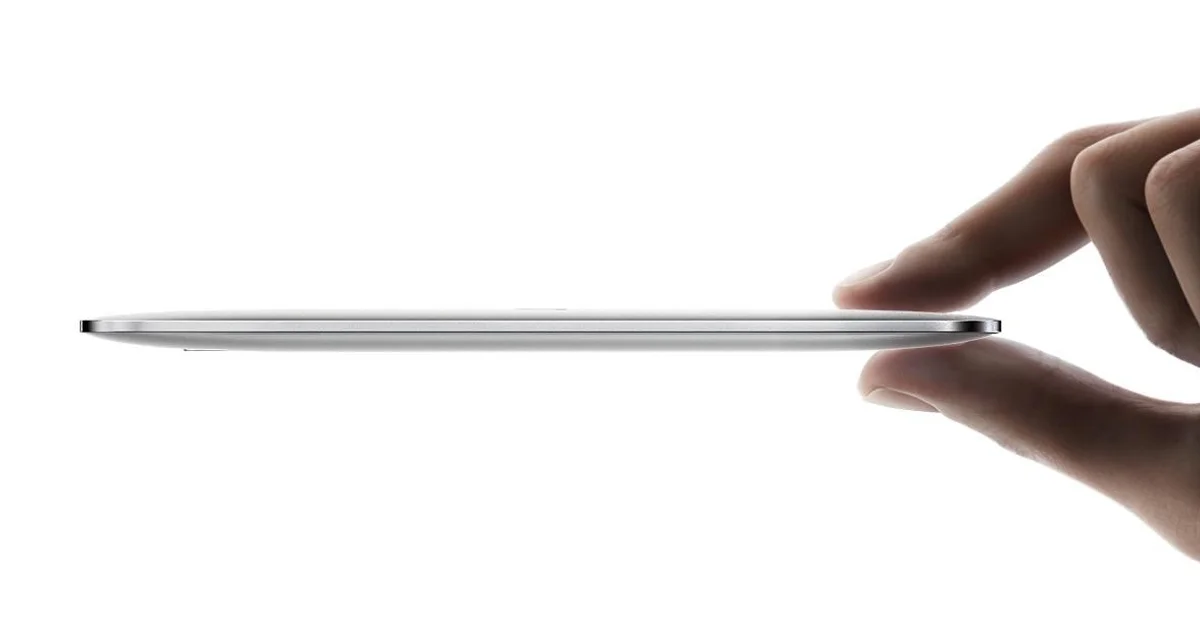
The SSD itself is thinner than some phone cases
Lexar unveiled the Muse Ultra-Slim Portable SSD at IFA 2026 on September 4 and calls it the world's thinnest portable SSD.
The metal unibody measures roughly 80 by 48mm and reaches only 3.8mm at its thickest point.
Its tapered edges fall to about 1mm.
Lexar says that required a custom ultra-thin PCB, high-density NAND stacking and an internal structure designed specifically around the tiny volume.
Its real target is a phone camera
The Muse can be used with Macs, iPads, PCs and other USB-C devices, but its physical design makes the intended use case fairly obvious.
An included magnetic sleeve holds the SSD against the back of compatible MagSafe iPhones.
That turns external storage into something that can stay attached while the phone is being used as a camera rather than dangling from a cable.
Lexar says iPhone use requires a USB-C model from the iPhone 15 family or newer. Exact MagSafe and direct-recording compatibility varies by phone and case.
1,000MB/s write speed is there for 4K120 ProRes
The drive is rated for up to 1,050MB/s reads and 1,000MB/s writes.
Those numbers put it in conventional 10Gbps external SSD territory rather than competing with much faster USB4 or Thunderbolt storage.
For an iPhone, that level of performance is still enough for the feature Lexar is emphasizing: direct external Apple ProRes recording at up to 4K and 120 frames per second on supported devices.
ProRes can consume internal phone storage extremely quickly, so recording directly to an attached SSD changes the usefulness of the product far more than shaving a few seconds from a normal file copy.
SnapLink is the clever part and the annoying part
The Muse does not have a USB-C socket.
Instead, Lexar supplies a proprietary SnapLink Magnetic Cable that connects through spring-loaded pogo pins.
N52-grade neodymium magnets align and hold the connector in place.
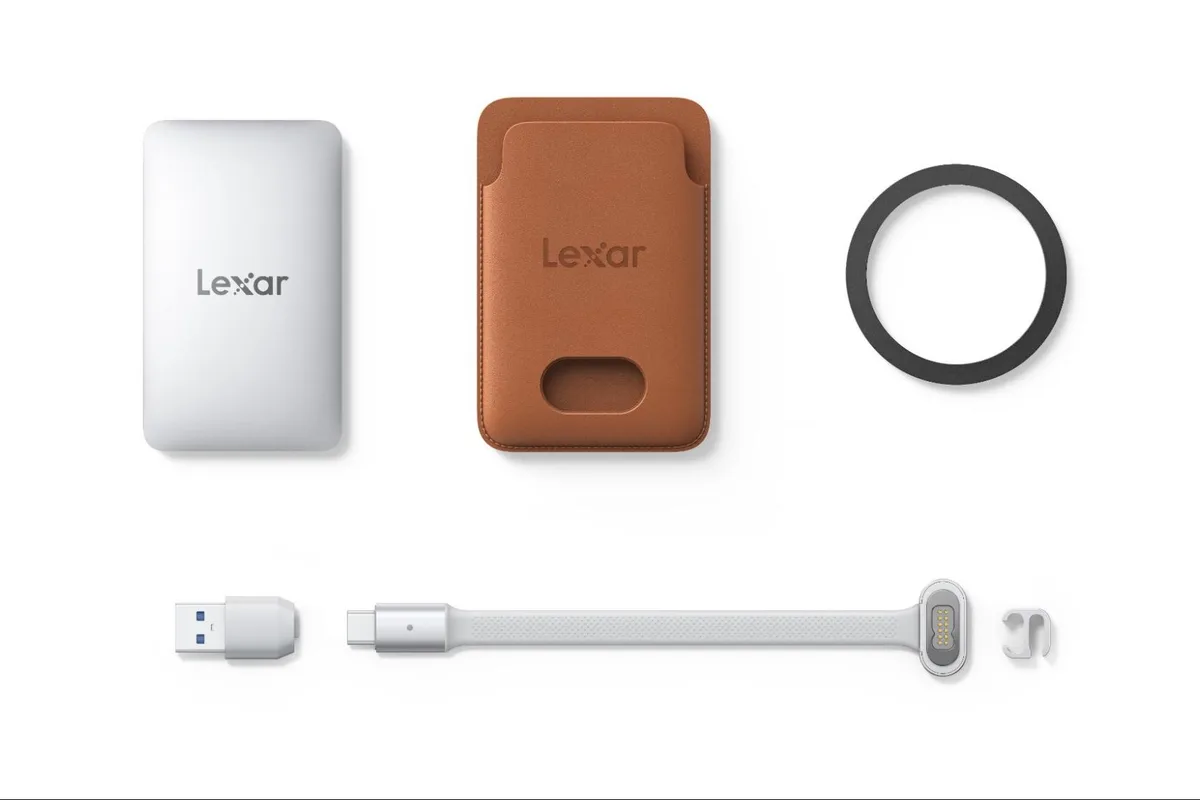
That lets Lexar keep the edge of the SSD exceptionally thin and avoids carving enough internal space for a conventional port.
It also means the cable has become a critical accessory.
Lose SnapLink and there is no ordinary USB-C cable sitting in a drawer that can immediately replace it.
The Verge also points out another consequence of using a magnetic data connector: an accidental knock could disconnect the cable during a transfer or recording session.
The magnetic sleeve adds some of the thickness back
The 3.8mm measurement describes the bare SSD.
Attaching it to a phone requires the included magnetic sleeve, which necessarily makes the complete assembly thicker.
Tom's Hardware handled the Muse at IFA and noted that the sleeve adds visible bulk and resembles a small card wallet.
The package is still significantly cleaner than many conventional portable SSD arrangements, but the headline thinness should not be confused with the thickness of the entire phone-mounted setup.
Sustained performance is still an unanswered question
Lexar has published maximum read and write figures but has not yet provided detailed sustained-write or thermal performance data.
That will matter for long ProRes recording sessions.
Portable SSDs can hit peak speed for short periods and then slow as the controller and NAND heat up.
The Muse's metal shell can spread heat, but a 3.8mm enclosure has very little physical mass available for thermal management.
Android Central highlighted the same concern after seeing the drive at IFA.
The claimed 1,000MB/s write speed should therefore be treated as a peak specification until the retail hardware can be tested over sustained workloads.
The first capacities stop at 1TB
Lexar will launch the Muse in 512GB and 1TB versions during the fourth quarter of 2026.
No 2TB model has been announced.
That ceiling is worth noticing on a product aimed partly at high-bitrate video recording, where storage disappears quickly.
Official global pricing has not yet been published.
Tom's Hardware says Lexar representatives at IFA were targeting roughly $230 for 512GB and $380 for 1TB, but those figures remain provisional rather than confirmed retail prices.
External SSDs are starting to be designed around phones instead of PCs
The Muse matters because its form follows a workflow that barely existed a few iPhone generations ago.
Modern phones can record professional video directly to external storage. Storage makers are now shaping the hardware around the back of a phone instead of expecting users to tolerate a small desktop drive hanging from a cable.
Lexar has pushed that concept to an extreme with the Muse.
Whether people prefer 3.8mm hardware and a proprietary cable over a slightly thicker SSD with an ordinary USB-C port will be the more useful comparison once it actually ships.