
 By Adri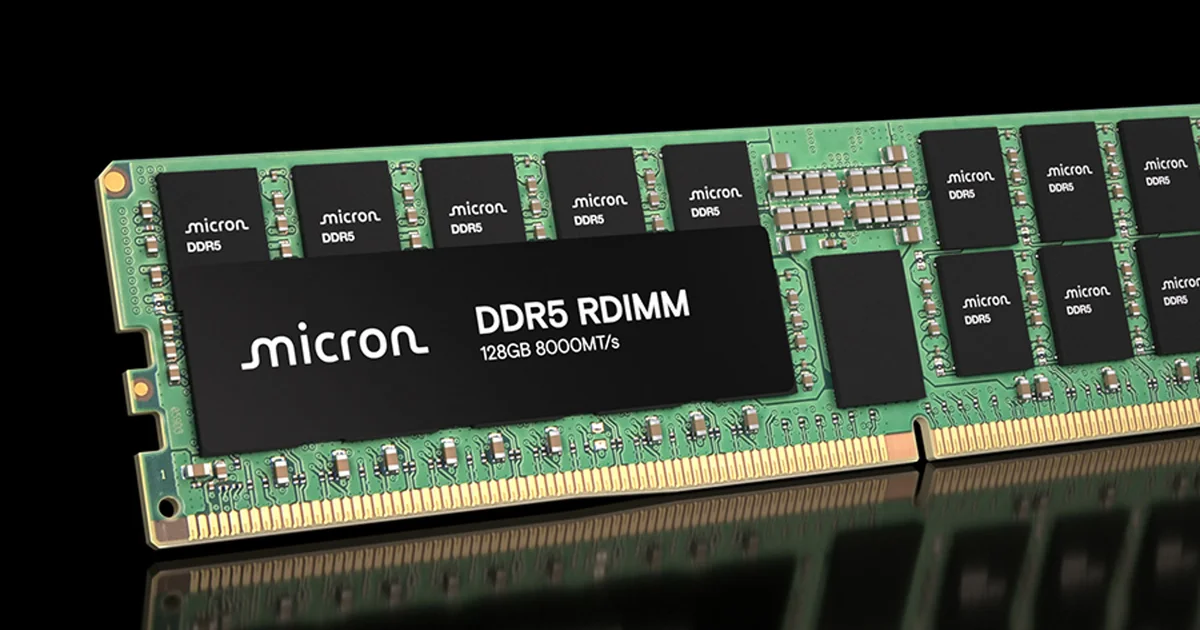
The short version for PC builders is not particularly exciting: RAM prices do not currently show the kind of broad reversal that would suggest much cheaper kits are only weeks away.
TrendForce's spot data on September 23 still showed DDR5 16 Gb pricing edging higher. Desktop DDR5 module pricing also remained firm. The increases are becoming less explosive in parts of the market, but slower inflation is not the same thing as falling prices.
AI changed where memory manufacturers want to spend their capacity
PC demand alone does not explain the current market. AI infrastructure has altered the economics of memory manufacturing.
Modern AI servers require enormous quantities of memory. HBM sits beside accelerators, while conventional DDR5 RDIMMs populate the host servers surrounding those accelerators. Hyperscalers are ordering both at a scale that consumer PCs cannot match.
Samsung, SK hynix and Micron therefore have a strong incentive to prioritize the products and process capacity that generate the best returns. That has reduced the amount of conventional DRAM capacity available to PCs and smartphones.
TrendForce still describes DRAM supply as tight in September, with AI servers driving demand for both HBM and conventional server memory. Its third-quarter forecast called for conventional DRAM contract prices to rise another 13–18 percent quarter over quarter.
There is one useful limit: customers can stop buying
High prices eventually create their own problem. Notebook and smartphone makers cannot endlessly pass memory costs to customers without damaging demand.
That effect is already visible. Device makers are reducing production, reconsidering memory capacities and trying alternative suppliers. Consumers confronted with more expensive PCs can simply keep their current machine for another year.
This matters because memory has always been cyclical. Tight supply pushes prices and margins higher. High margins encourage investment. High prices suppress demand. Eventually additional supply arrives into a weaker market.
The only frustrating variable is how long that cycle takes.
Acer sees a turning point in the second half of 2027
Acer chairman and CEO Jason Chen currently offers one of the more optimistic forecasts. He expects PC pricing pressure to continue through the first half of 2027 before prices begin declining later in the year.
Chen argues that mainstream DDR4 and DDR5 availability has already improved and that shortages are becoming concentrated in selected high-end parts rather than affecting everything equally.
He also disputes predictions that the broader memory shortage must continue until 2030.
There is an obvious commercial divide here. Acer buys memory. Memory manufacturers sell it. Their preferred definitions of “healthy pricing” are unlikely to match perfectly.
More Chinese DRAM could make a bigger difference than it first appears
The other potential source of price pressure is China. CXMT continues to expand its DRAM presence, and Chinese memory is increasingly appearing in real products rather than remaining a theoretical future competitor.
That does not require CXMT to lead the HBM market. Additional competitive supply of mainstream DDR4 and DDR5 could still force established vendors to defend their position in the commodity segments used by ordinary PCs.
This is where consumer RAM could eventually diverge from the most supply-constrained AI memory products. A cheaper 32 GB desktop kit and a shortage of cutting-edge HBM can exist at the same time.
SK hynix expects 2027 to be worse, not better
There is a substantial counterargument. SK hynix CEO Kwak Noh-jung has described 2027 as potentially the industry's worst year from a memory supply perspective.
His explanation is straightforward: customer demand is still growing faster than available capacity. SK hynix expects that imbalance to remain a problem for years as AI systems consume increasing quantities of memory.
That forecast does not guarantee that retail DDR5 prices will rise continuously. HBM, server RDIMMs, mobile memory and desktop DDR5 do not move in perfect synchronization.
It does mean that anyone expecting an immediate return to abundant, cheap DRAM is betting against one of the strongest demand cycles the memory industry has ever experienced.
What this means for a PC upgrade
For an upgrade planned in the next few weeks, waiting specifically for a dramatic RAM price collapse is difficult to support with today's market data.
The picture becomes more interesting over the next six to twelve months. Consumer demand is weakening, manufacturers are adding capacity and Chinese suppliers are becoming more relevant.
The second half of 2027 is therefore a plausible first window for meaningful relief under Acer's scenario, rather than a guaranteed date.
For RAM to become genuinely cheap again, supply growth needs to catch demand at the same time that manufacturers have fewer reasons to reserve their best capacity for AI infrastructure. Right now, that second condition has clearly not arrived.