
 By Tsuky
US spot Bitcoin ETFs recorded $730.9 million of net inflows on September 3, their strongest single session since January 14.
BlackRock's IBIT took roughly $454 million of that amount. Six other funds, including products from Fidelity and Grayscale, also finished with positive flows.
Bitcoin moved back above $80,000 as markets reacted to a more dovish reading of Federal Reserve Governor Christopher Waller's comments.
The ETF route is widening beyond Bitcoin
Zcash crossed $1,000 on September 4 as regulated investment interest around ZEC accelerated.
Grayscale's Zcash vehicle gives investors exposure to the price of ZEC without requiring them to hold the asset directly, placing one of crypto's best-known privacy-focused networks inside a conventional securities wrapper.
That produces an odd contrast. Zcash's technological identity is closely tied to private transactions; institutional fund ownership is built around regulated custody, identity checks and transparent financial-market infrastructure.
Mining activity has also increased as the token price has risen, bringing more hashpower onto the network.
South Korea wants securities themselves to move onchain
South Korea's Financial Services Commission is preparing a three-stage tokenization framework beginning in 2027.
The plan is intended to support a broad range of securities rather than a small sandbox of crypto-native assets. Stocks, bonds and funds are all within scope.
Early stages are expected to cover instruments such as private money-market funds, corporate bonds and unlisted shares. Later phases would extend the system toward public securities.
The final ambition is onchain settlement, with stablecoins explicitly contemplated as part of the payment layer.
Coinbase is trying to bring stock perpetuals home
Coinbase already offers 24/7 stock perpetual futures to eligible customers outside the United States.
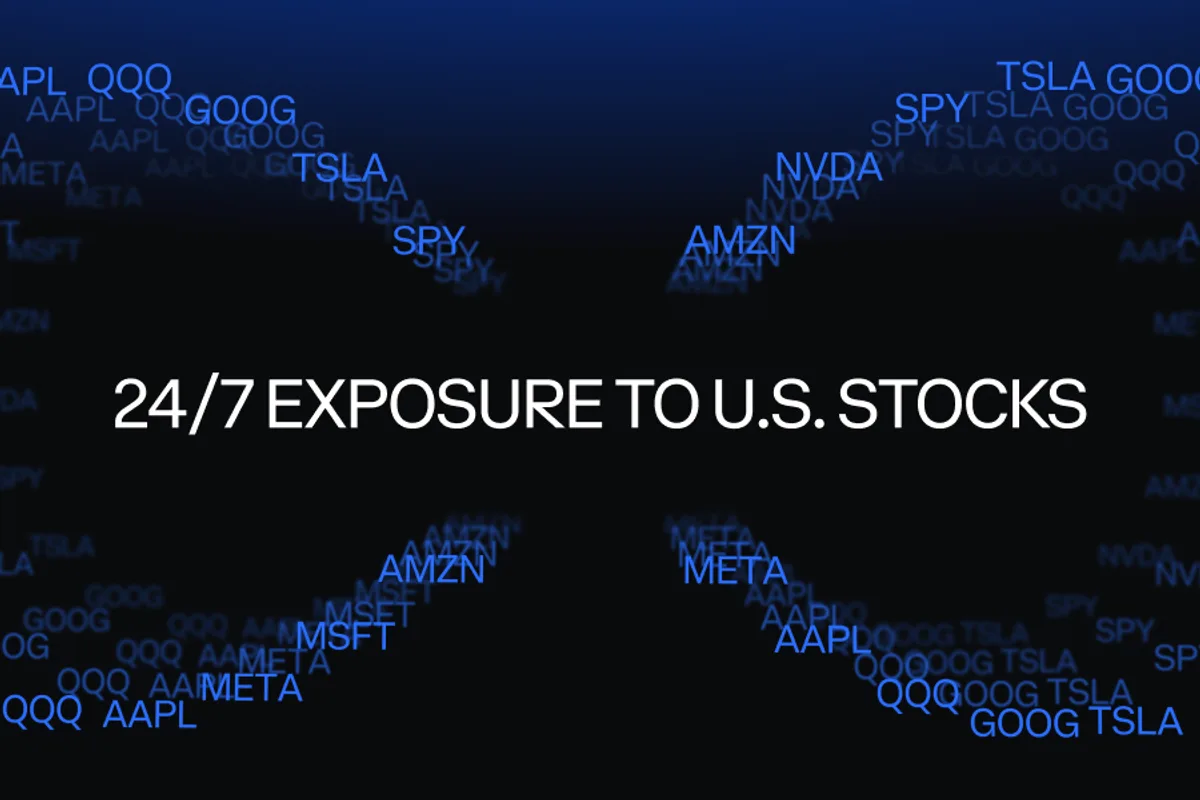
Its international product includes synthetic exposure to major US companies and ETFs, with USDC settlement and no conventional contract expiry.
On September 3, Coinbase confirmed that it had filed registration paperwork with the SEC seeking permission to list equity perpetuals through a regulated US route.
Approval has not been granted. For American users, this remains a proposal.
The underlying idea is still significant. Perpetual futures grew into one of crypto's defining trading instruments partly because they run continuously. Coinbase now wants to apply that market structure to assets whose primary exchanges still close every day and every weekend.
Hyperliquid may not need to bring its existing exchange into the US
The Hyperliquid discussion is earlier in the process.
President Donald Trump has said he wants the platform to enter the United States through a legal and compliant structure, with the CFTC expected to play a role.
One possible route would use Hyperliquid technology, liquidity or market design inside a regulated arrangement rather than simply opening its current decentralized venue to US traders.
Kraken and Bitnomial have been discussed around possible structures. Depending on custody, routing and the products involved, the SEC could also have a role.
There is no finalized framework yet.
OpenReserve wants the bank charter itself
OpenReserve is taking a more conventional route in one sense: it wants to become an actual national bank.
The Office of the Comptroller of the Currency approved its new-bank charter application on a preliminary conditional basis on September 2.
The proposed OpenReserve Bank, National Association is designed as a full-service national bank with plans involving tokenized deposits, digital-asset custody and a stablecoin subsidiary.
The conditions are decidedly traditional. The OCC requires at least $210 million of initial paid-in capital after organizational and pre-opening expenses.
The bank must also maintain a Tier 1 leverage ratio of at least 12% during its first three years.
Trezor's problem happened much further down the stack
While finance moves onchain, Trezor spent September 4 explaining why old shipping records were still sitting in a logistics provider's systems.
ShipMonk informed Trezor that approximately 67,000 additional US customers had been affected by its data breach.
The newly disclosed records cover orders from November 2019 through August 2021 and include names, email addresses, phone numbers, shipping addresses and order numbers.
That comes on top of roughly 13,689 customers identified in the original August disclosure.
Trezor says it had repeatedly requested deletion of order information and received written assurances that the data had been removed.
It had not.
Private keys were not exposed
Trezor says its own systems and hardware wallets were not compromised. Recovery seeds are not among the exposed data categories it has disclosed.
The practical threat is targeted fraud. A scammer who already knows a victim's name, address, phone number and history of buying a hardware wallet has a much stronger starting point for phishing or impersonation.
Physical addresses also make this category of breach different from an ordinary marketing database leak.
Crypto and traditional finance are becoming increasingly difficult to separate
Bitcoin and Zcash are moving through regulated funds. South Korea wants conventional securities on tokenized rails. Coinbase wants crypto-style perpetual markets for equities.
Hyperliquid is being discussed in the language of CFTC and SEC compliance. OpenReserve is being evaluated using bank capital ratios.
The technology is not replacing the old financial system in one clean move. Pieces of each are being inserted into the other.
And somewhere underneath all of those ETFs, stablecoins and tokenized securities, companies still have to remember to delete an old spreadsheet containing customer addresses.